Vietnamese Drip Coffee: Pro Brewing Tips
Among the many modern brewing methods available today, Vietnamese phin drip coffee still holds a special place in daily life...
read more

FREE Express Shipping On Orders $99+

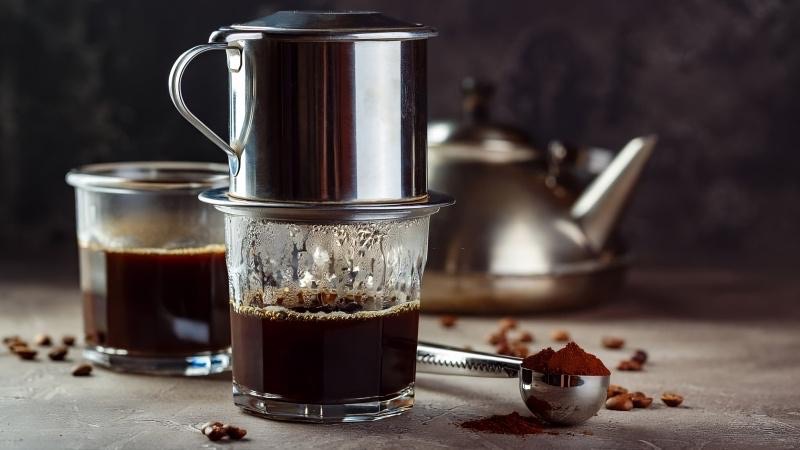
Amidst the influx of modern brewing equipment, the compact metal phin filter still maintains an immutable status. This tool represents a minimalist design philosophy, where pure mechanical engineering serves entirely to awaken the original flavor.
The Vietnamese phin coffee filter is not merely an affordable brewing tool, but also a testament to a clever mechanical design rooted in heritage. Surpassing the complex standards of Western brewing kits, the metal phin possesses a minimalist design yet achieves optimal efficiency in extraction. Understanding the structure and operating principles of the phin will help coffee lovers master the bold, distinctive flavor of this manual craft beverage.
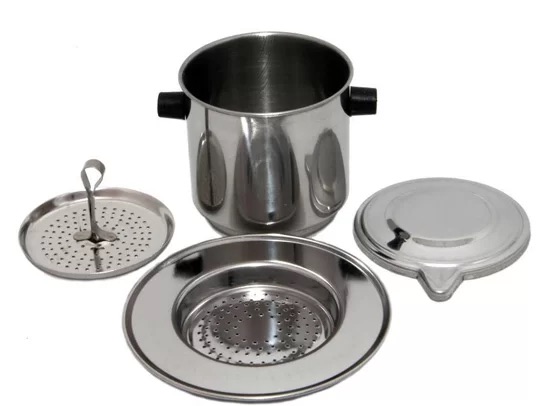
The 4 Metal Layers of the Traditional Vietnamese Coffee Filter Explained (Image source: Internet)
From a technical perspective, this tool is a complete mechanical filtration system stripped down to the absolute minimum. A standard phin set consists of 4 independent components that interlock mechanically without the use of threads, screws, or any rubber gaskets.
The interlocking design of these 4 components creates a tight, durable unit over time. The two most popular materials used are aluminum and stainless steel. Among them, the traditional aluminum phin is favored due to its quick heat transfer and even heat retention properties, helping to maintain the optimal temperature for the extracting water flow.
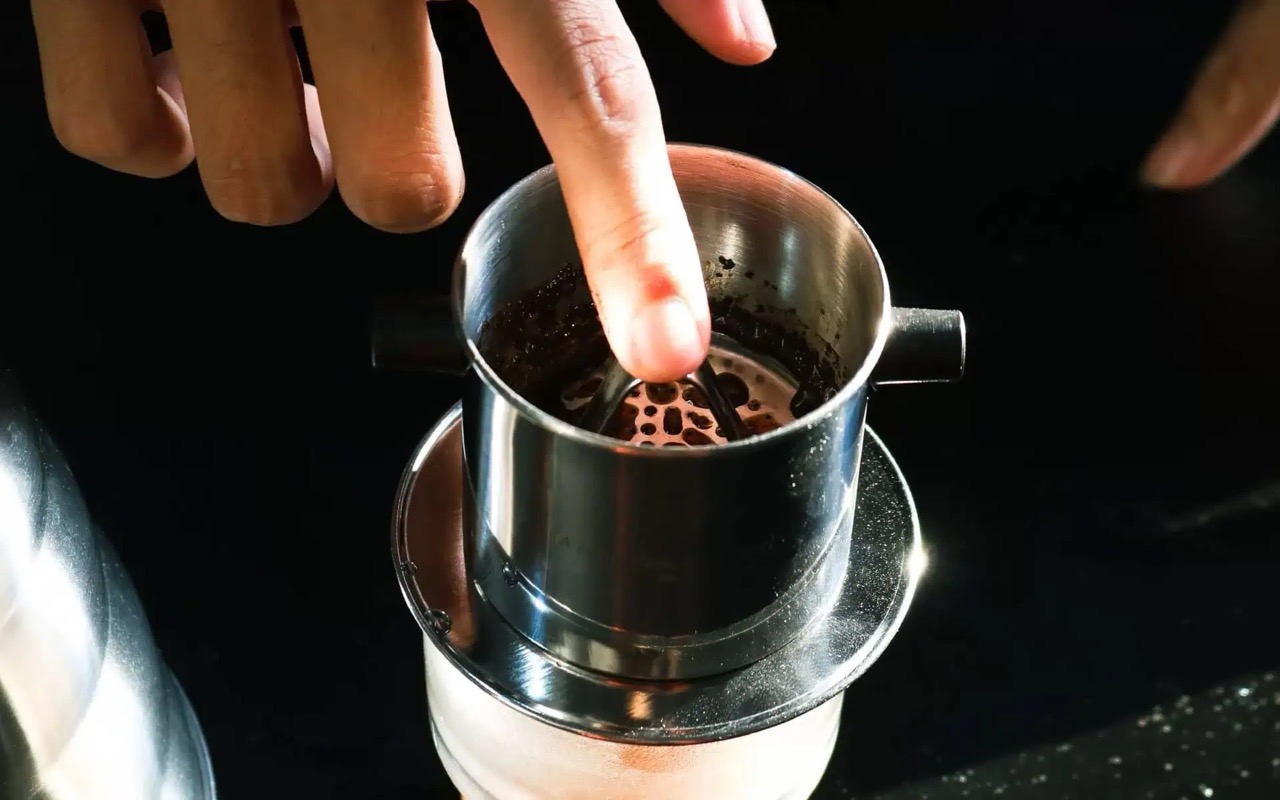
The Unique Brewing Principle of Vietnamese Drip Coffee (Image source: Internet)
The unique aspect that defines the identity of Vietnamese phin coffee lies in its operating principle. It does not belong entirely to the pour-over method using paper filters, nor is it purely immersion like a French Press. The metal phin operates on a unique hybrid mechanism, smoothly combining both of these states using only a natural mechanical filter.
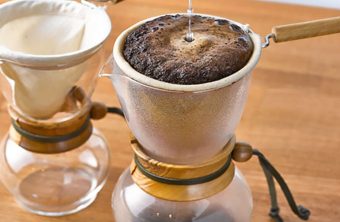
When hot water is poured into the filter body, the first phase that takes place is blooming. The coffee bed absorbs the hot water, begins to expand, and releases carbon dioxide gas bubbles accumulated inside the cell structure of the beans. Because the press disc has secured the surface and the holes at the bottom of the filter body are very small, the hot water does not immediately escape but is retained for a certain period. This blooming phase allows the hot water to dissolve flavor compounds, soluble solids, and natural oil bands under stable high-temperature conditions.
After the coffee bed is saturated with water, under the effect of gravity, the dripping phase truly begins. The concentrated coffee liquid weaves through the spaces between the coffee particles, passes through the dual-hole system of the body bottom and the base plate, and drops into the cup. This entire process takes place completely naturally, saying no to artificial pressure from machinery, requiring no electrical energy, and absolutely using no single-use paper filters.
It is precisely the elimination of paper filters that helps the system fully retain the coffee oils of the beans. Regular paper filters will trap most of this oil, making the coffee clearer and lighter. Conversely, the metal mesh of the phin allows the entire layer of essential oils to pass directly down into the extraction cup. This factor determines the heavy body, syrupy density, and rich, lingering aftertaste of the final cup of coffee.
To achieve the highest extraction efficiency, brewers need a deep understanding of manual coffee brewing methods through controlling the variables that affect the mechanical filter. Every small change in technique directly impacts the dripping speed and final flavor.
Because Vietnamese phin coffee uses a metal filter with fixed hole sizes, the grind size plays a decisive role in flow resistance.
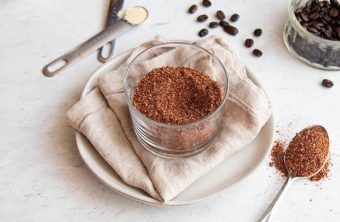
The most ideal grind level for the phin is medium-coarse, which feels distinctly gritty like sea salt particles when touched. If you find it difficult to gauge the right particle size, you can purchase pre-ground Robusta coffee from VietNatur to enjoy right away. This type of coffee is crafted with a precise grind level, optimized for phin brewing, helping you save time while still ensuring extraction efficiency.
With a standard small-sized Vietnamese phin coffee set, the appropriate amount of coffee ranges from 20 to 25 grams. After putting the ground coffee into the phin, shaking it gently to level the surface helps the water saturate evenly through the entire coffee bed.
When placing the press disc inside, the brewer needs to apply a moderate downward vertical force. Too much pressure will tightly compact the spaces between the coffee particles, which, combined with the expansion phenomenon when meeting water, will clog the flow. Conversely, too little pressure causes the press disc to float up when water is poured, causing the coffee grounds to overflow and destroying the stability of the blooming cycle.
In manual coffee brewing methods, the water delivery should be split into stages to optimize the filtration layer:
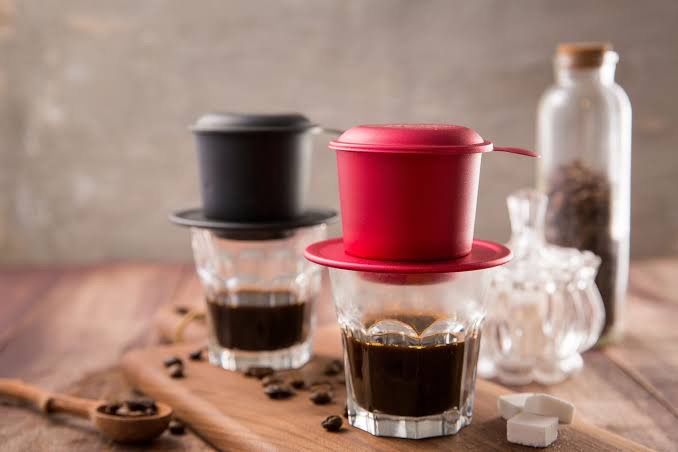
The Sustainability Benefits of the Vietnamese Coffee Filter (Image source: Internet)
The enduring survival of Vietnamese phin coffee over centuries comes not only from its functionality but also stems from the sustainable values it brings to modern lifestyles. Amid a market flooded with devices that consume electricity and generate waste from capsules or paper filters, the pure mechanical nature of the phin is a major highlight.
This product is completely environmentally friendly thanks to a usage lifecycle that extends almost infinitely if preserved properly. Cleaning the tool is incredibly simple, requiring only a rinse with warm water without the need for complex specialized chemical detergents. This minimalism completely eliminates recurring costs such as buying paper filters or maintaining machine engines.
This method promotes a slow and mindful lifestyle. The 3 to 5-minute interval spent waiting for each drop of coffee to fall through the filter layer is a necessary pause for the brewer to restore energy, calm the mind, and observe the surroundings. It is a simple form of practicing mindfulness, where humans learn patience to receive the finest essence of agricultural beans.
Through the ups and downs of culinary history, Vietnamese phin coffee still retains its original value thanks to its clever mechanical design and characteristic minimalist nature. Without relying on complex technology, this tool still demonstrates powerful self-contained energy in creating bold, quality cups of coffee. Maintaining and mastering this brewing method is precisely the way to preserve a refined aspect of artisanal culture in modern life.
You May Also Like