Vietnamese Drip Coffee: Pro Brewing Tips
Among the many modern brewing methods available today, Vietnamese phin drip coffee still holds a special place in daily life...
read more

FREE Express Shipping On Orders $99+

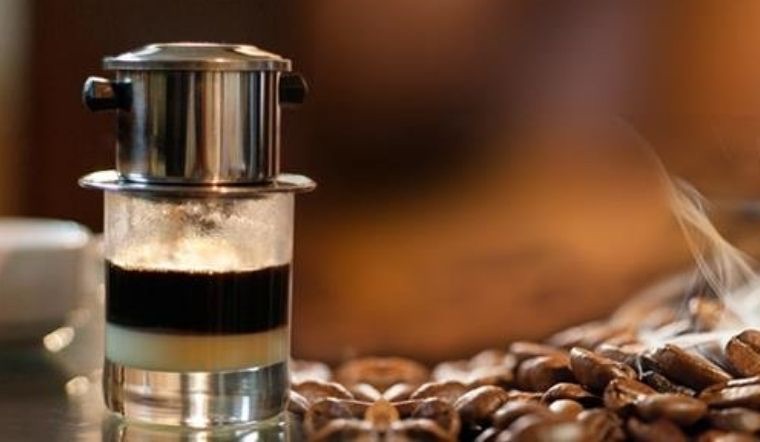
Waking up in the wild, preparing a hot cup of coffee by yourself always brings a sense of absolute relaxation. Instead of carrying bulky equipment, the Vietnamese coffee filter is a convenient choice to optimize your gear. This article will guide you through the detailed steps to extract the bold flavor of coffee in the heart of nature with a Phin.
What is a Vietnamese coffee filter? The art of manual brewing
A Vietnamese coffee filter is a compact manual metal brewing tool, renowned for extracting concentrated coffee drops through a micro-perforated base. Unlike modern brewing methods, the Phin requires no electricity or complex parts. The combination of interlocking metal components creates a “mini extraction chamber,” allowing hot water to permeate every coffee ground, dissolving essences to deliver a rich, aromatic flavor that few machines can replicate.
Today, Phin-brewed coffee is not just a familiar drink but a symbol of Vietnamese coffee culture, attracting international tourists eager to explore traditional flavors and the unique pace of Vietnamese life.
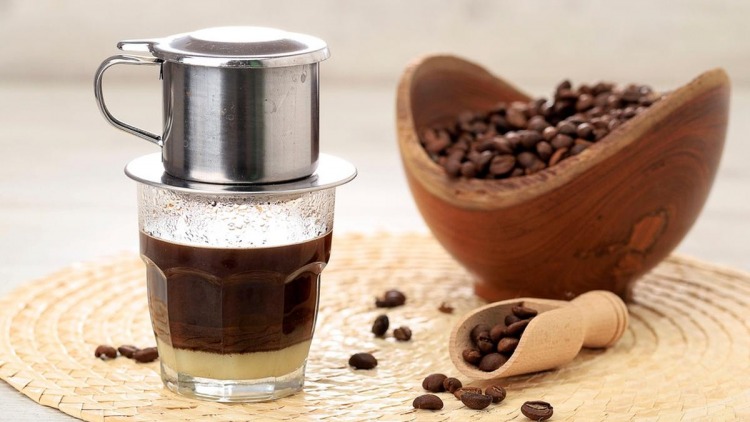
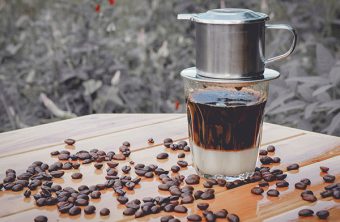
How to make Vietnamese drip coffee quickly anywhere (Image source: Internet)
Brewing with a Phin is more than just making a drink; it is an artistic waiting process where simple physical principles create complex and bold results. Instead of using machines or paper filters, the Phin applies immersion techniques combined with natural gravity—considered the “golden” tool for the sustainable camping trend thanks to its absolute “Zero-waste” design.
The Phin consists of 4 metal parts (aluminum or stainless steel) working in harmony: the Lid (heat retention), the Body (extraction chamber), the Gravity Press (securing the grounds), and the Filter Base (final filtration). To fully extract the essence of Robusta beans in nature, follow this detailed process:
Before starting, rinse all parts of the Phin and the cup with hot water. This cleans and warms the metal, preventing a sudden temperature drop when pouring water. In manual brewing, stable temperature is the prerequisite for the essences in Robusta beans to be released perfectly.
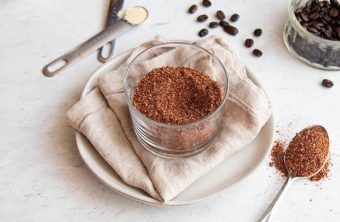
Put about 20g of Robusta coffee grounds (medium-coarse grind, similar to sea salt) into the body. Place the Gravity Press on top and apply gentle pressure to level the surface.
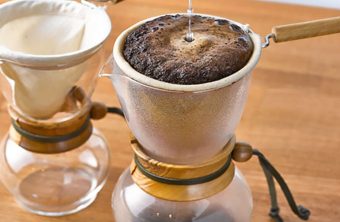
Slowly pour about 30ml of hot water (ideally 92 – 96°C) into the Phin, cover with the lid, and let it sit for 40 seconds.
Once the grounds have bloomed, add about 40ml – 50ml of hot water and cover again. Now, simply wait patiently for each drop of bold liquid to fall into the cup.
Because it requires no electricity or paper, the Phin cuts 100% of non-biodegradable waste. Used grounds can be poured at the base of a tree as organic fertilizer, making your trip truly “Zero-waste.”
While waiting for each dark, syrupy drop, you can leisurely enjoy the fresh air—a relaxing experience as patient as the process of making a perfect cup of coffee.
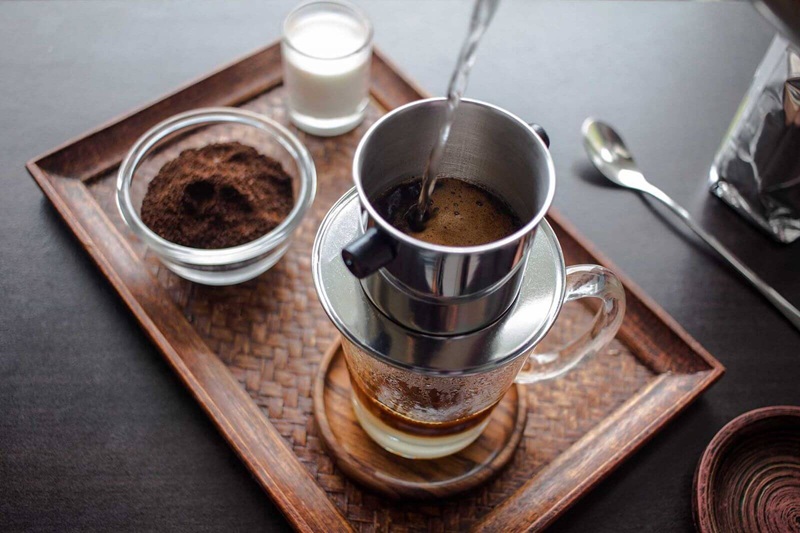
A Vietnamese coffee filter makes brewing incredibly easy (Image source: Internet)
In harsh outdoor environments, the Vietnamese coffee filter emerges as an “unbeatable” tool due to its durability, mobility, and minimalist process. Here is why it is the top priority for travelers:
Made of aluminum or stainless steel, the Phin is ultra-light yet extremely durable. During travel through rough terrain, you never have to worry about cracks or breaks like glass or ceramic brewers.
The 4-part structure fits intelligently into one another. This transforms a complete brewing tool into a compact cylinder that fits easily in a backpack pocket or inside a camping mug.
The Phin relies on slow gravity drip. No complex machinery or batteries needed; you can create a bold coffee anywhere—from a misty peak to a quiet stream—with just hot water and coffee grounds.
In the wild, clean water is precious. The Phin wins over other methods with its water-saving cleanup. Without paper filters, you don’t deal with bulky, soggy waste.
This minimalism makes the Vietnamese coffee filter a symbol of sustainable camping, allowing you to enjoy nature without leaving plastic or paper waste behind.
Pay close attention to the grind size and tamping pressure to avoid ruining the extraction speed.
Aluminum or stainless steel for camping?
Aluminum is ultra-light and affordable, while stainless steel is dent-resistant and retains heat excellently outdoors. Choose based on whether you prioritize weight or heat retention.
Do I need a thermometer and a scale?
Not mandatory. The philosophy of outdoor brewing is convenience. You can estimate 3-4 spoons of coffee and use hot water from a thermos.
What drinks can I make with a Phin?
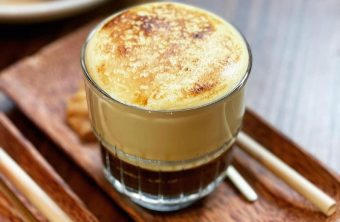
Besides black coffee, you can pour condensed milk at the bottom of the cup first. The hot coffee will “cook” the milk, creating the famous Vietnamese Iced Milk Coffee right in the woods.
Why is the coffee stuck (not dripping)?
This usually happens because the grounds are too fine or pressed too hard. Use a medium grind and gentle pressure to level the surface.
For camping enthusiasts in Germany, the VietNatur store in Leipzig provides bold Robusta beans and convenient Phin sets for every trip. Whether it’s a weekend picnic, a trek, or a cold morning at the campsite, you can easily enjoy an authentic Vietnamese coffee anywhere.

Content-Mitarbeiterin