Vietnamese Drip Coffee: Pro Brewing Tips
Among the many modern brewing methods available today, Vietnamese phin drip coffee still holds a special place in daily life...
read more

FREE Express Shipping On Orders $99+

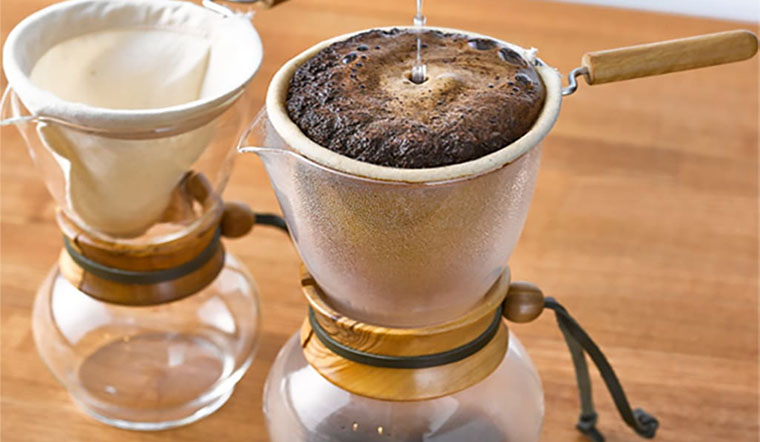
Saigon sock coffee is a long-standing style of coffee associated with small shops, old markets, and the working rhythm of the city. Even though it is no longer as common as it once was, people still remember it for its rounded, warm flavor and for a slow drinking style that feels very different from many modern coffee formats. For people in Germany, this is still a fairly unfamiliar type of coffee. And if this drink makes you curious, a good place to start is with the story behind it, then move on to its flavor, its brewing method, and whether it can be recreated at home.
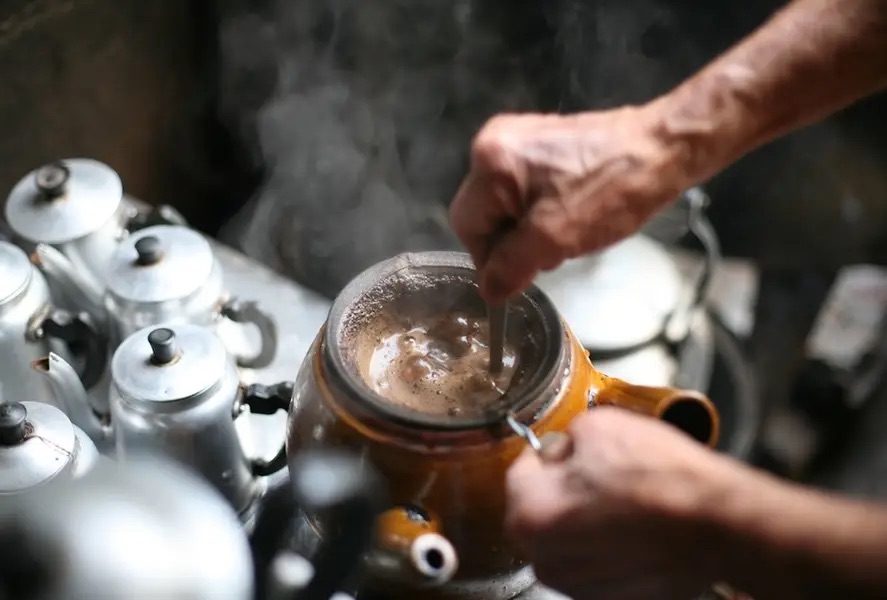
Traditional and famous Saigon sock coffee has been loved by many people for generations (Image source: Internet)
Saigon sock coffee is a way of brewing coffee through a cloth filter, then keeping it hot in a clay kettle, teapot, or pot and pouring it gradually for customers. Unlike phin coffee, where each cup drips individually, sock coffee is more about batch brewing and continuous serving. In long-standing shops, the cloth filter, the small charcoal fire, and the clay kettle are almost inseparable from this method.
Put simply, if phin coffee is tied to an individual cup and the slow rhythm of waiting for it to drip, sock coffee belongs to the rhythm of the coffee stall: brew once, keep it hot, and pour it out for many people. That is why, if you want to understand sock coffee, it is not enough to stop at the name. You also have to look at how it is brewed.
Ground coffee is placed in a long cloth filter, then dipped or steeped in hot water so the extraction happens gradually. Once it reaches the desired strength, the coffee is kept hot in a clay kettle or pot and poured into cups as needed. What matters most in this method is not pressure or speed, but steady heat, which helps the coffee become rounder and smoother over time.
Because the brewing method is different, the drinking experience is different too. That is why people trying sock coffee for the first time usually do not compare it directly to a cup of phin coffee. Instead, they tend to wonder: what exactly makes the taste of sock coffee different?
Sock coffee is usually less sharp and harsh than espresso, and it does not give the short, direct intensity of phin coffee either. Its aroma is gentler, the flavor is rich but smooth, less aggressive, and the finish lingers longer. Put simply, sock coffee does not try to make a strong impression in the first sip. It suits slow drinking, letting the flavor move more evenly and warmly across the palate.
To make it easier for new readers to picture, here is a quick comparison of the three styles:
|
Criteria |
Sock coffee | Phin coffee | Espresso |
|
Brewing method |
Batch brewed through a cloth filter, then kept hot and poured gradually | Dripped one cup at a time through a phin | Fast extraction under high pressure |
| Drinking feel | Rich but smooth, easy to drink slowly | More direct and clearly strong from the start |
Stronger impact, shorter and sharper |
| Finish | Longer, warmer, and less harsh | Clearly lingering |
Shorter but more concentrated |
That difference in both brewing and flavor is also why sock coffee is not just another variation of Vietnamese coffee. It is tied to a whole way of living. And that is where the story begins to move into the idea of the “soul of old Saigon.”
Sock coffee is seen as part of the “soul” of old Saigon because it is not just a drink. It is a living heritage that still carries the daily rhythm and the Chinese-Vietnamese cultural overlap of the city over more than half a century.
This style of coffee has endured and become part of urban memory because of three core values:
In other words, people do not talk about sock coffee simply as a brewing method. They talk about it as an invisible thread that lets us see, touch, and taste parts of old Saigon life that are still present today.
From corners of Chợ Lớn in District 5 to older working-class neighborhoods in District 8, sock coffee survives not just as an old drink, but as a habit that still clings to the city. What is memorable about these places is not that they look “old,” but that they still serve customers in the old rhythm every day: brew in batches, keep it hot, pour fast, and drink slowly.
When you see how these shops keep the fire going, keep the clay kettle going, and keep the old drinking style alive, it also becomes easier to understand why not every kind of coffee works for this method. At that point, choosing coffee beans is no longer just a technical decision. It becomes part of preserving the spirit of the cup.
In terms of flavor, Vietnamese Robusta coffee is the best fit for sock coffee because it gives enough strength, enough body, and enough backbone to hold up in larger batch brewing. This method does not need beans that are too bright or overly aromatic. It needs a coffee that is clear in character, stable, and works both on its own and with milk. That is why dark-roasted Robusta is such a natural choice if you want to stay close to the spirit of a true cup of Saigon sock coffee.
That naturally leads to the next question: if you live in Germany, can you recreate something close to this style at home?
Yes, although it is hard to recreate the full atmosphere of an old sock coffee shop. If your goal is to get close to the spirit of sock coffee, you can absolutely try it at home with simpler tools: a cloth filter bag, a kettle or pot that holds heat well, suitable ground coffee, and a steady heat source. If you do not have a clay kettle, you can still use a thick kettle or a thermal pot instead.
The important thing here is not to think that you have to rebuild an entire old-style coffee stall to make it work. For people in Germany, a more realistic starting point is a simplified version that still keeps the essential character of the method.
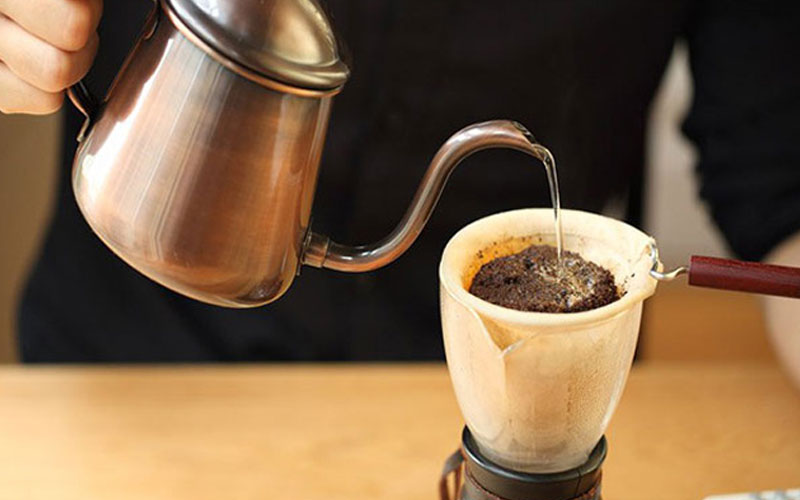
You can absolutely try making sock coffee at home very easily (Image source: Internet)
To make it easier to try at home, you can start with a small batch of about 2 to 3 cups: 20–25 g of roasted ground coffee and 250–300 ml of very hot water. That is easier to control at home, while traditional shop-style batches are much larger.
In traditional brewing, the coffee sock is usually made from cotton or coarse cloth. If you cannot find the exact Vietnamese-style sock in Germany, you can try using a reusable cotton or flannel cloth filter bag, or a Hario Woodneck-style cloth filter.
|
Step |
What to do | Specific method |
Note |
|
1 |
Warm the cloth filter and the kettle | Rinse both with hot water before brewing to stabilize the temperature | Cold tools can make the first cup taste weak |
|
2 |
Add the coffee and spread it lightly | Put 20–25 g of ground coffee into the cloth bag and spread it evenly without packing it down | Do not tamp it like espresso |
|
3 |
Bloom with a little hot water | Pour about 30–40 ml of hot water to wet the coffee evenly | This helps the aroma open up more evenly |
| 4 | Dip or steep in hot water | Add the remaining 220–260 ml of water and keep it very hot so the coffee extracts slowly |
Avoid a hard boil, which can make the taste harsher |
| 5 | Watch the strength | Stop when the aroma turns softer, the color is deep enough, and the body feels right |
Over-steeping can make the coffee rough |
| 6 | Transfer to a hot kettle and pour gradually | Once brewed, keep it at a steady temperature and pour cup by cup |
Do not keep reheating it over and over |
Note for beginners: If your first cup feels softer than phin coffee, less sharp than espresso, more gently aromatic, and longer in the finish, that is not a sign you did it wrong. That is exactly the kind of profile sock coffee usually has.
If you only follow the steps without paying attention to heat and brewing rhythm, sock coffee can easily turn out rich but rough. If you want the cup to feel “rich but smooth,” keep these points in mind:
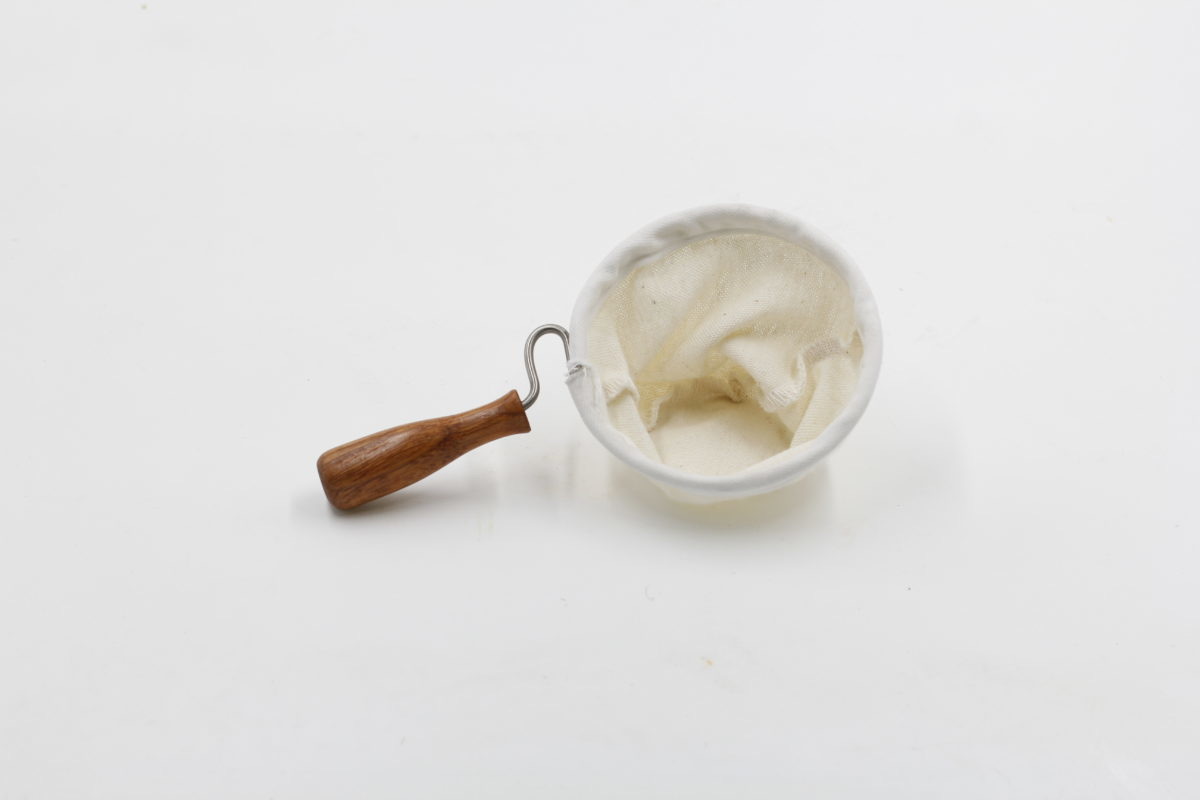
Cleaning the coffee sock is also very important because it affects the quality of the coffee (Image source: Internet)
This may seem like a small detail, but it matters a lot, because the cloth filter directly affects the aroma and the clean taste of the next batch. To keep the cup more stable, pay attention to the following:
For Vietnamese people in Germany, the hardest part is not understanding what sock coffee is. It is recreating the exact feeling of it. In Saigon, a cup of sock coffee always comes with a small shop, warm heat, a clay kettle, and the rhythm of drinking slowly. Once you take it out of that setting, what remains is mainly the flavor and the method.
That is why, when trying it again at home in Germany, the most important thing is not reproducing the old setting exactly, but keeping the cup rich, warm, and steady. From a practical point of view, that is also where choosing the right beans matters more than whether you have the exact same clay kettle.
If you want to get closer to the spirit of sock coffee, you can start very simply: choose a dark-roasted Robusta, brew in small batches, keep it hot for a while instead of drinking it immediately, and aim for a cup with clear body rather than something too bright or too light. If you want a more practical option in Germany, you can start with Robusta or darker-leaning blends from VietNatur.
No, not if the cloth filter is cleaned properly and dried after each use. After brewing, you should remove all the spent grounds, rinse it again with hot water, and let it dry fully before using it again. With sock coffee, a clean cloth filter matters a lot because it directly affects both the aroma and the consistency of the next batch.
Not necessarily. A clay kettle helps keep the heat more stable, but if you are brewing at home in Germany, you can still use a thick kettle, a small pot, or a thermal container. What matters more is keeping the coffee evenly hot after brewing instead of boiling it hard again and again.
Yes, to a degree. You do not need to recreate an entire old-style coffee shop. You just need to go in the right direction: use a cloth filter, keep the coffee hot after brewing, and choose coffee with enough strength. That already gets you fairly close to the spirit of sock coffee.
Both work. Drinking it black makes it easier to notice the smoothness and the finish. If you add condensed milk, the cup becomes rounder and closer to the familiar taste of many working-class coffee shops in Saigon.
Saigon sock coffee is not just an old brewing method. It is part of the city’s memory: humble, slow, rich, and tied to the small shops that still survive in the middle of modern life. But for newcomers, especially those in Germany, what stays with you is not only the story behind it. It is also the very distinct feeling of a coffee brewed through a cloth filter, kept hot for a long time, and drunk slowly. If you want to start from that spirit at home, a Vietnamese Robusta coffee with enough strength is a sensible place to begin.
If you want to try the spirit of Saigon sock coffee at home, you can explore suitable Robusta options from VietNatur and start in your own way in Germany.