Best Hiking Snacks: Energy Foods for Outdoor Adventures
Hiking and trekking are outdoor activities that build endurance, improve physical fitness, and help recharge your mental energy. However, to...
read more

FREE Express Shipping On Orders $99+

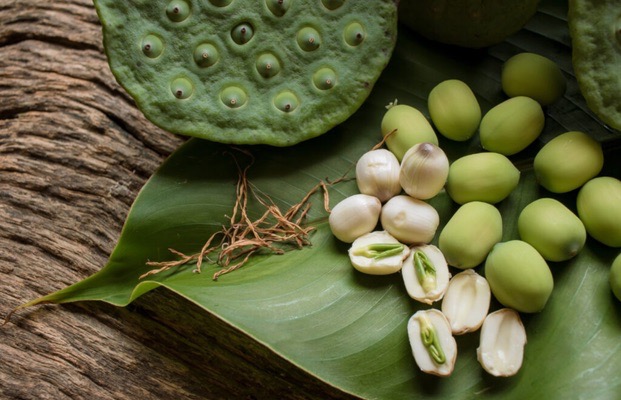
As consumer trends in Germany increasingly prioritize products of natural origin, lotus seeds are gradually appearing more often in the plant-based snack category. However, to use them reasonably in a daily diet, understanding lotus seed nutrition is essential.
The content below focuses on important values such as calories, protein, and fiber, while also clarifying how to use lotus seeds in a balanced and suitable portion.
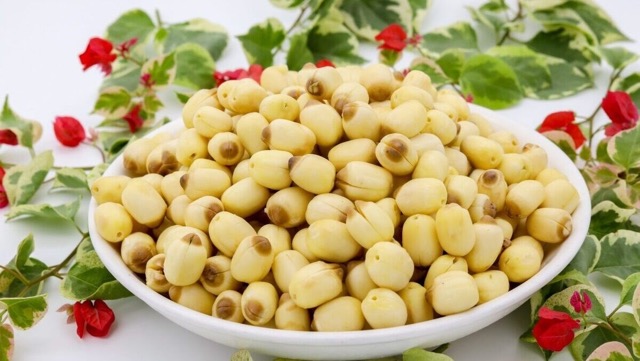
Lotus seeds provide abundant energy for your daily activities (Image source: Internet)
Dried lotus seeds provide about 500 kcal per 100g, depending on the characteristics of the ingredient.
The average nutritional composition includes:
With this structure, lotus seed nutrition shows that this is a food with relatively high energy density, while also providing plant-based protein and fiber in the diet.
Lotus seeds provide a rich source of energy together with a notable amount of plant-based protein and fiber in each serving consumed.(1) Below is the average nutritional table for 100g of dried lotus seeds:
| Nutritional value | Amount |
| Energy | 2095 kJ / 500 kcal |
| Fat | 25 g |
| Of which saturated | ~12.5 g |
| Carbohydrate | 50 g |
| Of which sugar | 15 g |
| Dietary fiber | 15 g |
| Protein | 15 g |
| Salt | 0.81 g |
These figures help clarify the ratio between the main nutrient groups, thereby supporting suitable portion adjustment in a daily diet.
Lotus seeds can be used as part of a balanced diet when consumed in a reasonable amount.
The energy level of about 500 kcal/100g is a common characteristic of dried foods.(1) When water content decreases, components such as carbohydrates, fat, and protein become more concentrated within the same weight.
This reflects the product’s natural nutrient density, not the addition of extra fat or sugar.
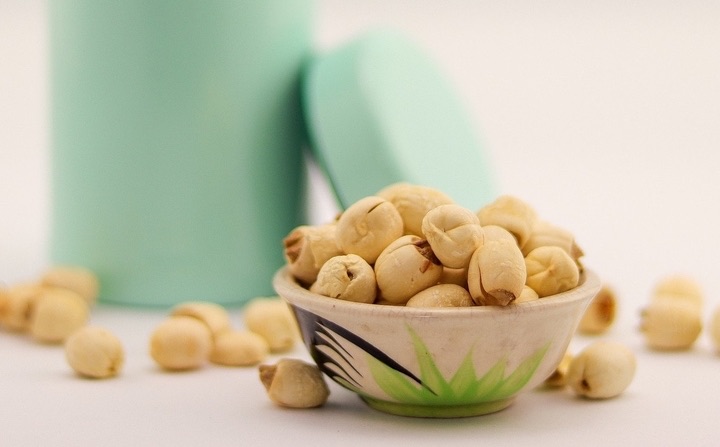
Several factors can affect the nutritional value of lotus seeds (Image source: Internet)
The amount of nutrition you take in from lotus seeds depends not only on the product itself, but also on how it is used:
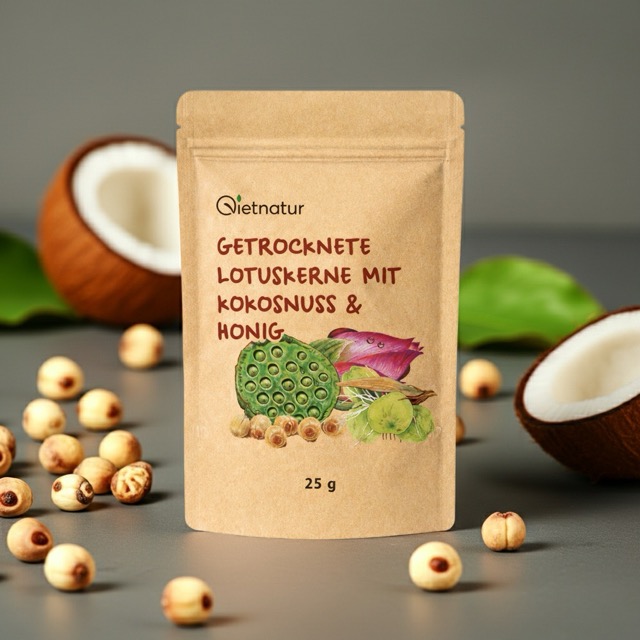
VietNatur dried lotus seeds combine a light crispy texture with the delicious sweetness of honey (Image source: Internet)
VietNatur dried lotus seeds are developed with the aim of preserving the natural characteristics of the ingredient and ensuring clarity in composition.
The product has a distinctive light, crispy texture. When combined with coconut and a thin layer of honey, lotus seeds offer a mild sweetness that is not too strong.
This combination mainly adds variety in flavor, while the natural nutty taste of lotus seeds remains the main base.
You should use about 25–30g each time to control energy intake.(3)
The main difference lies in the ingredients and the simplicity of the product composition:
| Criteria | Dried lotus seeds | Industrial snacks |
| Origin | Natural plant-based ingredient | Processed starch, additives |
| Fiber | High (~15g) | Usually very low |
| Salt | Low (~0.81g) | Usually high |
| Sugar | Natural | Often added sugar |
| Experience | Light, easy to digest | Easy to feel heavy, can cause thirst |
Lotus seeds often provide a lighter and easier-to-eat feeling, while many industrial snacks tend to contain more salt or sugar.
Yes, they can. Lotus seeds have a mild, nutty taste and are easy to chew, making them suitable as a snack for children. However, parents should control the portion and make sure children drink enough water after eating.
Lotus seeds are a plant-based food. With coconut and honey dried lotus seeds, people following a “honey-vegan” diet can use them normally. Strict vegans may want to consider carefully because the product contains honey(2)
About 25 to 30g each time is a reasonable amount to provide energy without affecting overall calorie balance.(3)
After opening the bag, you should seal the zip closure tightly or store the product in an airtight container to prevent moisture in colder climates from affecting the crispness.
Yes. You can use dried lotus seeds as a topping for yogurt, smoothie bowls, or mix them with dried fruit to create a convenient trail mix.
Dried lotus seeds are a snack choice with high energy density, while also providing protein and fiber in the diet. Once you understand lotus seed nutrition, you can use this food appropriately in your daily diet.
Disclaimer: Nutritional values may vary slightly depending on the natural characteristics of each batch of lotus seed ingredients. This content is for reference only and does not replace professional nutritional advice.
(1) NutritionValue.org: Detailed nutrition data from an international food database.
(2) ScienceDirect: Research on the chemical composition and food value of lotus seeds.
(3) World Health Organization (WHO): Guidance on a healthy diet and energy control.
🪷 Try VietNatur’s Crispy Lotus Seeds
Light, crispy and mildly nutty — discover Vietnamese lotus seeds with coconut and a touch of honey.
🪷 Shop Now — Crispy Lotus Seeds
Explore more