

Best Hiking Snacks: Energy Foods for Outdoor Adventures
Hiking and trekking are outdoor activities that build endurance, improve physical fitness, and help recharge your mental energy. However, to...
read more

FREE Express Shipping On Orders $99+


When considering adding jackfruit chips to your daily diet, the question are jackfruit chips healthy often comes from the desire to find a convenient snack that still retains the natural qualities of fruit. Jackfruit is a familiar fruit with a distinctive aroma and a naturally sweet taste when ripe. When processed into crispy slices or dried pieces, it easily appeals to people who enjoy fruity snacks with a light, crunchy texture. However, the actual nutritional value of each product depends not only on the name of the fruit but also on the processing method and the ingredient list on the packaging.
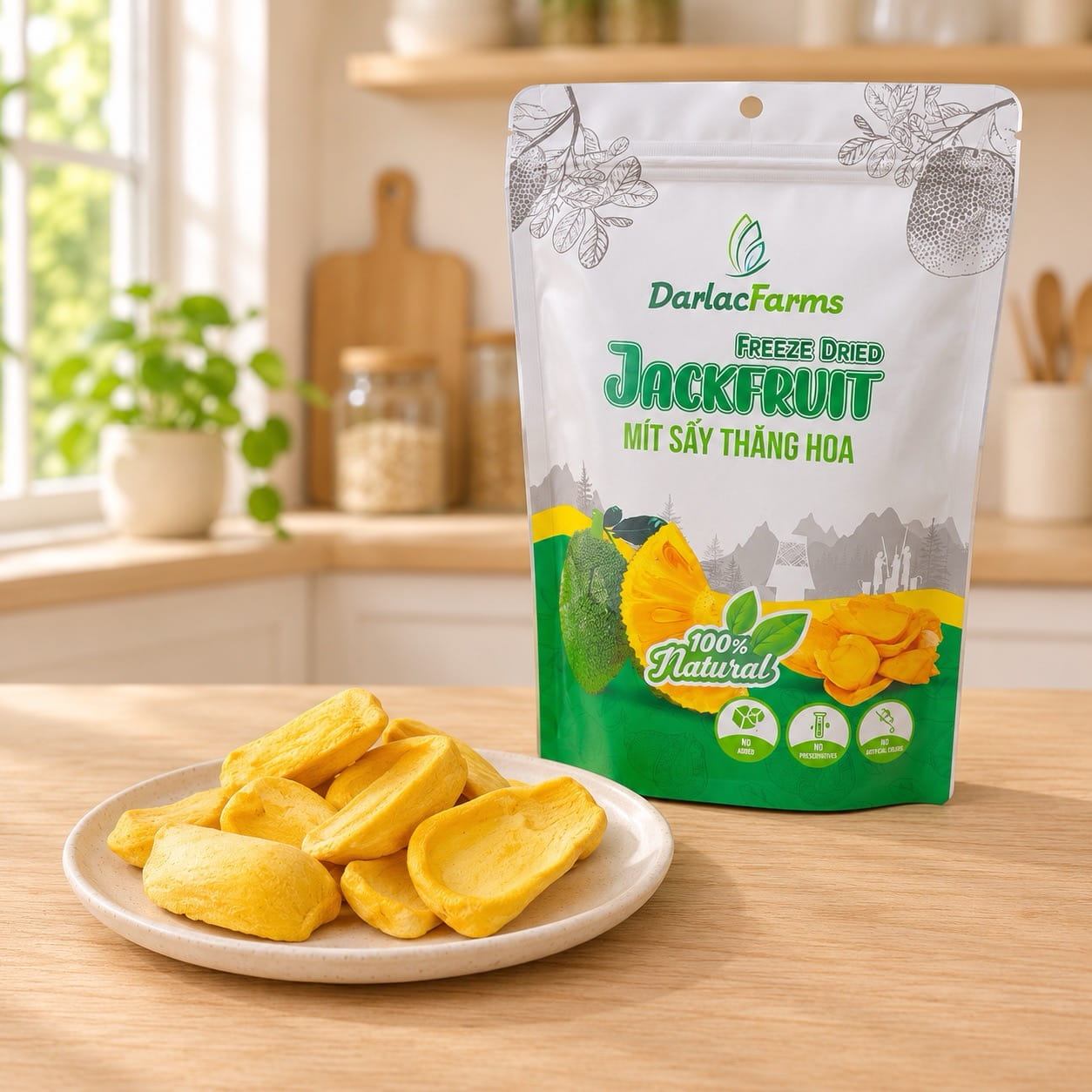
Dried jackfruit contains more concentrated sugar and energy than fresh jackfruit because most of the water has been removed. (Source: VietNatur)
To accurately evaluate whether jackfruit chips are healthy, the most practical factors to look at are jackfruit chips calories and the sugar content listed on the product packaging. Water does not provide calories. When most of the moisture in fresh jackfruit is removed, natural components such as carbohydrates and sugars become more concentrated per unit of weight. This is why the calories in jackfruit increase significantly after drying, even when no additives are used.
On the market, jackfruit chips calories per 100g typically range from 350 to 500 kcal, with total sugar levels ranging from approximately 30g to 60g or more, depending on the product. Deep-fried varieties or products coated with refined sugar usually contain more energy and fat, while products made from ripe fruit alone retain primarily the fruit’s natural sugars.
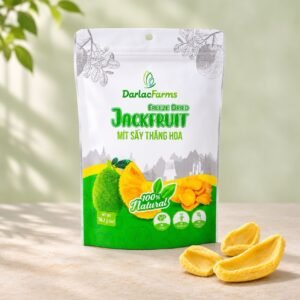
For example, VietNatur Freeze-Dried Jackfruit provides 380 kcal and contains 65.5g of sugar per 100g. The product is made from 100% jackfruit, with no added sugar and no frying oil. The high sugar content per 100g mainly comes from the removal of water during freeze-drying, which concentrates natural components such as sugars and carbohydrates by weight.
Therefore, even without added sugar, freeze-dried jackfruit remains a snack with a relatively high energy density and sugar content. It is important to pay attention to portion sizes when enjoying it. For example, a serving of around 20–30g provides approximately 76–114 kcal and 13.1–19.7g of sugar.
A small snack can contain a concentrated amount of sugar and energy. Eating continuously straight from a large bag may therefore lead to consuming more calories than you intended.
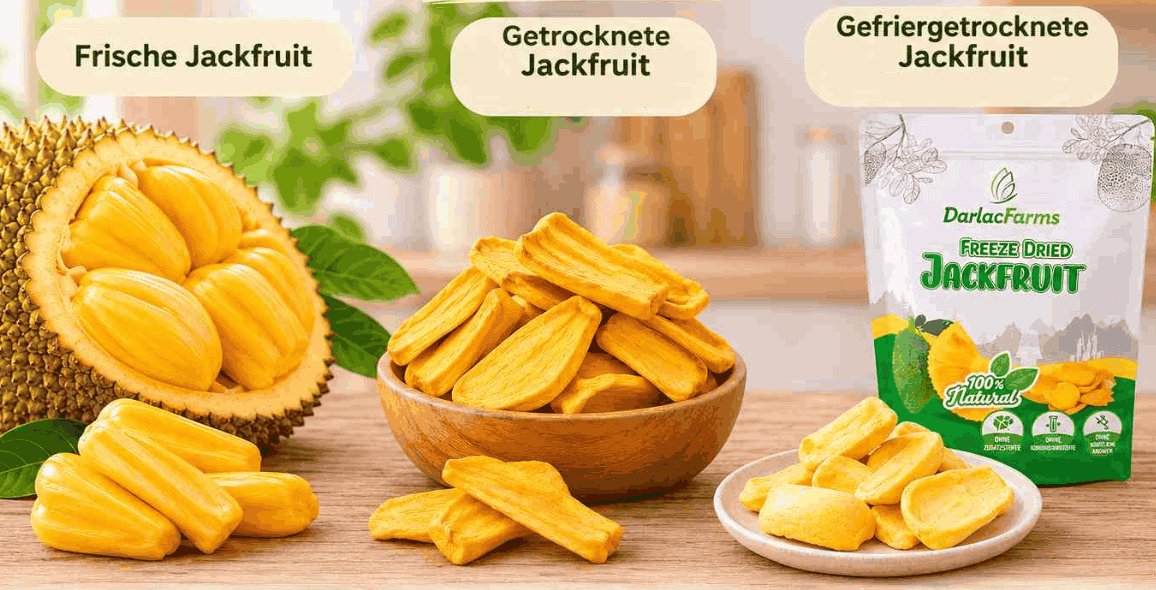
Fresh jackfruit, conventional dried jackfruit, and freeze-dried jackfruit differ in moisture content and texture. (Source: VietNatur)
When comparing fresh jackfruit with processed jackfruit products, the most noticeable differences lie in moisture content, energy density, texture, and nutritional composition.
| Comparison Criteria | Fresh Jackfruit | Traditionally Dried Jackfruit (Heat-Dried / Vacuum-Fried) | Freeze-Dried Jackfruit (e.g., VietNatur) |
| Processing method | Freshly harvested, without moisture-removal processing | Water evaporated using high temperatures or fried in vegetable oil to create a crispy texture | Deep-frozen, then moisture removed directly under vacuum at low temperatures |
| Moisture content | High, retaining its natural juiciness | Low | Very low |
| Ingredients | 100% fresh fruit | May absorb frying oil; some products may contain added sugar | 100% ripe jackfruit, no added sugar, no frying oil |
| Energy density & sugar | Lower per 100g because water makes up a large portion of its weight | Higher; added oil or sugar can further increase calories and fat | Higher than fresh jackfruit (380 kcal and 65.5g natural sugar per 100g) due to the concentration of natural components |
| Nutrient retention | Retains the fruit’s natural vitamins, fiber, and micronutrients | High temperatures may reduce some heat-sensitive vitamins; fiber and sugar are largely retained | Low-temperature processing helps preserve fiber, minerals, and heat-sensitive micronutrients better than heat drying |
| Texture & color | Soft, juicy, naturally yellow | Hard or slightly chewy and crispy; often darker in color | Light and airy, crispy texture; retains the shape of the jackfruit segments and a bright yellow color |
| Serving advice | Shorter shelf life; consider sugar intake if necessary | Check the ingredient list to avoid excess refined sugar and fat | Enjoy in small portions of around 20–30g per serving because natural sugars are concentrated |
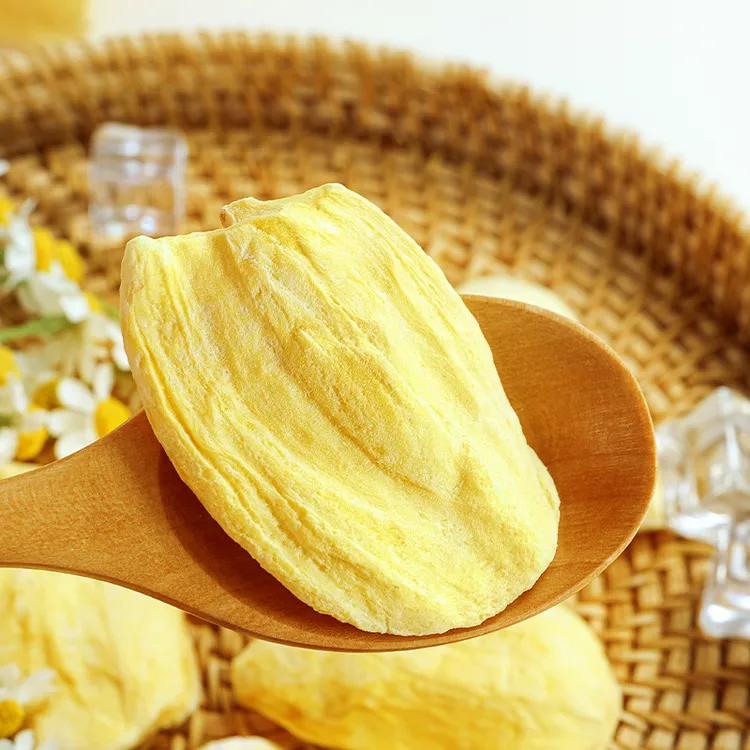
Smaller portions help you enjoy dried jackfruit more appropriately. (Source: Internet)
From a nutritional perspective, jackfruit contains natural carbohydrates, dietary fiber, and certain micronutrients found in fruit. However, the amount retained and the actual nutritional composition depend on the specific product and its processing method. No single dried food is “perfect” for everyone, and snacking should be considered as part of your overall daily diet.
If you are considering dried jackfruit as an alternative to sweets containing multiple additives, its advantages lie in the familiar fruit-based ingredients and convenience for on-the-go snacking. However, if you treat it as an unlimited snack simply because it is fruit and assume it is always a “light” option, you may unintentionally consume more calories and sugar than expected.
To make a choice that better suits your dietary needs, you can follow a few simple habits:
Dried jackfruit can be suitable as part of a balanced diet if you choose varieties without added sugar or frying oil and eat an appropriate portion of around 20–30g at a time. It provides fiber, natural carbohydrates, and some micronutrients from fruit, making it an alternative to sweets containing multiple additives.
However, because dried jackfruit is a concentrated source of energy and natural sugar, eating too much every day may lead to excess calorie intake. In addition, clinical research on the long-term health effects of dried jackfruit products specifically is still limited.
The drying process removes almost all the water that makes up a large portion of the weight of fresh jackfruit. As a result, producing 100g of dried jackfruit requires a much larger amount of fresh fruit. The natural sugar from multiple jackfruit segments becomes concentrated in that 100g of finished product, increasing the sugar value shown on the nutrition label. For example, VietNatur freeze-dried jackfruit contains 65.5g of sugar per 100g.
People who need to monitor their blood sugar should pay attention not only to added sugar but also to total carbohydrate intake and portion size. Even dried fruit without added sugar can contain a significant amount of concentrated natural sugar.
For example, a 20g serving of VietNatur freeze-dried jackfruit provides approximately 17.54g of carbohydrates, including around 13.1g of sugar, and 76 kcal. Whether and how much you should consume depends on your individual dietary needs and blood sugar response. If you need to monitor your blood sugar closely, consult a doctor or nutritionist for personalized advice.
From a practical perspective, are jackfruit chips healthy mainly depends on how the product is processed, its actual ingredient list, and how much you consume at a time. Understanding the differences in moisture content, energy density, and sugar levels can help you choose a crunchy snack that fits your lifestyle and balanced diet.
Entdecke passende VietNatur Produkte zu diesem Thema.