Vietnamese Drip Coffee: Pro Brewing Tips
Among the many modern brewing methods available today, Vietnamese phin drip coffee still holds a special place in daily life...
read more

FREE Express Shipping On Orders $99+

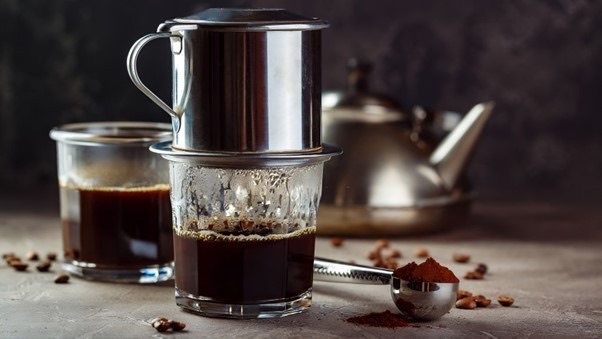
The Vietnamese coffee filter (Phin) is an incredibly compact manual metal brewing tool, renowned for its ability to extract bold, concentrated coffee. Using a Phin is not just about making a drink; it carries historical values and a distinct lifestyle. This article will help you understand the mechanical structure, origins, and cultural story behind this small but powerful brewing tool.
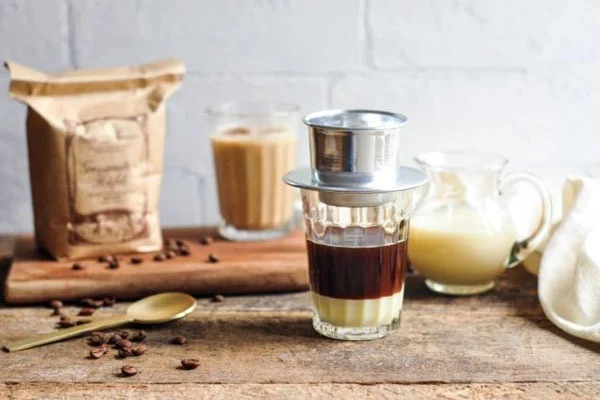
Key criteria to consider when choosing a coffee brewing device for camping trips (Image source: Internet)
A Vietnamese coffee filter is a small metal filter used in manual coffee brewing via the drip method. Introduced by the French and improved over decades, the Phin has become a core symbol of Vietnam’s coffee culture.
Phin coffee is closely associated with the slow pace of Vietnamese life. Watching each drop of coffee fall is an art of relaxation. It is often enjoyed with ice (Cà phê đá) or combined with a layer of condensed milk at the bottom (Cà phê sữa đá) to balance the intense bitterness of the signature Vietnamese Robusta beans.
The word “Phin” is actually the Vietnamese pronunciation of the French word “Filtre” (meaning filter). This proves the intersection of language and culture when coffee was introduced to Vietnam.
Coffee and brewing equipment followed the French into Vietnam in the mid-19th century (around 1857). Before the Phin became popular, the world had early brewing tools like the Ibrik (Turkey) or cloth filters. The French also used percolators or cloth filters, but these were not suitable for the living conditions of the Vietnamese people. Over decades, the Vietnamese adapted the large brewing pots into compact metal filters made of aluminum or stainless steel for individual servings to increase convenience and mobility.
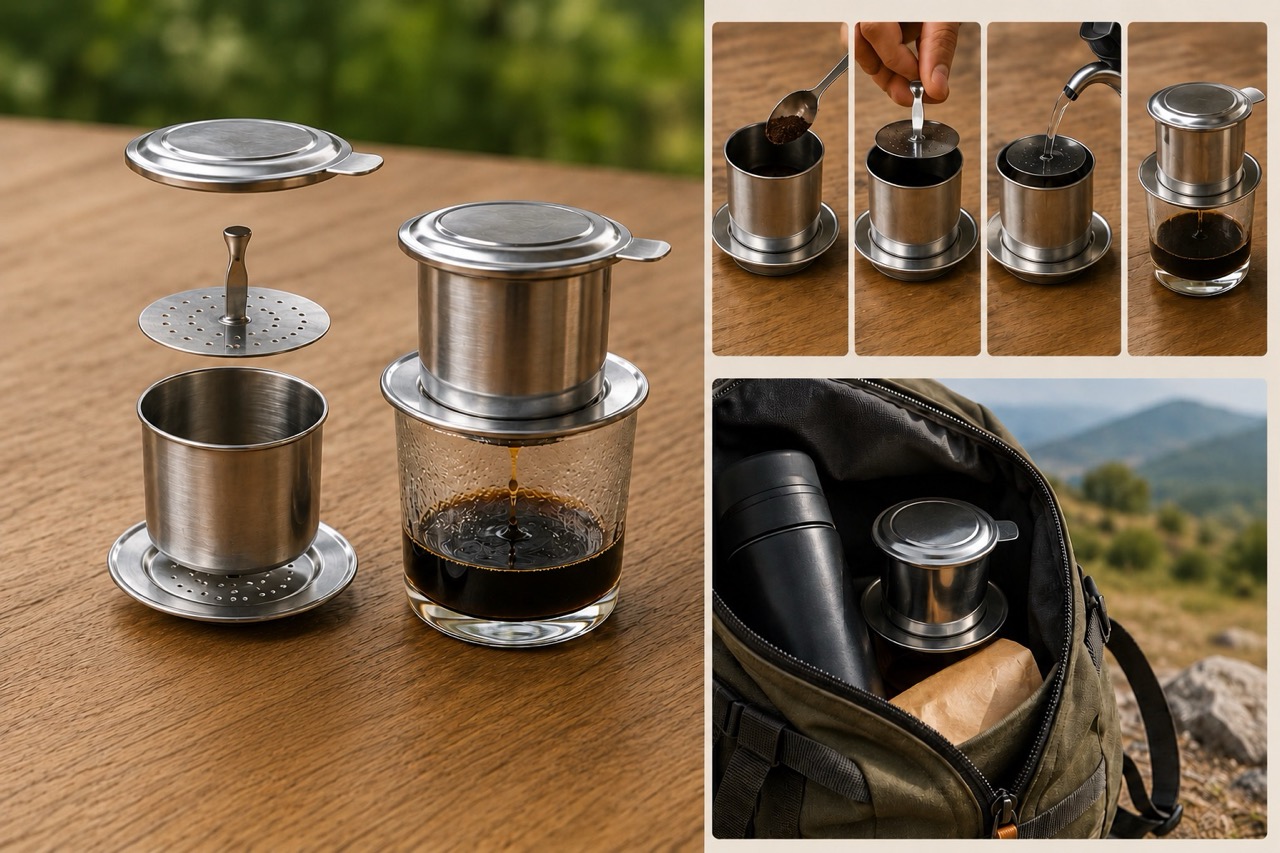
A close-up look at the structure of a Vietnamese coffee filter that you can easily take anywhere
The Vietnamese coffee filter is a masterpiece of minimalist yet effective mechanical design, consisting of 4 perfectly interlocking metal parts: Lid, Brew Chamber, Gravity Press, and Filter Base.
| Part | Definition & Description | Mechanical Function |
| 1. Lid | A circular part with a rim that fits snugly on the Phin. | Heat retention & Hygiene: Prevents heat loss, creating a closed environment for steam to circulate so the coffee grounds bloom evenly while preserving the aroma. |
| 2. Brew Chamber | A hollow cylinder with hundreds of micro-holes at the bottom. | Extraction Chamber: Holds the coffee grounds and water; creates light hydrostatic pressure to push hot water through the grounds. |
| 3. Gravity Press (Insert) | A perforated metal plate with a small handle. | Securing & Regulating: Levels the surface of the grounds, prevents them from floating, and ensures even water pressure. |
| 4. Filter Base | A metal plate with a rim and a filtration system at the bottom. | Support & Final Filter: Stabilizes the Phin on the cup, prevents fine sediment, and regulates the drip rhythm. |
The Vietnamese coffee filter operates on a hybrid principle of immersion and percolation. Thanks to the gravity press and the micro-perforated bottom, the tool acts as a natural mechanical filter. This system allows boiling water to slowly permeate the coffee grounds, automatically retaining the residue without the need for electricity or single-use paper filters.
The Phin is more than just an extraction tool; it is a symbol representing the leisurely, patient, and sophisticated lifestyle of the Vietnamese.
Unlike the culture of enjoying espressos quickly extracted by pressure machines, Vietnamese people consider the 3 to 5 minutes spent waiting for each dark drop to fall a precious moment of silence to start the day. From humble sidewalk stalls to luxurious spaces, the image of a Vietnamese coffee filter made of aluminum or stainless steel sitting atop a glass cup has become an inseparable part of daily cultural life.
Many wonder why the same beans produce a bolder and richer flavor when brewed with a Vietnamese coffee filter. The answer lies in the combination of two extraction principles: Immersion and Percolation.
Unlike paper filters where water passes through the grounds very quickly, the Phin acts as a mini “blooming chamber.”
After the immersion stage, natural gravity pulls the water through the coffee grounds to begin the dripping process.
Thanks to these ingenious mechanical principles, the Vietnamese coffee filter creates a cup with profound depth of flavor, requiring no complex techniques or sophisticated pressure machinery. It is the perfect choice for those seeking boldness, strength, and authenticity in every drop of coffee.
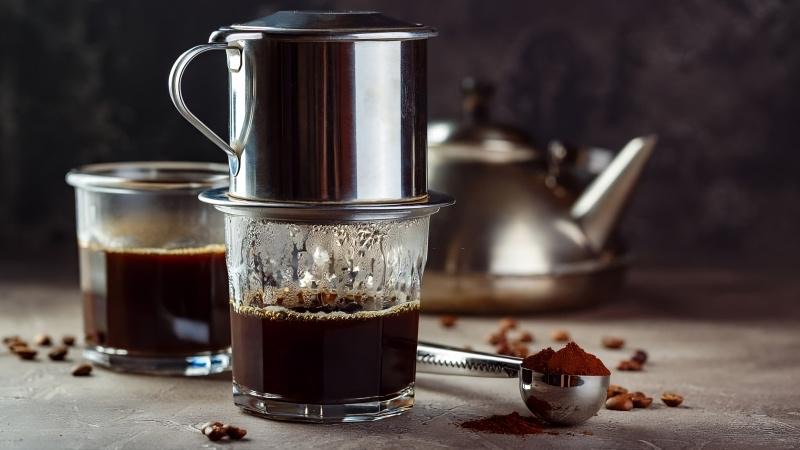
Simple tips for cleaning your Vietnamese coffee filter after use (Image source: Internet)
You can use a Phin to prepare a quick morning drink, take it camping, or use it to host guests at home.
Once you have the concentrated coffee extract, you can customize it with sugar, ice, or condensed milk.
Read more:
Robusta coffee vs. Arabica: The Ultimate Flavor War
How Many Grams of Coffee per Cup? Phin Guide
In Germany, many consumers and young people have begun seeking out the Vietnamese coffee filter to recreate the exact bold flavors they experienced during their travels to Vietnam.
The Phin experience in Germany is an inspiring cultural intersection, where Vietnam’s concentrated extraction technique meets the German appreciation for craftsmanship and authenticity. Although Germans are well-acquainted with drip coffee, they are increasingly captivated by the intense, energetic nature of the tiny filter. In a world dominated by automated machines, the ritual of waiting for each drop offers a rare sense of mindfulness and relaxation.
To truly win over coffee enthusiasts, the art of Vietnamese Phin brewing requires precision—from prioritizing dark roast beans to following the “golden ratio” of 1:4 to maintain full body without being diluted. Carefully blooming the coffee grounds before extraction is the key to releasing maximum natural aromas and a long-lasting aftertaste. For an excellent Phin coffee, Robusta is usually the preferred choice due to its strength and richness. While the original bitterness of Robusta may seem unfamiliar at first, when refined into specialties like iced milk coffee or salt coffee, it becomes a unique culinary bridge. For those seeking depth and a smoother profile, blending Arabica and Robusta to personal taste is the perfect solution.
Whether you seek a strong cup to kickstart your day or a quiet moment amidst the hustle and bustle, the Vietnamese coffee filter is an ideal companion. With its timeless mechanical design and contemplative manual brewing method, this small filter proves that authenticity and patience often yield the deepest satisfaction.
In Germany, VietNatur is proud to be the connecting bridge, bringing authentic traditional coffee filters and pure coffee directly to you—whether you are in Leipzig or anywhere else across Germany. Let the slow drip of each coffee drop open up a relaxing space, connecting you with Vietnamese coffee culture right in your own home.

Content-Mitarbeiterin