Vietnamese Drip Coffee: Pro Brewing Tips
Among the many modern brewing methods available today, Vietnamese phin drip coffee still holds a special place in daily life...
read more

FREE Express Shipping On Orders $99+

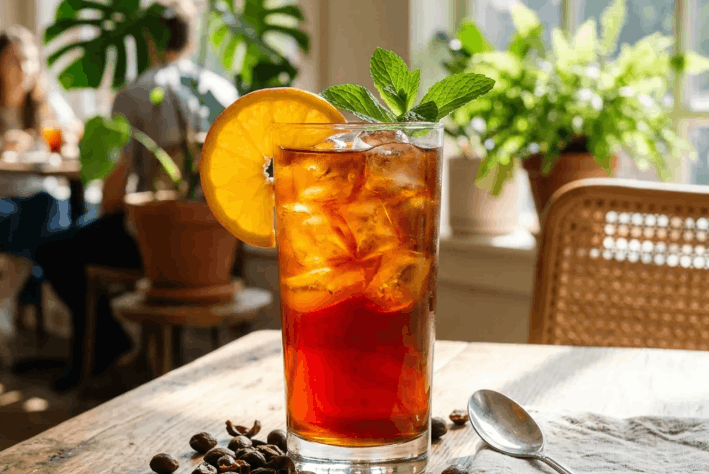
The low-temperature extraction technique always holds a special refinement. Patience during the brewing process not only helps retain the plant’s valuable biological properties but also creates a smooth water texture. This article will guide you on how to make Cold Brew Cascara with navel orange and cardamom. This combination brings a refreshing, balanced drink that is extremely ideal for quiet afternoons.
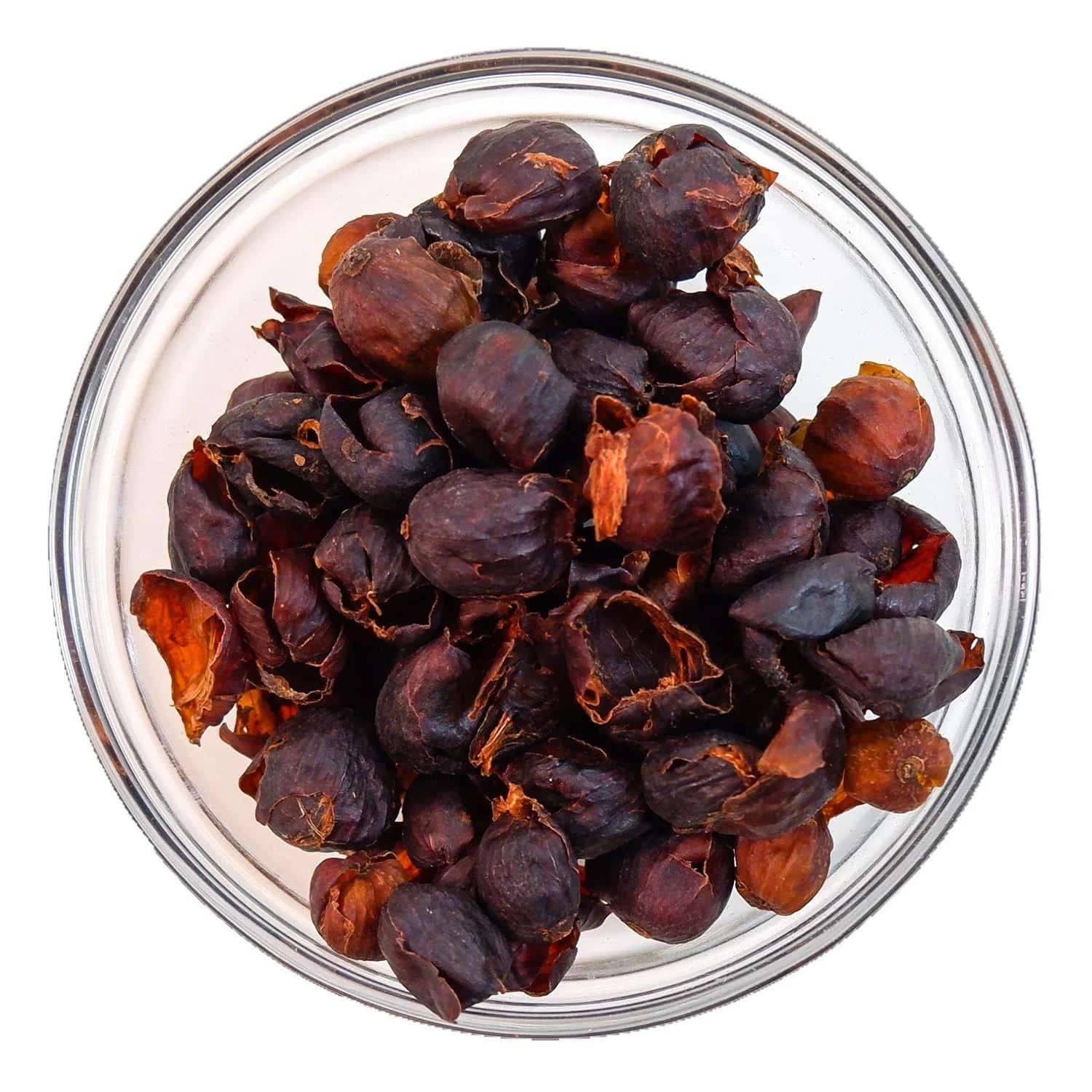
Dried Arabica cascara coffee husks. (Source: Internet)
The difference in this drink comes from understanding the ingredients and applying the right physical principles in brewing. The water temperature directly determines which compounds will be dissolved.
In Spanish, “cascara” means the outer shell or husk. In coffee agriculture, this term refers to the skin and pulp of the coffee cherry after the coffee bean has been extracted. Once considered an organic byproduct, cascara has now elevated itself into a premium brewing ingredient. However, not every type of husk can be used to make tea. Standard ingredients require a strict processing procedure.
At VietNatur, this process begins with harvesting only ripe Arabica cherries. Immediately after, the materials are put through an optical color sorting system to remove defective, unripe, or overripe cherries. The coffee cherries are then washed with pure RO water to ensure absolute hygiene and safety before depulping to separate the husk. The most crucial point that shapes the flavor lies in the next step: the husks are placed in a fermentation environment for exactly 8 hours. This process helps develop the fruity flavor profile clearly. Finally, the husks are dried and lightly roasted to completely stop the natural fermentation process, creating a perfect foundational ingredient.
Boiling water is a strong solvent that makes the extraction process happen faster. But this also leads to more tannins and bitter compounds being extracted. Conversely, the cold steeping technique uses low-temperature water, acting as a gentle solvent.
The slow osmosis over many hours helps selectively dissolve natural simple sugar molecules, organic acids with a delicate tartness, and volatile essential oils. As a result, Cold Brew Cascara possesses a clear, smooth texture. Low temperatures also inhibit the oxidation process, helping the beverage maintain its color and original flavor more stably than brewing it hot and letting it cool.
A refined beverage requires harmony between the main ingredient and catalysts. Choosing the right supplementary ingredients will help highlight the hidden flavor notes of the coffee husk. This clever combination creates a truly outstanding refreshing fruit drink.
Many people mistakenly believe that lemon or green orange can be used as a substitute. However, these fruits have a very high acid content, easily causing harshness in the throat and overpowering the tea’s aroma. Navel oranges possess a moderate amount of citric acid, bringing brightness to the water texture while maintaining smoothness. Specifically, the outermost epidermis of the navel orange contains a large amount of essential oils with a warm, sweet fragrance. When steeped in cold water for a long time, this essential oil will be released and envelop the tart notes of the berries, creating a perfect balance.
Cardamom is an ancient spice, famous for its complex flavor profile. It brings an interplay between a very mild spiciness, rustic woody notes, and elegant floral scents. Instead of boiling and evaporating the aroma, steeping crushed cardamom in cold water helps release the essential oils slowly. This flavor layer acts as a warm base, helping to connect the fresh scent of navel orange and the ripe plum flavor of the coffee husk.
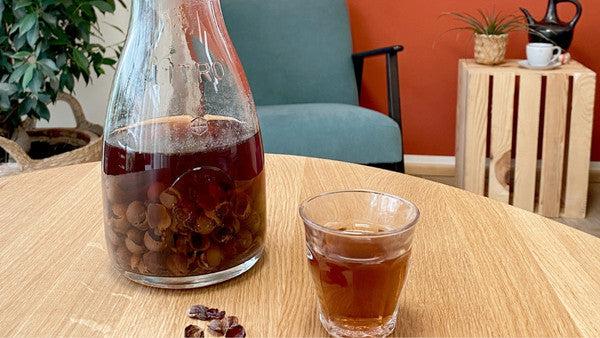
Cold brewing cascara in a glass jar to extract its flavors. (Source: Internet)
A successful cold brew tea recipe lies in the precise ratio of ingredients. The 1:25 ratio (weight of dry ingredients to water volume) is considered the optimal level for the beverage to have enough body without becoming cloudy or astringent.
Step 1: Clean the tools. Ensure the glass jar is washed and completely dry, with no tap water left.
Step 2: Layer the ingredients. Sequentially place the coffee husks, navel orange slices, and prepared cardamom pods at the bottom of the jar. Evenly distributing the ingredients helps optimize the contact area with water.
Step 3: The watering process. Slowly pour 500ml of pure filtered water into the container. You should pour in a circular motion so the water stream spreads evenly over the surface of the dry ingredients.
Step 4: Homogenize the state. Use a long spoon to stir very gently for a few rounds. This step is extremely important, aiming to let all the dry husks absorb enough water, avoiding the situation where ingredients float on top due to surface tension.
Step 5: Set temperature and steeping time. Close the jar lid very tightly and place it in the refrigerator, ensuring the temperature is stably maintained between 3 and 5 degrees Celsius. Proceed to steep for a minimum time of 8 hours and it can be extended up to 16 hours, depending on your taste. Steeping longer can change the intensity and astringency of the beverage.
Temperature and time are the two variables you need to control most strictly. Specifically as follows:
The steeping process should be stably maintained at a temperature of 3 to 5 degrees Celsius inside the refrigerator space. Keeping the temperature low limits the dissolution of astringency-causing compounds, while simultaneously inhibiting the growth of microorganisms in a steeping environment containing fresh fruit.
The minimum recommended steeping time for Cold Brew Cascara is 8 hours. If the steeping process ends below this time mark, the cold water solvent has not had enough time to dissolve the natural sugar compounds and the essential oil layers hidden inside the plant tissue. As a result, the beverage will be bland, lacking the necessary body, and the fruity flavor notes will not be able to fully blossom.
According to many brewing experts, 12–16 hours is a time frame you can start experimenting with for this recipe to achieve the best quality. This is considered the ideal time frame to help the flavor develop fully, keeping the water texture smooth without accommodating too many bitter compounds.
However, setting the time is not a rigid rule. Generally, steeping longer can alter the intensity and astringency, so adjust according to your senses. You can entirely choose when to end the steeping process based on your personal taste, relying on the following sensory characteristics:
You absolutely should not extend the steeping time beyond 18 hours. When steeped for too long, even in a cold water environment, the tannins present in the white pith of the orange and in the plant tissue of the coffee husk will begin to dissolve. This will leave an astringent taste clinging to the surface of the tongue, breaking the elegant structure of the beverage.
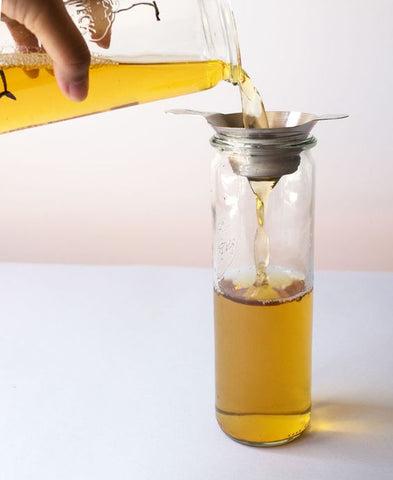
Gentle filtration helps keep the final drink clear and refreshing. (Source: Internet)
The process of separating the grounds requires care to keep the final finished product clear and allow it to be stored for a long time.
After completing the steeping time, you need to take the jar out of the refrigerator and proceed to strain it. Please use specialized filter paper or an ultra-fine mesh stainless steel sieve. Pour the entire mixture through the filter. An important note: Absolutely do not use a spoon to press, squeeze, or push hard on the navel orange slices and the tea grounds. Mechanical force will force the bitter essential oils and small sediments to fall into the water, clouding the color and causing bitterness in the finished product. Allowing the water to flow naturally through the filter will help Cold Brew Cascara maintain absolute purity.
A successful batch will have a brilliant, crystal-clear amber-red color. The olfactory sense will receive the fresh scent of orange peel blended with a bit of the warmth of cardamom. Upon tasting, the delicate tartness of plum and cherry passes quickly, making way for a natural, lingering smooth sweetness. Thanks to the sugar developed from the initial 8 hours of fermentation, you can drink it directly with ice cubes without needing to add refined sugar or syrup.
The extract, after being cleanly strained of grounds, needs to be poured into another tightly sealed glass jar and put back into the refrigerator. If the temperature is stable, you can store and use it gradually for about 3 to 5 days while the flavor remains unchanged.
For those who care about their health, clearly understanding the plant components present in their daily beverages is essential. A big plus is that to protect the original texture of Cold Brew Cascara, this drink does not use added artificial sweeteners.
In terms of stimulant content, the coffee cherry husk contains natural caffeine. However, this caffeine amount is many times lower when compared to roasted coffee beans. As a result, the beverage brings a gentle alertness and mental relaxation while being less likely to cause heart palpitations or insomnia, making it very suitable for the afternoon timeframe. Besides, fruit peels generally contain polyphenol groups. Although these compounds are noted by the scientific community for their antioxidant-supporting properties, we still need more large-scale clinical studies to conclude precisely about their medical benefits. However, increasing plant-sourced beverages that are transparent and free of refined sugar is always a positive and sustainable choice.
The cold extraction technique opens a creative space for users to fully approach the original flavor of agricultural products. With meticulousness in ratios and waiting time, Cold Brew Cascara not only preserves the precious essential oil layer but also brings a smooth, pure experience. If you want to brew this recipe yourself, the 100% ripe Arabica cascara ingredients, passed through an RO washing system and VietNatur’s standard 8-hour fermentation, are always ready to accompany you. Please visit our space at Cichoriusstraße 2, 04318 Leipzig, Germany, or visit the website to own high-quality brewing ingredients for your family.