Vietnamese Drip Coffee: Pro Brewing Tips
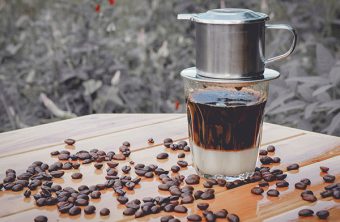
Among the many modern brewing methods available today, Vietnamese phin drip coffee still holds a special place in daily life...
read more

FREE Express Shipping On Orders $99+

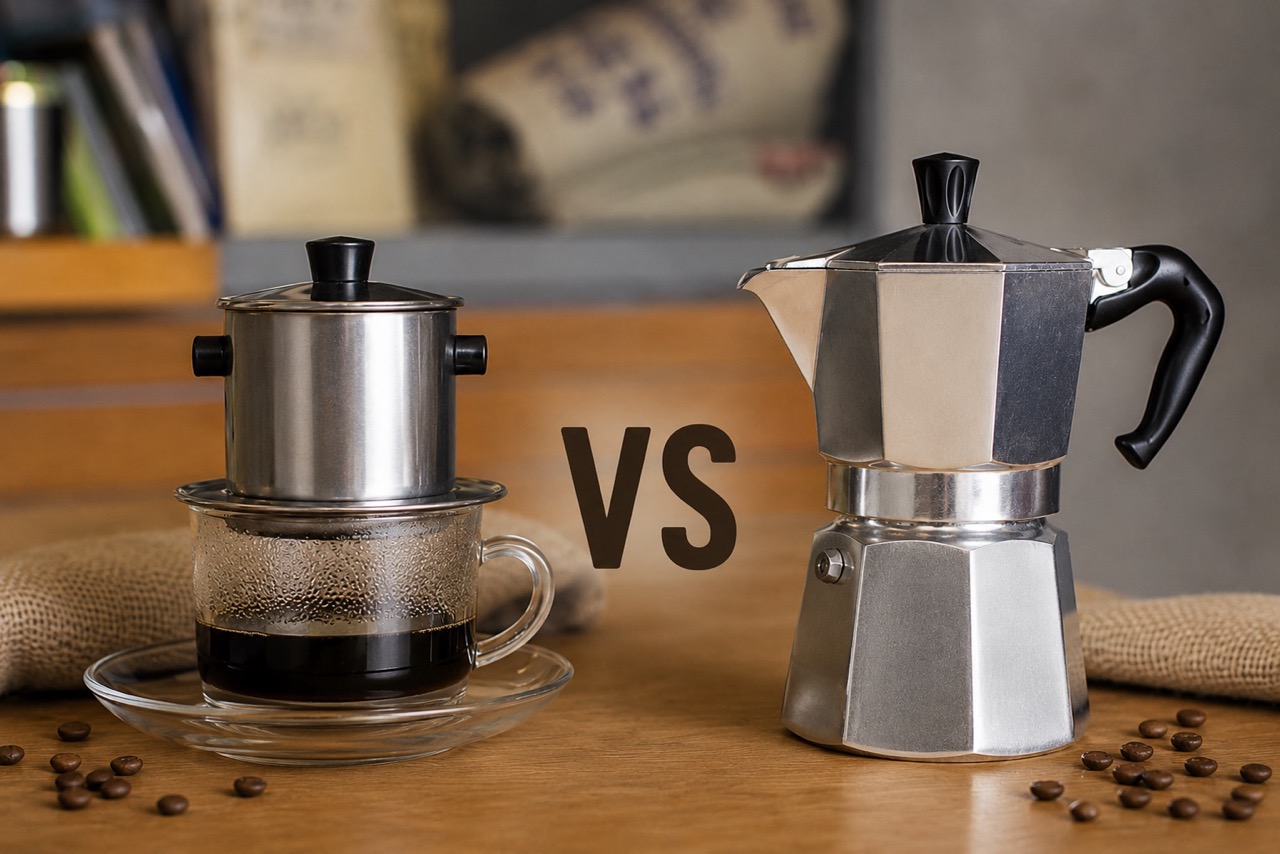
When packing for a camping trip, every gram of weight must be carefully calculated. Brewing a quality cup of coffee in the mountains requires equipment that is both minimalist and durable. Currently, the two manual brewing methods most frequently considered are the Italian Moka pot and the Vietnamese coffee filter. Both possess their own advantages in terms of flavor. However, when viewed purely through the lens of practical outdoor convenience, these two tools offer completely different experiences.
Coffee Phin or Moka Pot – Which Is the Perfect Choice for Your Outdoor Adventure? (Image source: Internet)
The first factor determining the comfort of a hiking trip or self-sufficient camping is the weight and volume of the luggage. Outdoor gadgets are constantly being improved to achieve maximum compactness, and this is where the traditional Vietnamese brewing tool shows a clear advantage thanks to its simple, lightweight, and easy-to-carry design.
A medium-sized traditional aluminum filter typically weighs only about 30 to 50 grams. The structure of the filter consists of four separate parts: the filter plate, the filter body, the press disk, and the lid. When packing, these parts can be disassembled and nested perfectly inside each other, or placed neatly inside a stainless steel drinking mug. The flat and thin structure ensures the filter takes up no significant space in a backpack. Even if you use a thicker stainless steel filter version, its weight remains minimalist, putting no pressure on the user’s shoulders.
Conversely, the Italian Moka pot is a thick piece of metal, usually cast from aluminum or high-grade stainless steel to withstand high pressure during boiling. The average weight of a small Moka pot (brewing 2-3 cups) ranges from 400 to 600 grams, which is more than 10 times heavier than an aluminum filter. In addition, its distinctive hourglass shape with a protruding handle makes the Moka pot a bulky item, making it very difficult to tuck neatly into small corners of an outdoor backpack. For those traveling by motorcycle or car, this might not be a major issue, but for trekkers prioritizing compactness, this discrepancy is a factor that must be weighed carefully.
The outdoor environment always contains weather variables such as strong winds, low ambient temperatures, or changing altitudes. These factors directly affect the performance of cooking equipment.
To enjoy outdoor coffee with a Moka pot, you must have a direct and strong enough heat source. The Moka pot operates on the principle of boiling water pressure pushing water from the lower reservoir through the filter basket containing coffee grounds up to the collection chamber above. This process requires a stable outdoor gas stove or a wood fire with a steady flame. On a windy day or when camping at high altitudes where atmospheric pressure drops, maintaining a flame strong enough to trigger the pressure in the Moka pot becomes more difficult, extending the waiting time and consuming more fuel.
Meanwhile, the filter method is completely independent of a direct heat source during the extraction process. You only need to boil water using any available means, from an ultra-lightweight kettle to taking hot water from a carried vacuum flask. The dripping process takes place completely naturally due to gravity. You do not need to worry about maintaining a flame under the equipment, nor do you have to fear the wind blowing out the stove midway and interrupting the brewing process. The simplicity of its operating principle helps this method achieve high stability under all outdoor weather conditions.
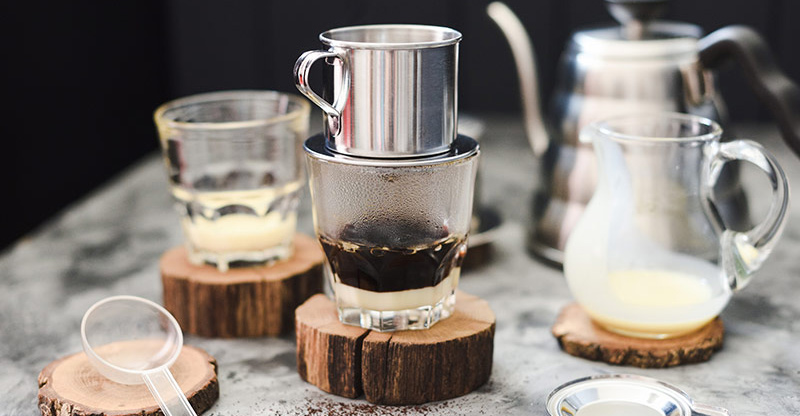
You can clean a coffee phin quickly and effortlessly (Image source: Internet)
A practical aspect often overlooked when buying camping gear is the cleanup process after eating and drinking. In forests or spontaneous campsites, clean water sources are usually limited, and protecting the environment by leaving no waste is the ultimate principle.
When using a filter, cleaning is very quick. The straight interior design of the filter and the smooth aluminum or stainless steel surface prevent coffee grounds from sticking tightly. You just need to tap the filter gently into a trash bag, and the entire coffee puck will fall out easily. After that, only a small amount of water is needed to rinse it out, leaving the filter completely clean and ready for the next use. Because the aluminum filter is thin, its heat dissipation is extremely fast. Less than a minute after the last drop falls, the filter has cooled down completely, allowing you to clean it with bare hands and pack it away immediately without fear of burns.
The Moka pot, however, brings a much more complicated cleaning experience in outdoor conditions. Due to its thick metal construction designed to hold pressure, the entire body retains heat for a long time after brewing. You have to wait a fairly long time for the pot to cool down, or force-cool it by pouring cold water over the outside, which wastes scarce clean water. Disassembling the two parts of the pot body while it is still hot also poses a risk of burning your hands. Additionally, the filter screen and rubber gasket inside the Moka pot easily trap fine coffee grounds. If not rinsed thoroughly under a strong stream of water, these remnants will get stuck, leading to mold over time and affecting the flavor of subsequent brews.
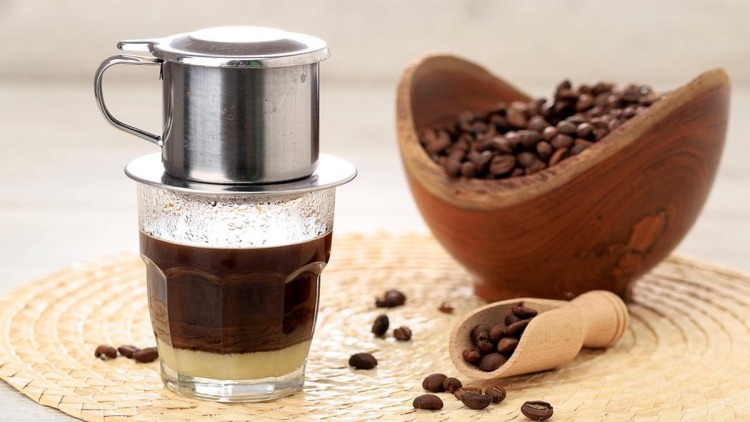
What could be better than enjoying a rich, flavorful cup of coffee surrounded by mountains and forests? (Image source: Internet)
Alongside convenience, the quality of the outdoor coffee cup remains the ultimate goal for travelers. These two tools represent two completely different flavor profiles.
The Moka pot delivers a highly concentrated cup of coffee with a heavy body and a light crema layer similar to Espresso, thanks to mechanical pressure. The extraction process happens quickly, usually taking only 2 to 3 minutes once the water begins to boil. This is the right choice for those who love bold coffee and want to combine it with fresh milk to create Lattes or Cappuccinos right at the tent.
In contrast, the filter utilizes an immersion and free-drip filtration method. The extraction time is longer, usually taking 5 to 7 minutes. The result is an extremely concentrated extract that carries the authentic characteristics of the coffee beans, particularly suited for traditional Robusta beans. For many campers, sitting and watching each coffee drop fall slowly amidst the quiet space of the mountains and forests is a relaxing, therapeutic experience, turning a time disadvantage into a major plus for a lifestyle experience.
To provide you with the most comprehensive overview when choosing between these two product lines for your upcoming trip, below is a detailed comparison table:
| Comparison Criteria | Vietnamese Coffee Filter | Italian Moka Pot |
| Weight | Ultra-light (30g – 50g) | Heavy (400g – 600g) |
| Compactness | Nested parts, flat and thin | Bulky block, protruding handle |
| Heat Source Requirement | Only requires available hot water from any source | Requires a direct, continuous, strong flame |
| Cooling Speed | Very fast (under 1 minute) | Slow (thick metal retains heat) |
| Grounds Cleaning | Tap gently to clean, easy to rinse | Must unscrew threads, grounds easily trap in rubber gasket |
| Best Suited For | Compact Trekking, Hiking, Backpacking | Motocamping, Glamping, Car camping |
Looking at the comparison table, it is clear that each tool has an optimal application space. However, when judged against the standards of outdoor travel, the Vietnamese coffee filter—with its lack of mechanical parts, simplicity, lightweight nature, and portability—always holds a superior advantage for campers who love freedom and flexibility.
In conclusion, choosing brewing equipment for camping is always a balance between personal preference and the practical conditions of the trip. The Italian Moka pot offers a bold cup of coffee quickly but comes with strict heat source requirements and bulky luggage weight. Meanwhile, the Vietnamese coffee filter proves its exceptional value in terms of simplicity, lightweight design, and portability when operating in the wild. If you are someone who prioritizes compactness and minimalism for your backpack, this traditional filter is the most ideal companion.
See more:
Vietnamese Drip Coffee: Pro Brewing Tips
Is coffee healthy? Read before you sip
Lightweight Vietnamese Coffee Filter for Camping