Vietnamese Drip Coffee: Pro Brewing Tips
Among the many modern brewing methods available today, Vietnamese phin drip coffee still holds a special place in daily life...
read more

FREE Express Shipping On Orders $99+


The choice of filtering tool significantly affects the components that are retained or make their way into the final beverage. When enjoying phin coffee, users often experience a distinctive texture compared to other methods. Instead of attributing this entire experience to a single factor, analyzing the interaction between filter materials, flow mechanisms, and chemical components provides a more objective perspective. By comparing this traditional method with the espresso system, we can clearly understand why these two techniques produce entirely different spectrums of mouthfeel.

The filtration mechanism of Vietnamese Phin coffee (Source: Internet)
In the art of extraction, the filter acts as a physical barrier, determining which micro-elements are allowed into the drink. Unlike the pour-over method, a metal filter does not retain fine particles and certain lipid components in the same way as a paper filter. The difference in structure and particle retention capabilities between metal and paper filters directly affects the composition that enters the beverage. Paper filters have a complex cellulose fiber network that tends to adsorb a significant portion of lipids and diterpenes, while almost completely blocking suspended solid particles.
Conversely, the metal filter system features a mechanically perforated structure. A metal filter allows more fine particles and certain lipid components to pass through compared to a paper filter. When applying the phin coffee technique, the water flow is not subjected to mechanical intervention. Unlike espresso, which uses pressure generated by a pump, this method relies primarily on gravity to create flow through the bed of grounds.
The combination of natural flow and the size of the metal filter holes allows a certain percentage of insoluble compounds to travel down into the cup. The presence of these micro-particles and lipids is one of the factors that can contribute to a thicker and bolder mouthfeel, shaping the fundamental physical structure of the beverage.
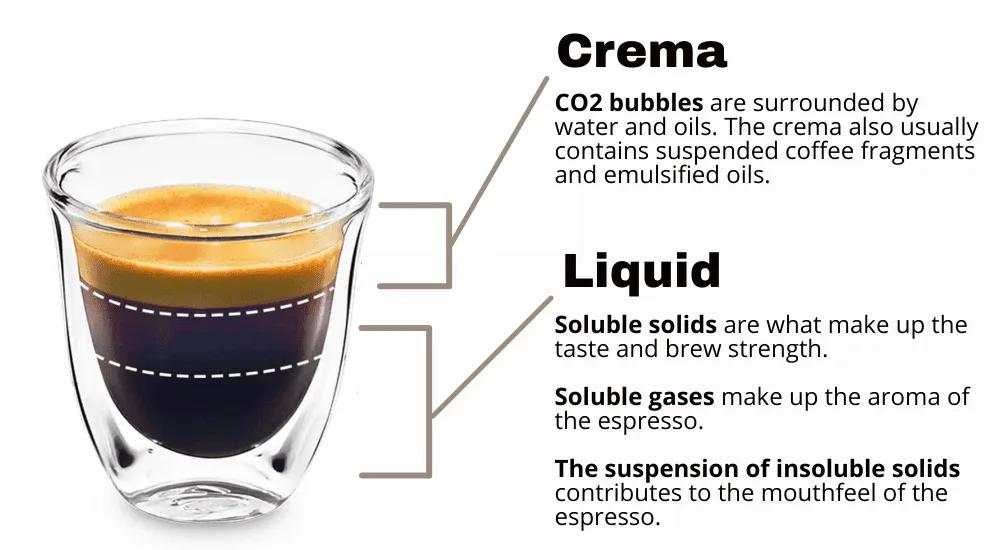
Crema and coffee oils contribute to the differences in the overall tasting experience (Source: Internet)
The clearest difference between the traditional metal filter method and espresso lies in the surface formation mechanism and the distribution of lipids, including coffee oils.
Crema is the foam layer formed during espresso extraction, in which CO₂ released from the roasted materials plays a crucial role. Surface compounds within the bean structure (such as proteins and polysaccharides) contribute to the formation and stabilization of this foam structure. The foaming process typically occurs under high-pressure conditions; although 9 bar is a common parameter in commercial machines, the development of pressure profiling techniques shows this is not the only condition for crema to form.
Meanwhile, the natural drip method lacks the characteristic crema-forming process of espresso. Due to the absence of forced pressure, CO₂ escapes gently during the blooming phase instead of being trapped into an emulsion system. An amount of lipids and fine particles can pass through the metal filter and disperse directly into the water phase.
Although it does not create a porous foam layer, the presence of coffee oils, colloids, and fine particles can contribute to a rounder, thicker, and more lingering sensation in the oral cavity. This creates a different type of mouthfeel compared to espresso. It is worth emphasizing that both espresso and filter methods contain lipids; some academic analyses even indicate that the lipid content in espresso can be higher than in some paper filter techniques, showing that fats contribute to mouthfeel under various physical states.
To scientifically evaluate the liquid’s structure, clearly distinguishing between the dissolved and suspended parts is absolutely necessary. TDS (Total Dissolved Solids) is an indicator reflecting the concentration of dissolved solids in the water portion. It includes components such as organic acids, sugar molecules, minerals, and caffeine. These substances not only establish the foundation for flavor, acidity, and bitterness, but also contribute to the overall feel of the beverage. However, TDS is not the sole variable determining the liquid’s thickness.
Besides dissolved substances, the beverage also contains fines. Fines are very small material particles formed during the grinding process, which include minute fragments of the plant cell structure. These micro-particles do not dissolve in the solvent but are small enough to pass through the perforated holes at the bottom of the filter.
In sufficient quantities, fine particles can contribute to a slightly gritty or cloudy sensation in the mouth (grittiness). The presence of these components—including the concentration of dissolved solids, the lipid emulsion system, and suspended micro-particles—can contribute to a fuller and heavier mouthfeel. The body (thickness) of the beverage, therefore, is the result of this mechanical and chemical resonance, rather than coming from a single cause.
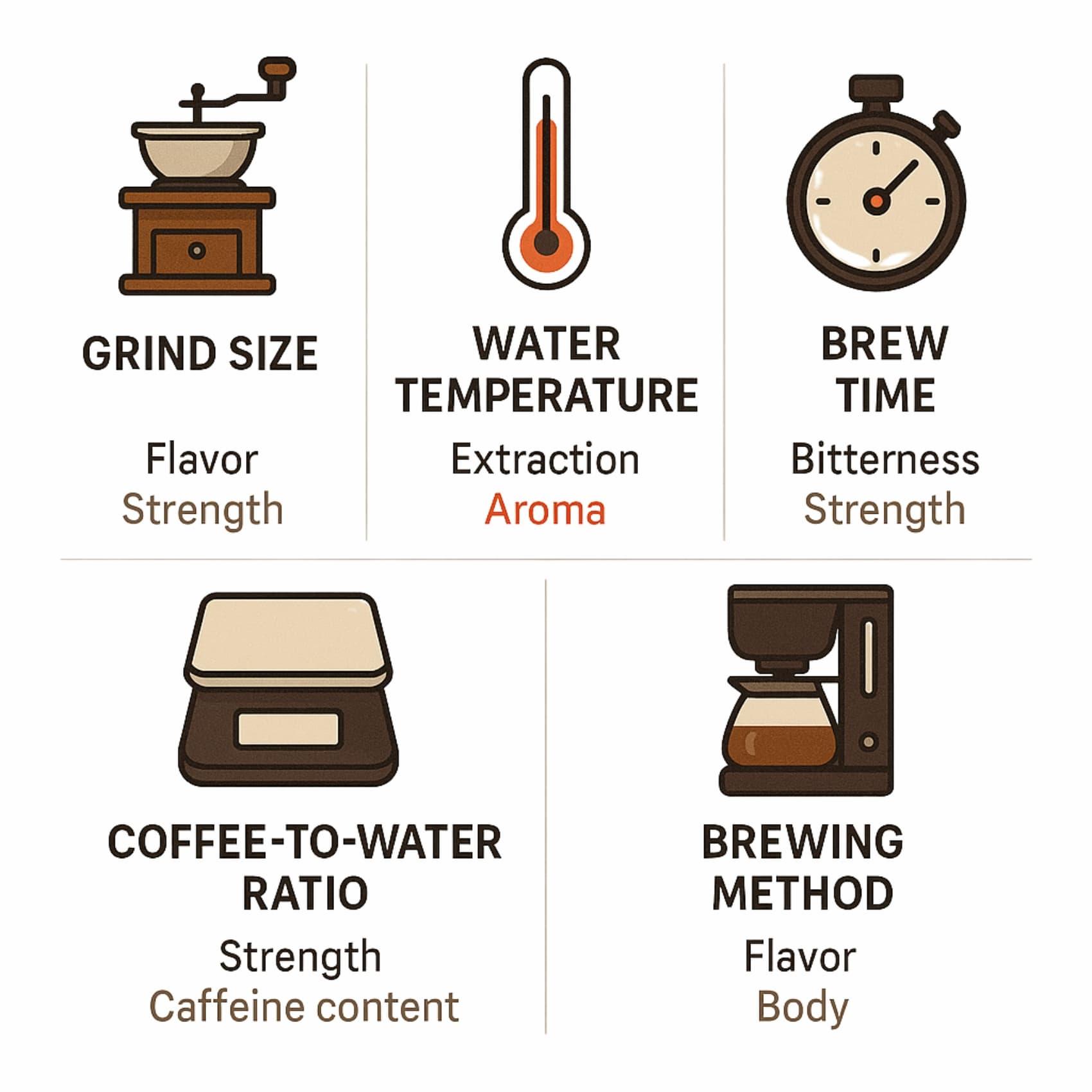
Grind size and brewing techniques directly influence the structure and flavor of coffee (Source: Internet)
One of the standout characteristics when approaching the Vietnamese coffee filter is the flexibility during the manipulation process. Instead of being bound by rigid time standards, the actual extraction parameters vary greatly depending on the brewer and physical conditions.
Many believe this method requires a fixed drip rate, but in reality, there is no single drip rate scientifically proven to be ideal for all devices. The flow time depends on the interaction of multiple variables: the dose of grounds, grind size, the volume of water poured, the specific design of each filter type (hole size, metal thickness), tamping force, and the blooming of CO₂ gas. Grind size directly affects hydraulic resistance; grinding too fine easily causes clogging, while grinding too coarse makes the water run through quickly, leaving insufficient time to dissolve the necessary compounds.
Water temperature is also a variable with a strong impact. Water temperatures ranging from 90–95°C are commonly used in many methods and significantly affect the extraction rate of dissolved compounds. However, maintaining this temperature level does not mean unconditionally maximizing the solid content. Temperature adjustments must be calibrated alongside particle size and water ratio to control the dissolution rate, helping to maintain a balanced body structure without intensifying harsh bitterness.
See more:
The final factor, yet one that plays a foundational role in shaping mouthfeel, is the biological and chemical nature of the roasted coffee beans. The raw material’s ability to yield lipids and dissolved compounds depends heavily on its genetic structure and the intervention of temperature.
Lipid content varies among plant varieties and is also influenced by the roasting process, processing, and the source of the raw materials. An overview analyzing scientific data records an average of about 12.3% lipids in Arabica and 10.5% in Robusta. However, these figures serve only as a general reference; the actual variance changes significantly depending on the specific varietal, the cultivation climate zone, and post-harvest processing methods.
Besides the genetic factor, the heat treatment process acts as a catalyst that alters the physical structure of the bean. Roasting changes the porosity, cell structure, and the state of many compounds within the bean, thereby affecting the extraction process during brewing. This morphological transformation creates internal microcracks, allowing water to penetrate deeper and dissolve the endosperm structure more effectively. It is precisely this understanding of porosity and chemical transformation during roasting that helps technicians optimize grind size and brewing methods, thereby directly impacting the final liquid structure.
The distinctive experience of phin coffee does not stem from a single miracle or a fixed recipe. The feeling of fullness in the oral cavity is the result of a complex interaction between the filtering method, grind size, extraction level, and various components in the beverage, including suspended fine particles, natural colloids, and lipids. Comparing it with the crema formation mechanism of espresso helps us better understand how physical conditions such as gravity, pressure, and filter materials shape the sensory structure. Mastering these scientific principles not only helps in better controlling brewing variables but also enhances the ability to appreciate the rich diversity of the beverage world.