Crispy baguettes, juicy lemongrass pork, savoury pâté and crunchy pickled vegetables: bánh mì brings together everything you could want in a sandwich. Fresh coriander, chilli and creamy Vietnamese mayonnaise complete the flavours. With this recipe, you can recreate Vietnam’s beloved street-food classic at home, using ingredients available in Germany.
1. Origins and Food Culture
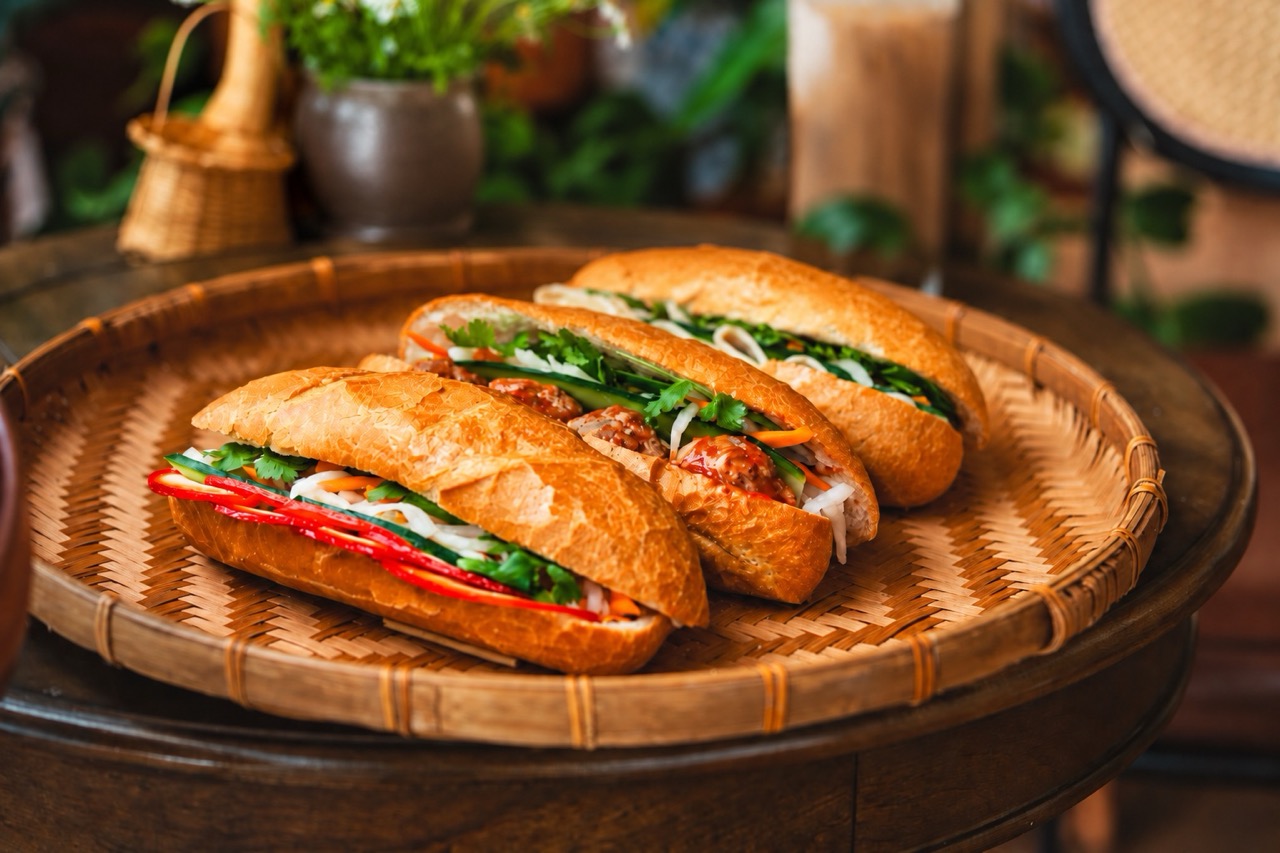
Bánh mì is one of Vietnam’s most iconic street foods. It combines a baguette influenced by French food culture with distinctly Vietnamese ingredients and flavours.
The grilled lemongrass pork version is especially popular in southern Vietnam, where its appeal lies in the balance of salty, sweet, tangy and spicy flavours.
2. Flavour and Texture
A crisp baguette crust surrounds a light, airy interior. Inside, juicy lemongrass-marinated pork with rich grilled flavours meets savoury liver pâté and creamy mayonnaise.
Pickled daikon and carrots add a sweet-and-sour freshness and a satisfying crunch, while cucumber, coriander and fresh chilli round out the sandwich.
3. Difficulty
Difficulty: Intermediate
Marinating and grilling the pork takes a little patience. Making Vietnamese mayonnaise requires adding the oil slowly while whisking continuously to create a smooth, stable emulsion.
4. Ingredients
Serves 4 — makes 4 sandwiches
Bread and Toppings
- 4 small baguettes, such as mini baguettes or demi-baguettes
- 100–150 g liver pâté
- 1 cucumber
- ½ bunch fresh coriander
- 1 fresh chilli
- A few drops of Maggi seasoning or soy sauce, optional
For the Grilled Lemongrass Pork
- 500 g pork shoulder
- 3 tbsp finely chopped lemongrass
- 2½ tbsp sugar, approximately 30–32 g
- 1½ tbsp fish sauce, approximately 22 ml
- 2 tsp ground black pepper
- 1 large garlic clove, finely chopped
- 2 shallots, finely chopped
- 2 tbsp sesame oil, approximately 30 ml
- 2 tsp dark soy sauce, approximately 10 ml
For the Pickled Vegetables
- 150 g daikon or white radish
- 100 g carrots
- ½ tsp salt
- 1 tsp sugar for massaging the vegetables
- 60 g sugar for the pickling liquid
- 150 ml white vinegar, not concentrated vinegar essence
- 110 ml warm water
For the Vietnamese Mayonnaise
- 120 ml neutral-flavoured vegetable oil
- 1 large shallot
- 2 large garlic cloves
- 3 egg yolks, preferably pasteurised and at room temperature
- ¼ tsp salt
- 1 tbsp pork lard or rendered chicken fat, optional
5. Instructions
Step 1: Prepare the Pickled Vegetables
- Cut the daikon and carrots into slightly thick matchsticks. Avoid shredding them too finely so they retain their crunch.
- Place the vegetables in a bowl with ½ tsp salt and 1 tsp sugar. Massage with your hands for about 3 minutes until they soften slightly and release some water.
- Transfer to a colander, rinse under cold running water and drain. Gently squeeze out any excess water.
- Mix 60 g sugar, 150 ml white vinegar and 110 ml warm water until the sugar has completely dissolved.
- Place the vegetables in a clean jar and cover completely with the pickling liquid. Leave for at least 1 hour before serving. Keep refrigerated and always use clean utensils when removing the vegetables.
Step 2: Marinate the Pork
- Cut the pork shoulder into slices approximately 0.5–0.6 cm thick. If the slices are large, cut them into pieces about 5–7 cm long for easier grilling. Avoid cutting them too thin or too small, as they may dry out during cooking.
- In a large bowl, combine the lemongrass, sugar, fish sauce, pepper, garlic, shallots, sesame oil and dark soy sauce.
- Add the pork and mix thoroughly, making sure every piece is evenly coated.
- Cover and refrigerate for at least 1–2 hours. For a deeper flavour, marinate overnight in the fridge.
Step 3: Make the Vietnamese Mayonnaise
- Peel and slice the shallot and garlic. Place them in a cold pan with 120 ml vegetable oil. Heat over medium-high heat until the shallot and garlic are golden and fragrant. Strain through a fine sieve and allow the infused oil to cool completely to room temperature.
- Place the egg yolks in a bowl and whisk vigorously until they become paler and smooth.
- Add the cooled shallot-and-garlic oil drop by drop at first, then in a very thin stream, whisking continuously until the mixture becomes thick and creamy.
- If using pork lard or chicken fat, melt 1 tbsp and allow it to cool until it is still liquid but no longer warm. Slowly whisk it into the mayonnaise.
- Add ¼ tsp salt and mix well. Transfer to a clean, airtight container and refrigerate immediately. Since the yolks are not cooked, pasteurised yolks are recommended. Prepare the mayonnaise as close to serving as possible and use it promptly.
Step 4: Grill the Pork
- Preheat a barbecue, grill pan or regular frying pan.
- Cook the pork in batches on both sides until fully cooked. The surface should be golden brown with lightly charred edges. Avoid overcooking so the meat stays juicy.
- Remove the pork and let it rest for a few minutes before assembling the sandwiches.
Step 5: Assemble the Bánh Mì
- Slice the cucumber thinly lengthways. Wash and dry the coriander, and thinly slice the chilli.
- Split the baguettes lengthways without cutting all the way through. If desired, briefly warm them in the oven for a hot, crispy crust.
- Spread the inside of each baguette with Vietnamese mayonnaise, followed by a layer of liver pâté.
- Add the grilled lemongrass pork.
- Top with well-drained pickled vegetables, cucumber, coriander and chilli.
- Add a few drops of Maggi seasoning or soy sauce to taste. Close the sandwiches and enjoy immediately!
6. Buying Ingredients in Germany
- Bread: Look for small wheat baguettes in supermarkets or bakeries, labelled Mini-Baguette, Demi-Baguette or Weizenbaguette. Choose bread with a crispy crust and a light, airy interior.
- Liver pâté: A smooth, spreadable Leberpastete works well. Look in the chilled section, at the deli counter or among canned products.
- Vietnamese ingredients: Lemongrass, daikon, dark soy sauce and fish sauce are available in many Asian grocery shops, often called Asia-Märkte. Lemongrass may also be labelled Zitronengras.
- White radish: If you cannot find daikon, use white radish from a supermarket or greengrocer.
- Pasteurised egg yolks: Look for yolks explicitly labelled pasteurisiert. Ordinary eggs in their shells are not automatically pasteurised.
7. Frequently Asked Questions
Why must the shallot-and-garlic oil cool completely before making mayonnaise?
Hot oil can partially cook the egg yolks, creating lumps and making it difficult to form a smooth emulsion. Use both the oil and yolks at room temperature, and add the oil slowly while whisking continuously.
Why massage the vegetables with salt and sugar before pickling?
Salt and sugar draw out some of the vegetables’ natural moisture. Massaging makes the daikon and carrots more flexible and helps mellow the radish’s pungent flavour. The vegetables can then absorb the sweet-and-sour pickling liquid while retaining a pleasant crunch.
Why does the pork curl in the pan, and how can I prevent it?
Pork shoulder often contains connective tissue and thin edges of fat that contract when heated, causing the slices to curl.
Before marinating, make one or two small cuts along the outer edge of each slice. This helps the meat lie flatter and maintain more even contact with the pan.
Content Manager
Mit über 10 Jahren Erfahrung im Schreiben über Kulinarik, Reisen und E-Commerce glaube ich daran, dass die Kraft von Worten in ihrer Authentizität liegt. Mein Ziel bei VietNatur ist es, einen ganzheitlichen Blick auf vietnamesische Agrarprodukte zu vermitteln — von den realen Produkten selbst bis hin zu den kulinarischen Kulturgeschichten, die sich dahinter verbergen. Ich bin überzeugt, dass Transparenz über die Herkunft internationalen Kundinnen und Kunden hilft, den Produkten mehr Vertrauen und Wertschätzung entgegenzubringen.