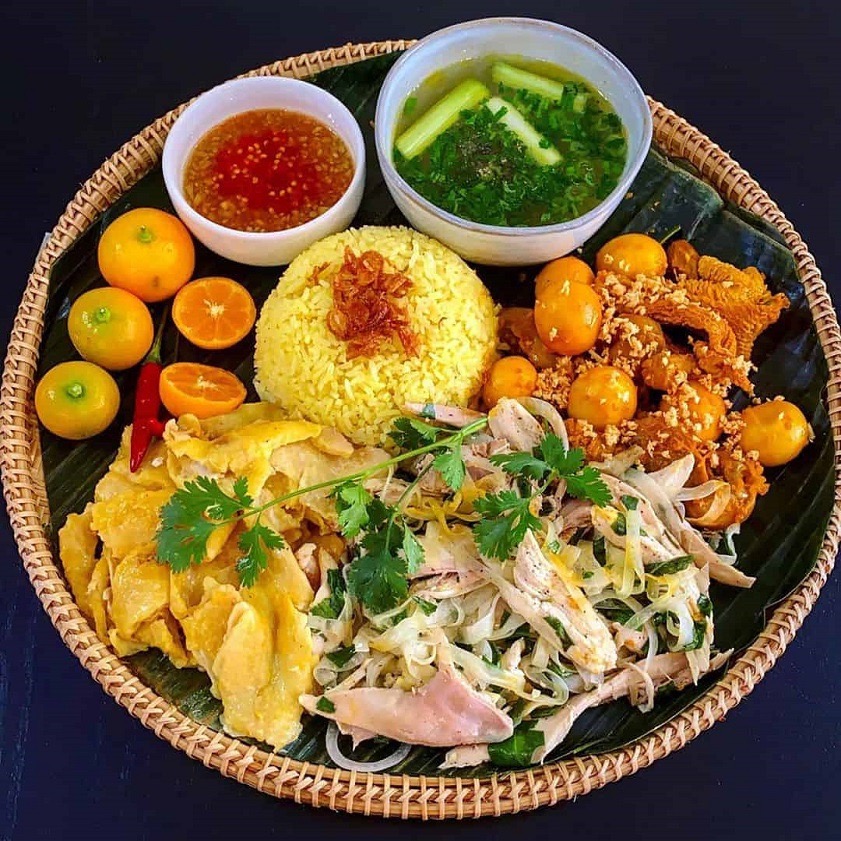
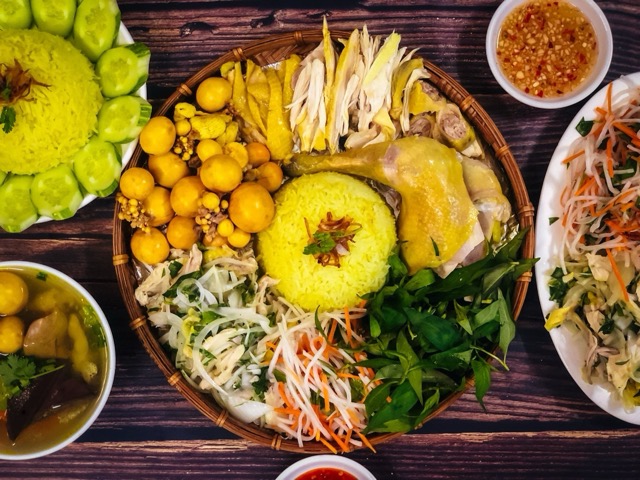
Golden rice, tender shredded chicken and a crunchy green papaya salad: Cơm Gà Hội An brings the flavours of central Vietnam to your table. This beloved dish combines savoury chicken rice with fresh herbs and a rich sauce known locally as “nước mạ”.
The secret lies in cooking the rice in homemade chicken broth, allowing every grain to absorb its flavour. With a little preparation, you can recreate this Vietnamese speciality in your own kitchen. Follow our step-by-step Hoi An chicken rice recipe, complete with tips for finding the ingredients in Germany.
1. Origins and Food Culture
Cơm Gà Hội An is one of the best-known specialities of Hội An, in the Quảng Nam region of central Vietnam. It is closely connected to the food culture of the historic trading town beside the Hoài River.
The dish makes thoughtful use of its ingredients. The chicken broth is used to cook the rice and prepare the savoury sauce with chicken giblets. Vietnamese coriander and a refreshing vegetable salad complete the meal.
Together, these simple ingredients create a balance of rich, fresh and gently tangy flavours.
2. What Does Hoi An Chicken Rice Taste Like?
The rice is golden and fragrant, with a savoury richness from the chicken broth. Turmeric gives it its characteristic colour and a subtle earthy flavour.
The tender shredded chicken pairs beautifully with Vietnamese coriander, also called rau răm, which adds a distinctive peppery freshness. Green papaya, carrot and thinly sliced onion provide crunch and a refreshing tang.
A rich chicken giblet sauce seasoned with black pepper brings everything together. Spoon it over the rice to taste.
3. Difficulty
Difficulty: Medium
Servings: 4
The individual steps are manageable, but the recipe involves several components: poaching the chicken, toasting and cooking the rice, preparing the sauce and making the salad.
Tip: Prepare the vegetables while the chicken simmers. Add the salad dressing shortly before serving.
4. Ingredients for 4 People
For the chicken and broth
- 1 whole oven-ready chicken, preferably with separately packed giblets
- 1 piece of fresh ginger
- 5 small shallots
- 2 tbsp turmeric powder
- Salt
- Water
For the rice
- 250 g uncooked rice, such as jasmine rice
- 3 garlic cloves
- 1 tbsp neutral cooking oil
- Reserved chicken broth, quantity according to your rice variety and cooking instructions
For the chicken giblet sauce
- Cleaned chicken giblets, such as heart, liver and gizzard
- 2 small shallots
- 2 garlic cloves
- 1 tbsp annatto oil
- Approximately 400–500 ml chicken broth
- 1 tbsp fish sauce, adjusted to taste
- 1 tbsp sugar
- 1 tsp ground black pepper, adjusted to taste
- Chicken stock powder or granules, used sparingly if needed
For the green papaya and carrot salad
- Approximately 300 g green papaya, weighed after peeling and deseeding
- 1 carrot
- 1 onion
- 2 tbsp lime juice
- 1 tbsp sugar
- Approximately ½–1 tsp salt, to taste
- Ice water for soaking
To serve
- A small handful of Vietnamese coriander, also called rau răm
- Fresh chilli slices, optional
5. Step-by-Step Instructions
Step 1: Prepare and poach the chicken
- Remove the packaging and any bag of giblets from inside the chicken. Keep the giblets covered in the refrigerator until needed. Pat the chicken dry with kitchen paper if necessary. Do not wash raw poultry.
- Rub the chicken with 1 tbsp turmeric powder and leave it in the refrigerator for about 10 minutes.
- Peel and slice the ginger. Peel the 5 shallots.
- Place the chicken in a large pot and add enough water to just cover it. Add the ginger, shallots, remaining turmeric and a little salt.
- Bring to the boil, then reduce the heat and simmer gently. The cooking time depends on the chicken’s size and weight.
- Check the thickest parts of the breast and thigh with a food thermometer, avoiding contact with the bone. The chicken must reach a core temperature of at least 70°C for 2 minutes.
- Remove the fully cooked chicken and let it cool briefly until comfortable to handle. Remove the meat from the bones and shred it into bite-sized pieces. Reserve the broth for the rice and sauce.
Step 2: Cook the fragrant chicken rice
- Rinse the rice and drain thoroughly.
- Peel the 3 garlic cloves and cut them into thin slices.
- Heat the cooking oil in a frying pan. Gently fry the garlic until fragrant without letting it brown too much.
- Add the drained rice and stir briefly until the grains look lightly glossy.
- Transfer the rice to a rice cooker. Add the appropriate amount of chicken broth, following the instructions for your rice variety and rice cooker.
- Cook using the normal rice setting, then gently fluff the rice before serving.
Without a rice cooker: Cook the rice in a covered saucepan according to the packet instructions, replacing the water with chicken broth.
Step 3: Make the chicken giblet sauce
- Use properly cleaned, kitchen-ready giblets. Pat them dry and cut into small pieces.
- Peel and finely chop the remaining 2 shallots and 2 garlic cloves.
- Heat the annatto oil in a pan and gently fry the shallots and garlic until fragrant.
- Add the giblets and stir-fry.
- Season with fish sauce, sugar and black pepper. Add stock powder sparingly, as the broth may already be seasoned.
- Pour in approximately 400–500 ml chicken broth. Simmer gently until the giblets are fully cooked. Gizzards may need longer, so start cooking them earlier if necessary.
- Taste and adjust the seasoning. The sauce should be rich and savoury, with enough liquid to spoon over the rice.
Step 4: Prepare the green papaya salad
- Peel and deseed the green papaya. Finely shred approximately 300 g of the flesh.
- Peel and shred the carrot. Peel the onion and slice it very thinly.
- Soak the vegetables in ice water for about 15 minutes to help keep them crisp and soften the onion’s sharpness.
- Drain thoroughly.
- Mix the lime juice, sugar and initially ½ tsp salt.
- Toss the vegetables gently with the dressing shortly before serving. Taste and adjust as needed.
Step 5: Assemble and serve
- Divide the golden rice between four plates.
- Arrange the shredded chicken on top or alongside.
- Add a serving of green papaya and carrot salad and some washed Vietnamese coriander.
- Garnish with fresh chilli slices if desired.
- Serve the hot giblet sauce in small bowls on the side.
Spoon a little sauce over the rice and combine the different components as you eat.
6. Finding the Ingredients in Germany
For fresh herbs and green papaya, check with your local Asian grocery store before visiting. Availability varies by shop and delivery.
| Ingredient |
What to look for in Germany |
| Green papaya |
Look for “grüne Papaya” or “unreife Papaya” in the fresh produce section of an Asian grocery store. Ripe papaya is sweeter and softer. |
| Vietnamese coriander |
Often labelled “vietnamesischer Koriander” or “Rau Răm”. Its flavour differs from regular coriander. |
| Annatto oil |
Look for “Annatto-Öl”, “Annatto-Samen” or “Dầu màu điều”. This is a red colouring and seasoning oil made from annatto seeds, rather than cashew oil. |
| Chicken giblets |
Ask a butcher or poultry counter for kitchen-ready chicken hearts, liver and gizzards: “Hähnchenherzen”, “Hähnchenleber” and “Hähnchenmägen”. |
| Fish sauce and jasmine rice |
Available at Asian grocery stores and often in larger supermarkets. |
Alternative to green papaya: For an accessible home-cooking variation, use kohlrabi. The flavour and texture will differ slightly from the original.
7. Frequently Asked Questions
Why toast the rice with garlic before cooking it?
Briefly toasting the rice adds aroma and coats the grains with garlic-infused oil. The amount of broth is also crucial for a fluffy result: too much liquid can make the rice overly soft and sticky.
How do I keep the papaya salad crunchy?
Soak the sliced vegetables in ice water for about 15 minutes, then drain them thoroughly. Add the dressing only 10–15 minutes before serving, as salt and sugar gradually draw water out of the vegetables.
How can I tell whether the chicken is fully cooked?
A food thermometer is the most reliable method. The thickest parts must reach a core temperature of at least 70°C for 2 minutes. Avoid touching the bone with the probe. The colour of the juices or a skewer test alone cannot reliably confirm that the chicken is fully cooked.
Can I make Hoi An chicken rice without giblets?
Yes. For a simpler version, leave out the giblets and season some chicken broth with gently fried shallots, garlic, fish sauce and black pepper. This creates a lighter sauce with a different flavour from the giblet version.
Can I replace Vietnamese coriander with regular coriander?
Yes, although the flavour will change. Vietnamese coriander has a distinctive, slightly peppery taste. If you cannot find it, use a little regular coriander or adjust the herbs to your preference.
Content Manager
Mit über 10 Jahren Erfahrung im Schreiben über Kulinarik, Reisen und E-Commerce glaube ich daran, dass die Kraft von Worten in ihrer Authentizität liegt. Mein Ziel bei VietNatur ist es, einen ganzheitlichen Blick auf vietnamesische Agrarprodukte zu vermitteln — von den realen Produkten selbst bis hin zu den kulinarischen Kulturgeschichten, die sich dahinter verbergen. Ich bin überzeugt, dass Transparenz über die Herkunft internationalen Kundinnen und Kunden hilft, den Produkten mehr Vertrauen und Wertschätzung entgegenzubringen.