Best Hiking Snacks: Energy Foods for Outdoor Adventures
Hiking and trekking are outdoor activities that build endurance, improve physical fitness, and help recharge your mental energy. However, to...
read more

FREE Express Shipping On Orders $99+

The tendency to reach for snacks when tired is a predictable physiological response. However, the habit of consuming empty calories from sweets and pastries does not provide sustainable recovery value. To relieve work stress scientifically, we need to turn to clean, minimally processed nutrition. This article will analyze physical recovery mechanisms in the office and the role of food in overall health.

Relieving work-related stress becomes an essential need for many people during challenging times (Image source: Internet)
The modern office environment, with its high-intensity focus and massive volume of information, can increase the activity of the sympathetic nervous system and raise levels of stress-related hormones like cortisol. To limit feelings of fatigue and maintain focus, proactively seeking solutions to relieve work stress becomes an essential physiological need.
Office workers often apply various physical and psychological methods to restore a state of balance. Among these, popular solutions include:
Alongside these conscious behavioral adjustments, reaching for a snack emerges as the most automatic and easily executable reflex right in the workspace. Physiologically, the act of chewing can help increase alertness and bring a sense of relaxation for some people. Furthermore, when facing fatigue, the body tends to send signals demanding the brain to consume quick-release energy sources. This natural reaction explains why office workers’ drawers are often stocked with various snacks.
However, the effectiveness of this method depends entirely on the structure and quality of the chosen food source. Selecting the wrong energy source not only negates the nerve-soothing effect but also inadvertently pushes the body into a new cycle of fatigue, directly affecting work performance in the latter half of the day.

Consuming high-sugar foods often provides only a temporary feeling of alertness and energy (Image source: Internet)
Prolonged fatigue often affects our cognitive system, making us feel that our body needs a massive amount of sugar to regain immediate alertness. Industrially packaged products like cookies, candies, chocolate, or energy drinks perfectly satisfy this instant craving. Yet, behind that convenience, these foods mostly provide only “empty calories.” They possess a very high refined sugar content but lack the essential micronutrients needed to maintain the body’s normal biochemical reactions.
The process of consuming empty calories creates a highly disadvantageous cycle for the metabolic system. As soon as you consume a large amount of refined sugar, blood glucose levels spike dramatically. In response to this surge, consuming sugar-rich foods can activate the brain’s reward system, contributing to a short-term feeling of comfort. At the same time, to maintain blood sugar at a safe threshold, the pancreas increases insulin secretion to move glucose from the blood into the cells.
Subsequently, some people may experience a relative drop in blood sugar (often referred to as a sugar crash), making the body feel tired, sluggish, or quickly hungry again. To compensate for this false energy deficit, the nervous system continues to signal a craving for sweets, forming a closed dependency cycle that is hard to break. Continuously undergoing major fluctuations in blood sugar levels significantly impairs the ability to focus on complex tasks.
For the majority of healthy individuals, using high-sugar foods only brings a brief sense of alertness and is not a long-term solution to relieve work stress. Additionally, excess calories from refined sugar, if not expended through physical activities, will quickly convert into stored fat. This is one of the common causes driving the accumulation of visceral fat in people with sedentary lifestyles.
For the act of chewing to truly exert its relaxation-supporting effect, the physical structure and chemical composition of the food play a decisive role. Instead of consuming industrial snacks with a soft, easily meltable texture, shifting toward minimally processed agricultural products offers more sustainable physiological benefits. Authentic-tasting treats like soft-dried pomelo peels, plain-dried Macapuno coconut, or lotus seeds are examples of minimally processed foods suitable for snacking. They possess a characteristic physical structure, requiring the jaw muscles to work more steadily and slowly, thereby enhancing the chewing experience.
More importantly, the natural nutrients within these original-flavor foods bring a major metabolic advantage. The presence of abundant fiber content is the differentiating factor. Upon entering the digestive system, soluble fiber absorbs water, forming a gel-like structure that helps carbohydrates absorb more slowly into the intestinal lining, thereby limiting a rapid spike in sugar levels after a meal.
As a result, you maintain stable blood sugar better after eating compared to when consuming foods containing lots of refined sugar. When the vascular system is supplied with a continuous and even energy source, the brain maintains better operational performance. This stability helps limit the fatigue or lack of focus often experienced after snacks. Approaching nutrition in a way that respects biological principles turns nibbling on snacks into an effective tool, supporting efforts to relieve work stress sustainably.
Suggestions from VietNatur: Original-flavor foods such as soft-dried pomelo peels, freeze-dried Macapuno coconut yogurt, or dried jackfruit are prime examples of minimally processed foods suitable for a light meal. They possess a characteristic physical structure, requiring the jaw muscles to work more steadily and slowly, thereby enhancing a relaxing chewing experience without the need to ingest additional industrial additives.
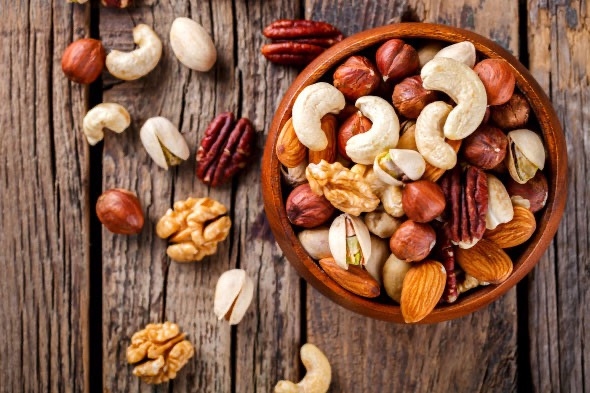
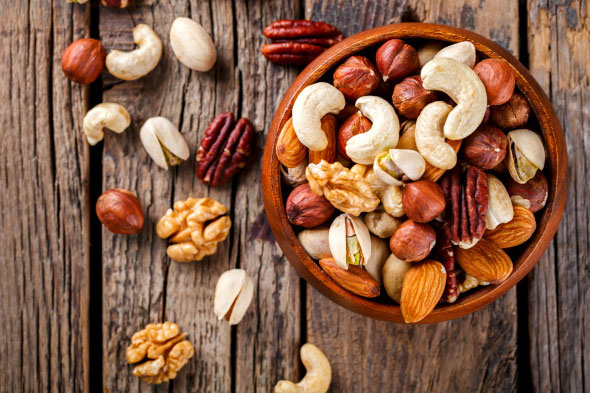
Instead, you might consider nutrient-rich nuts. They make a convenient snack and provide valuable nutrients throughout the day (Image source: Internet)
One of the common misconceptions in the workplace is equating all types of snacks. In nutritional science, evaluating the quality of a food portion should be based on micronutrient density rather than just measuring the total calories consumed. To truly support the body in recovering after stressful working hours, a snack menu needs to meet objective nutritional standards.
A true stress-relieving snack must be an abundant source of minerals and vitamins capable of participating in internal biochemical reactions. A typical example is magnesium, a trace mineral often found in high amounts in plain roasted nutritional seeds. Magnesium participates in hundreds of catalytic reactions in the body and directly contributes to supporting the normal functioning of the nervous system, as well as muscle function.
Additionally, B vitamins found in legumes, seeds, and whole grains play an important role in the cellular energy metabolism process and support the normal functioning of the central nervous system. The presence of this micronutrient system helps the body optimally utilize energy, limiting physical exhaustion at the end of the day. When proactively choosing micronutrient-rich foods, you are providing your body with the raw materials needed to maintain its operations. Applying these standards helps the process to relieve work stress occur safely and in accordance with health recommendations.
Suggestions from VietNatur: To easily meet this micronutrient standard at the office, you can add VietNatur’s nutritional seeds, such as honey coconut-coated roasted cashews and coconut-coated roasted lotus seeds. The combination of the original seeds’ crunchiness and their natural mild sweetness helps create a relaxing sensation while chewing, simultaneously providing a healthy energy source to replace industrial sweets and pastries.
The temptation of less healthy foods largely stems from their convenience and easy accessibility in the workplace. Therefore, to change consumption behavior, the most strategic step is to proactively redesign the environmental space around your desk.
Clearing out industrial candy jars, cleaning the drawer containing cookies, and replacing them with glass jars filled with original-flavor dried fruits or seeds is a physical change that brings a massive impact. When the supply of empty calories is no longer right in sight, the body’s natural reflex will automatically turn toward the already-prepared healthy food options. This preparation is the core element to practicing a guilt-free snacking habit every day.
Understanding the origin of foods that do not contain artificial food coloring or excessive added sugar brings a confident and comfortable psychological state. You can fully enjoy brief moments of rest during breaks without worrying about the consequences related to your physique or metabolic health. Self-control in these small nutritional decisions contributes directly to efforts to relieve work stress, helping you maintain your form and focus for long-term projects.
Read more:
Overall, to relieve work stress effectively and over the long term, readjusting nutritional habits at the office is an unmissable step. Instead of indulging instant reflexes with foods containing a lot of empty calories, prioritizing minimally processed foods rich in fiber and micronutrients can contribute to supporting metabolic health when combined with a balanced diet. By resetting the work environment and consciously choosing your energy source, you are equipping yourself with a solid physical foundation to overcome all daily professional challenges.