Best Hiking Snacks: Energy Foods for Outdoor Adventures
Hiking and trekking are outdoor activities that build endurance, improve physical fitness, and help recharge your mental energy. However, to...
read more

FREE Express Shipping On Orders $99+

Building a healthy snacking habit is not just about cutting down on sugar or refined starches, but the core lies in increasing nutrient density. In this, the ratio of raw nuts directly determines the product’s quality. A scientifically designed snack portion will help you stay alert and overcome hunger without reducing work productivity. This article will analyze in detail the digestion mechanism and practical value of raw ingredients.
One cause of exhaustion when walking in the sun is prolonged fluid loss (Image source: Internet)
The concept of side meals has changed significantly as consumers start paying more attention to ingredient quality. Previously, many people often sought foods containing large amounts of refined sugar or simple starches to satisfy immediate hunger. However, these choices provide empty calories, causing blood sugar to spike quickly but also drop suddenly right after. The consequence is that the body quickly falls into a state of lethargy and lack of focus.
To solve this problem, the standard for a modern healthy snacking diet focuses on nutrient density. Nutrient density is understood as the ratio of vitamins, minerals, and fiber compared to the total calories the food provides. When a product has a high nut ratio, it naturally brings a large amount of essential nutrients instead of just focusing on generating energy through simple carbohydrates.
The balance between macronutrients is a key factor. Whole grain nuts provide a complete structure including unsaturated fats, protein, and fiber. These three components form a slow-absorption system, helping to release energy gradually into the bloodstream. Focusing on the nut ratio is actually a biological control method, helping the body self-regulate energy levels without needing to calculate calories too strictly.
Furthermore, ingredient quality directly determines the product’s value. Transparency in the percentage of each nut type helps users evaluate the food they are consuming. Instead of using wheat flour or leavening agents as the main ingredients, prioritizing nuts in the ingredient list is the first step to building a stable and sustainable nutritional foundation.
Some helpful tips to help your body adapt to hot weather during physical activity (Image source: Internet)
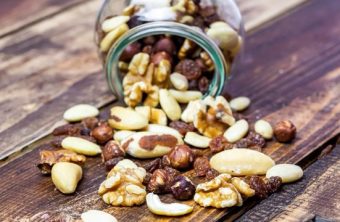
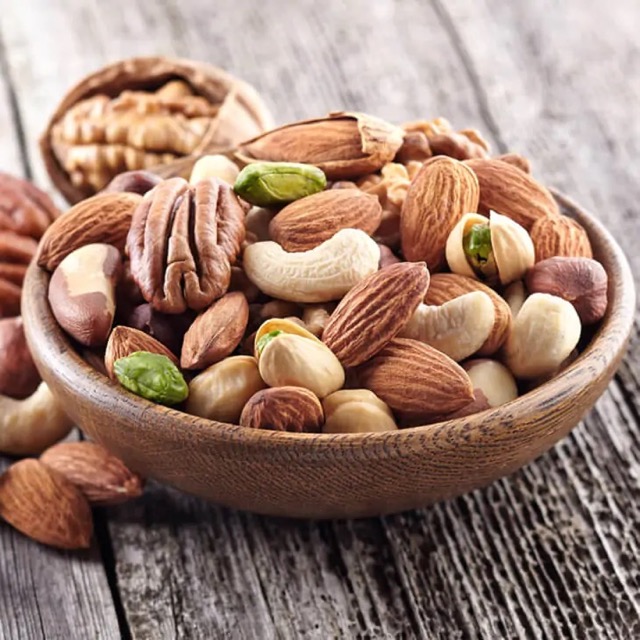
In the plant world, each type of nut possesses a distinctive nutrient profile. Combining multiple nut types not only brings variety in texture and flavor but also complements each other nutritionally. Below is a detailed analysis of three popular nuts commonly combined in current healthy snacking menus.
Cashews have a porous texture and a naturally sweet, nutty flavor, creating a pleasant feeling when chewing. Nutritionally, cashews are one of the rich sources of minerals. The most prominent components in cashews are copper and magnesium. Copper plays an important role in supporting red blood cell formation and maintaining nerve cell function. Meanwhile, magnesium is a mineral that participates in hundreds of biochemical reactions in the body, supporting the stability of muscle structure. The protein content in cashews also contributes to increasing the feeling of fullness, while providing necessary amino acids for the body’s self-recovery process after physical activities.
Almonds are highly valued for their thin skin containing many plant compounds. This is an abundant natural source of vitamin E. Vitamin E acts as an antioxidant, helping to protect cells from the effects of free radicals formed from the environment or during energy metabolism. Besides, almonds possess quite high fiber and protein content. The combination of these two elements helps minimize sugar absorption at the intestinal lining, thereby stabilizing energy levels. The sturdy structure of almonds also requires the jaw muscles to work more, early triggering fullness signals from the nervous system.
Despite their small size, pumpkin seeds contain a very impressive nutrient density. Pumpkin seeds are particularly rich in zinc, an essential trace mineral that supports immune system function and protein synthesis. In addition, this seed provides a large amount of unsaturated fats and insoluble fiber. Pumpkin seeds also contain tryptophan, a precursor amino acid of serotonin, contributing to supporting mental comfort. Adding pumpkin seeds to nut mixes not only enhances nutritional value but also adds a characteristic crunch, enriching the consuming experience.
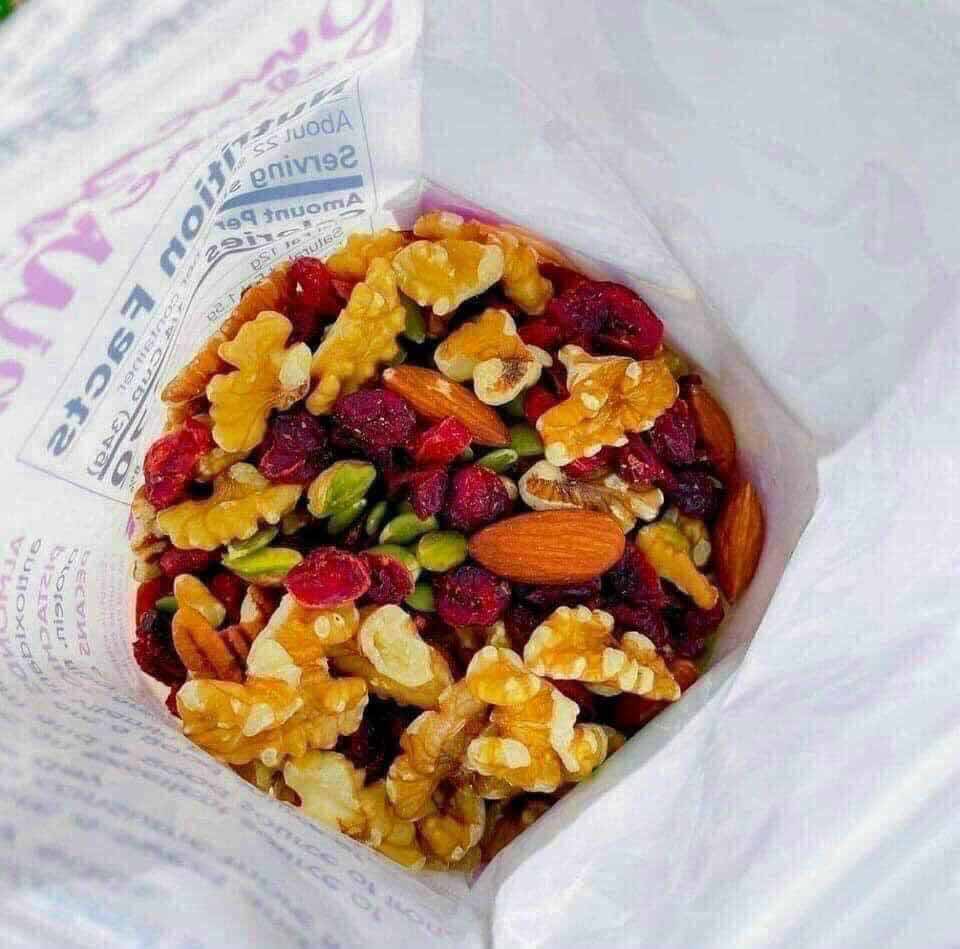
Some ideal snacks to consider for outdoor activities (Image source: Internet)
The feeling of fullness is not merely about the stomach being filled, but the result of a complex chain of physiological reactions. Choosing a nut-rich snack brings clear effectiveness in controlling hunger thanks to three basic mechanisms related to the digestive process and hormone regulation.
First is the mechanical chewing mechanism. The natural texture of nuts requires users to chew thoroughly before swallowing. This slow chewing process extends the contact time of food in the mouth, stimulating the central nervous system to send food-recognition signals to the hypothalamus of the brain. The brain usually needs about 20 minutes to recognize the state of fullness. Therefore, prolonging eating time through the hard texture of nuts helps prevent excessive energy consumption before the body can emit a stop signal.
Second is the gastric emptying time. Nuts contain high fiber and fat content. When entering the digestive system, fiber absorbs water and forms a denser texture, slowing down the movement of food from the stomach to the small intestine. Maintaining food in the stomach creates physical pressure on the stomach wall, continuously sending signals of satiety to the brain. This is why just a small amount of mixed nuts can help you feel satisfied for hours.
Third is the hormone feedback from the small intestine. When good fats and protein from nuts reach the intestinal wall, they activate cells here to secrete appetite-suppressing hormones like Cholecystokinin (CCK) and Peptide YY (PYY). The increase of these hormones in the blood directly informs the nervous system that the body has received enough necessary nutrients. This biological mechanism explains why raw nutrient-rich foods always bring significantly more effective appetite control than refined foods.
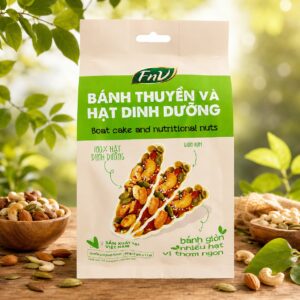
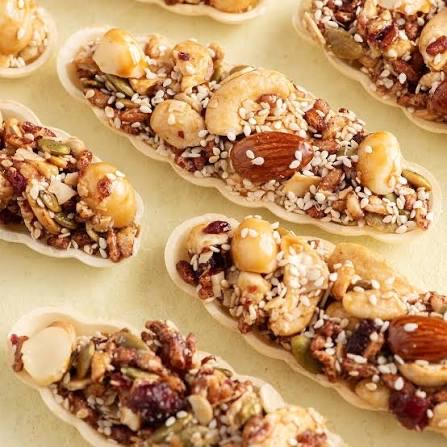
Nutrition theory becomes clearest when applied to a practical product. Based on the principles of scientific ingredient allocation, the structure of nutritional nut boat cookies is a typical example of optimizing the raw nut ratio to build a healthy snacking regimen. The ingredient list of this product demonstrates transparency and focuses on high-value ingredient groups.
The core that creates the product’s nutritional value comes from the combination of three types of nuts: pumpkin seeds (16%), cashews (16%), and almonds (16%). With a total ratio of 48%, the raw nut group accounts for nearly half of the product’s weight, ensuring a full supply of protein, unsaturated fats, and trace minerals as analyzed. Accompanying the nut group is 30% brown rice – a whole grain cereal that preserves the bran layer rich in fiber and B vitamins. In total, 78% of the cookie structure is made up of nuts and whole grains, creating a dense nutrient density.
Conversely, the boat cookie base only accounts for 10% of the overall product. This base consists of wheat flour, cornstarch, and salt. The main role of the base layer is to shape and provide a light crispy crust to support the volume of nuts above. Limiting the starch ratio to 10% helps control the total amount of simple carbohydrates loaded into the body, ensuring blood sugar stability.
To maintain cohesion for the 78% nut and whole grain structure, the product uses a very small ratio of sweeteners and natural spices. Honey (3%) and sesame (2%) are added to bind the raw ingredients, while bringing a gloss and a light aromatic flavor. The salt content is at 0.75%, which is quite low, contributing to a reasonable sodium control. Using few additives and focusing on raw ingredients helps the product preserve its original characteristics, supporting the optimization of biological chewing and digestion.
See more:
Evaluating a quality side meal depends heavily on the ratio of raw ingredients it possesses. The combination of cashews, almonds, pumpkin seeds, and brown rice in a logical structure not only provides diverse micronutrients but also naturally activates the hunger control reaction chain. By understanding the product structure and the body’s operating mechanisms, you can completely proactively maintain a sustainable healthy snacking habit, well-supporting your daily energy and work pace.
Entdecke passende VietNatur Produkte zu diesem Thema.