Muesli with Dried Mango: Breakfast Upgrade
Muesli has long been a popular breakfast choice in many households - thanks to its convenient preparation and balanced nutritional...
read more

FREE Express Shipping On Orders $99+

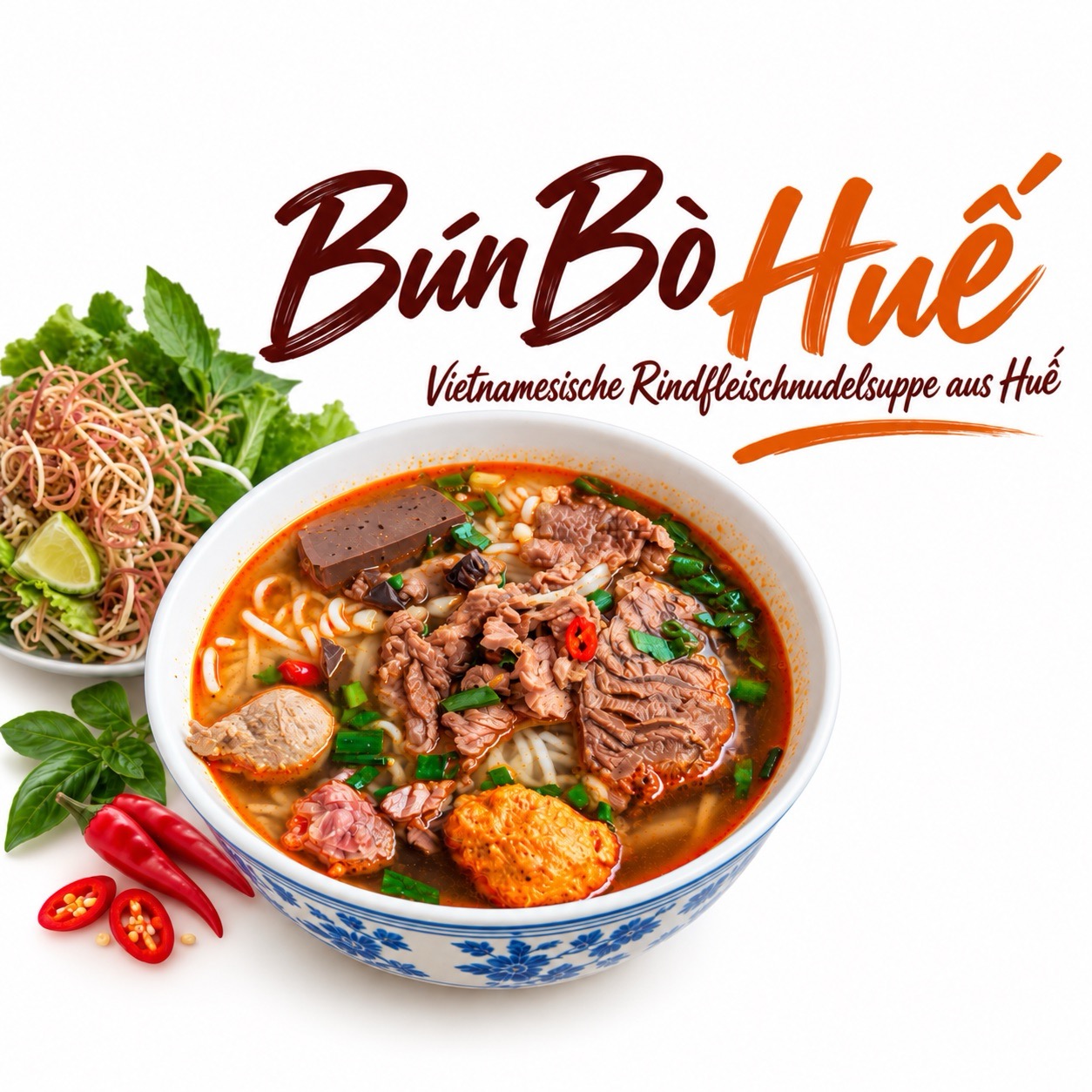
Bún Bò Huế brings the flavors of central Vietnam together in one bowl: rich broth, fragrant lemongrass, tender meat, and thick rice noodles. This recipe takes you through each step, with tips for finding the ingredients in Germany.
Huế was once the capital of the Nguyễn dynasty (1802–1945), and its kitchens still reflect the care and love of heat associated with the former imperial city. Bún Bò Huế, however, was not a court dish. It belonged to the everyday lives of people living around the imperial citadel. According to a local story, it originated in Vân Cù, a noodle-making village outside the city, and is linked to the legend of a woman known as Cô Bún. By the 20th century, a bowl of this soup had become a familiar part of mornings in Huế. Cooks from central Vietnam later carried it wherever they settled.
The broth has a glossy red sheen from annatto oil, the vivid aroma of bruised lemongrass, and a savory depth from fermented shrimp paste. Rich and gently spicy on its own, it becomes balanced and refreshing when served with thick rice noodles and fresh herbs and vegetables.
Difficulty: Intermediate
This dish calls for patience while the bones simmer and a little care when preparing the shrimp paste. Letting the sediment settle helps give the broth depth without making it cloudy or overly pungent.
For the broth
For the annatto oil and chili
For the bowls and table
Step 1: Blanch the bones and pork hock
Put the bones and pork hock in a pot and cover with cold water. Bring to a vigorous boil and cook for 5 minutes. Pour away the water, rinse the bones and meat thoroughly, and clean the pot. This keeps the finished broth from looking gray.
Step 2: Make the lemongrass broth
Bruise all 6 lemongrass stalks with the back of a knife and tie them into a bundle. Lightly char the onion. Put the bones, pork hock, and beef shank in the pot with 4 liters of water, the lemongrass bundle, and the charred onion. Simmer gently: only a few bubbles should rise to the surface. Do not let the broth boil hard. Remove the beef shank after 90 minutes. Remove the pork hock after about 2 hours, once tender, and leave the bones to continue simmering.
Step 3: Add the settled shrimp paste
Stir the 2 tbsp shrimp paste into 250 ml cool water. Leave it undisturbed for 20 minutes so the sediment sinks. Carefully pour the clearer liquid on top into the simmering broth, leaving the sediment behind. Simmer for another hour so the paste’s initially sharp smell mellows into a rich aroma.
Step 4: Make the annatto oil and chili
Warm the oil and annatto seeds over low heat until the oil turns a vivid red. Remove the seeds. Add the chopped lemongrass, shallot, and garlic to the red oil and cook until fragrant. Stir in the chili powder and turn off the heat. Add two-thirds of this mixture to the broth and reserve the rest for serving.
Step 5: Season and slice the meat
Strain the broth again if you prefer a particularly clear soup. Add the rock sugar, fish sauce, and a little salt. Season it slightly more strongly than you normally would, as the noodles and vegetables will soften the flavor. Chill the beef shank briefly, then slice it thinly against the grain.
Step 6: Serve hot
Cook the thick rice noodles according to the package directions and divide them among bowls. Thinly slice the shallot; you can soak it briefly in cold water to mellow its flavor. Arrange the beef slices, a piece of pork hock, and the shallot over the noodles. Ladle in boiling-hot broth to warm the meat. Serve with the fresh herbs, vegetables, lime wedges, and reserved chili oil so everyone can season their bowl to taste.
These distinctive ingredients are available at larger Asian supermarkets:
You can shop in person or order online from larger retailers in Germany, including:
I can’t find mắm ruốc. Can I leave it out?
Yes. The soup will still taste good, but it will lack the distinctive savory depth of Bún Bò Huế. The closest alternative is 1 tbsp Thai shrimp paste (gapi). Mix it with water and let it settle as directed in the recipe. Gapi is more pungent, so use about half as much and adjust the seasoning with extra fish sauce.
How is this different from pho?
Pho typically has a lighter beef broth flavored with ingredients such as charred ginger, star anise, cinnamon, and black cardamom. Bún Bò Huế is bolder, with lemongrass, chili, and fermented shrimp paste. It also uses thick, round rice noodles and combines pork and beef in one broth.
What about blood cubes and chả cua?
Cooked pork blood cubes and Vietnamese meat or crab cakes are popular traditional additions in Huế. If you cannot find them in Vietnamese markets such as the Dong Xuan Market, this recipe will still make a flavorful bowl of Bún Bò Huế.
Why bruise the lemongrass instead of finely chopping it?
Bruising releases the lemongrass’s aromatic oils. Tying the stalks together also makes them easy to remove. Finely chopped lemongrass would float in the broth and affect its texture.
How can I slice the beef shank thinly without it falling apart?
Let the cooked beef cool completely, then refrigerate it briefly. Chilling firms up the meat and connective tissue. Use a sharp knife to slice across the grain; the slices will hold their shape more easily.
How do I know when the mắm ruốc has cooked long enough?
The shrimp paste may smell quite sharp when it first goes into the pot. After about an hour of gentle simmering, that smell should fade considerably. The broth should smell warmly savory and taste noticeably deeper.