Muesli with Dried Mango: Breakfast Upgrade
Muesli has long been a popular breakfast choice in many households - thanks to its convenient preparation and balanced nutritional...
read more

FREE Express Shipping On Orders $99+

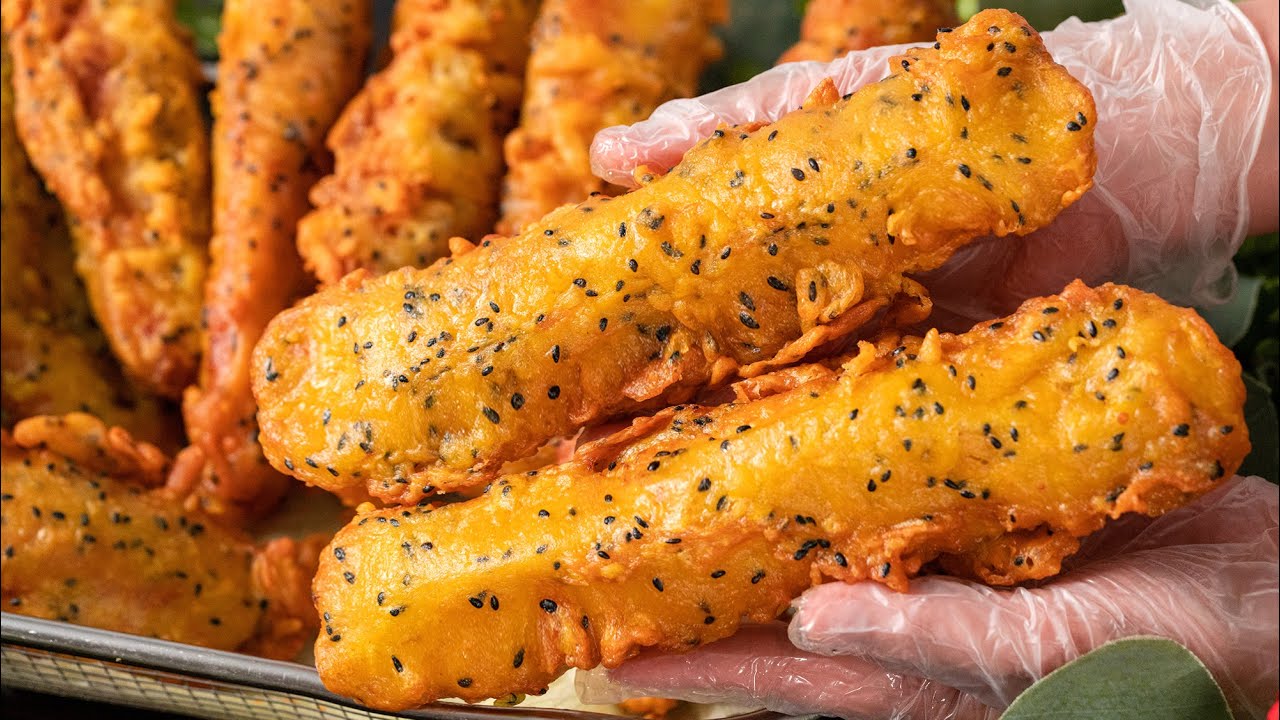
Golden and crispy on the outside, soft and sweet on the inside: Bánh chuối chiên are a much-loved Vietnamese street food snack. A light batter surrounds the ripe banana, while black sesame seeds add a gentle, nutty flavour.
This Banh Chuoi Chien recipe explains how to precook a small portion of the batter, why resting it matters and how to coat and fry the bananas twice. You’ll also find tips for choosing bananas and buying the ingredients in Germany.
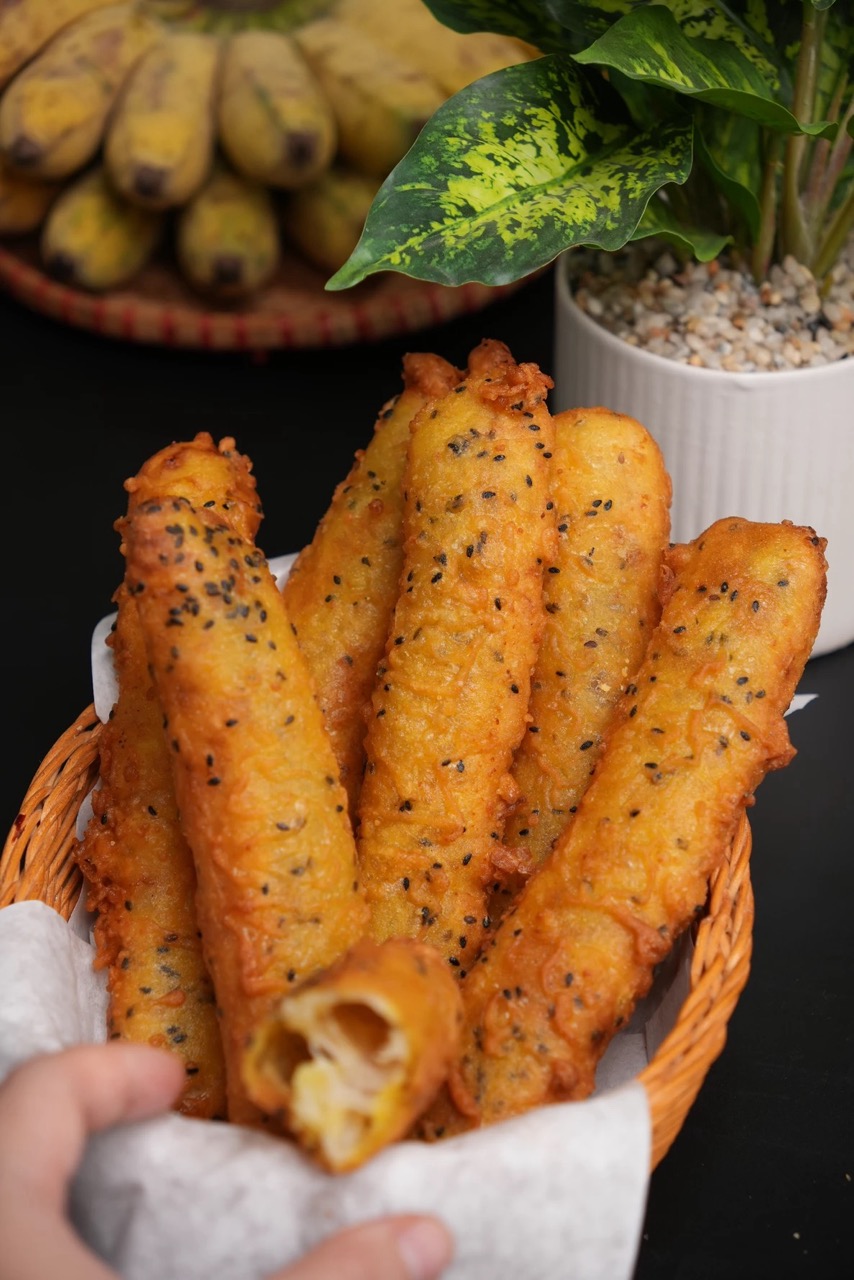
Bánh chuối chiên are a familiar sight at street stalls and markets across Vietnam. For many people, these freshly fried banana snacks bring back childhood memories.
Recipes vary between regions and vendors. Some fritters are relatively flat, while others have a puffed coating with airy pockets around the banana.
This version uses black sesame batter and a double-coating technique to create a crisp shell around a soft, sweet centre.
The first bite combines a crunchy coating with warm, fragrant banana. Black sesame seeds add a subtle nuttiness.
The bananas provide much of the sweetness, while a little turmeric gives the batter a warm yellow colour without dominating the flavour.
These fritters taste best freshly cooked, once they have cooled enough to eat comfortably.
Difficulty: Medium
The most important factors are batter consistency, at least three hours of resting time in the fridge and a steady frying temperature.
The bananas are first coated and briefly fried to set the outer layer. They are then dipped in batter again and fried until golden and crisp.
Approximate timing:
Serves approximately 5–6
About the batter mix: Bột chiên giòn is a prepared flour mixture used to create crispy coatings. It is not the same as breadcrumbs or pure baking powder. Choose an unseasoned variety suitable for a sweet recipe.
Peel two ripe bananas and blend them with 50 ml water until smooth. Set aside.
The banana purée adds sweetness, flavour and body to the batter.
In a large bowl, thoroughly mix the rice flour, plain flour, cornflour, crispy batter mix, sugar and turmeric.
Remove 2 tbsp of this dry mixture and place it in a small saucepan.
Whisk 250 ml water into the dry mixture in the saucepan until smooth.
Heat over medium heat, stirring continuously, until the mixture thickens and becomes slightly translucent.
Remove from the heat and continue stirring briefly until it forms a smooth, pudding-like mixture.
This step gelatinises part of the starch before frying.
Mix the remaining dry ingredients with the remaining 250 ml water until smooth.
Gradually add the warm, precooked mixture, whisking thoroughly. Stir in the banana purée and lemon juice.
The batter should be smooth and thick enough to coat the bananas rather than immediately running off. Whisk out any lumps.
The total water quantity is 550 ml: 50 ml for blending the bananas, 250 ml for the precooked mixture and 250 ml for the remaining batter.
Cover the bowl and refrigerate for at least 3 hours.
Resting gives the flours time to absorb moisture evenly. It helps the batter develop a consistent texture, but does not guarantee fermentation or a particular amount of puffing.
Before frying, stir the batter thoroughly and add the black sesame seeds.
Peel the remaining bananas.
Place each banana between two sheets of food-safe plastic or inside a suitable food storage bag. Gently press with a small chopping board until evenly flattened.
Aim for an elongated shape without crushing the banana or making it so thin that it breaks apart.
Heat the oil in a deep, stable saucepan to approximately 170–175°C. A cooking thermometer makes the temperature easier to control.
Dip one flattened banana into the batter, coating it completely. Allow the excess to drip off briefly, then carefully lower it into the oil.
Fry until the first coating has set and the fritter floats to the surface. It should not become dark at this stage.
Lift it out with a slotted spoon and drain briefly.
Using suitable tongs or another heat-resistant utensil, carefully dip the partially fried banana into the batter again.
Let excess batter drip off, then gently return it to the hot oil.
Continue frying at approximately 175–180°C, turning occasionally, until the coating is puffed, golden and crisp.
Fry only a few bananas at a time so the oil temperature does not drop sharply. Adjust the heat gradually rather than turning it up suddenly at the end.
Take care: Do not handle the hot fritters with your hands. Lower them gently into the oil, particularly after the second coating, as splashing can occur.
Lift the finished fritters out with a slotted spoon and place them on a wire rack over a tray.
Leave space between them and avoid stacking or covering them while hot. This allows steam to escape instead of softening the coating.
Cool briefly and serve fresh.
| Ingredient | Name to Look For | Shopping Tip |
|---|---|---|
| Chuối sứ / Chuối xiêm | Vietnamese bananas, sometimes labelled by variety | Ask Vietnamese grocery stores. Choose ripe, sweet fruit that still holds its shape. |
| Alternative bananas | Small dessert bananas / Babybananen | Choose fragrant, ripe bananas that are not overly soft. Results vary by variety. |
| Rice flour | Reismehl / Rice Flour | Do not use glutinous rice flour. |
| Cornflour | Maisstärke / Cornstarch | Check the label, as German “Speisestärke” can be made from different starches. |
| Plain wheat flour | Weizenmehl Type 405 | Suitable for this recipe. |
| Crispy batter mix | Bột chiên giòn / Crispy Flour | Choose an unseasoned variety. |
| Black sesame seeds | Schwarzer Sesam / Black Sesame | Look in Asian grocery stores or supermarket international aisles. |
| Turmeric | Kurkumapulver | Use sparingly so it does not overpower the banana flavour. |
Chuối sứ and Chuối xiêm are valued for their sweetness and pleasant texture when cooked.
Plantains are not a direct substitute. They differ in starch content and texture and may need a different preparation depending on ripeness.
Ordinary dessert bananas can also be used. Choose ripe but still firm fruit and flatten it gently. The flavour and texture may differ from the Vietnamese version.
Heating starch with water causes it to gelatinise and thicken. Mixing this cooked portion into the batter gives it more body and helps it cling to the banana.
How much the coating puffs and how long it stays crisp also depend on batter consistency, frying temperature and moisture.
Banana purée adds natural sweetness and banana flavour to the coating. It also changes the batter’s texture.
Because bananas vary in size and moisture content, the finished consistency may vary slightly. The batter should coat the flattened fruit evenly rather than immediately sliding off.
This recipe includes a resting time of at least three hours so the flours can absorb moisture.
Stir thoroughly before use, as starch may settle at the bottom of the bowl.
The first coating creates a stable outer layer. The second dip adds more batter, which can form a thicker, airier crust during the final frying stage.
Steam helps the coating expand, although a fully hollow shell cannot be guaranteed with every fritter.
Common causes include oil that is too cool, batter that is too thin or too many fritters cooking at once.
Trapped steam also softens the crust. Drain the fritters on a wire rack and avoid covering or stacking them while hot.
The oil may be too hot. Sugar and banana purée also encourage browning.
Lower the temperature slightly and continue frying steadily. A dark colour alone does not mean the coating has finished cooking.
That depends on humidity, banana variety, coating thickness and storage conditions. They are crispiest when freshly fried.
Double-frying and draining them uncovered can help preserve their texture, but the coating will gradually soften over time.
Yes. An oven or air fryer at moderate heat can warm them through and restore some crispness.
Check regularly to prevent the sweet coating from becoming too dark. Microwaving generally makes the coating softer.