Best Hiking Snacks: Energy Foods for Outdoor Adventures
Hiking and trekking are outdoor activities that build endurance, improve physical fitness, and help recharge your mental energy. However, to...
read more

FREE Express Shipping On Orders $99+

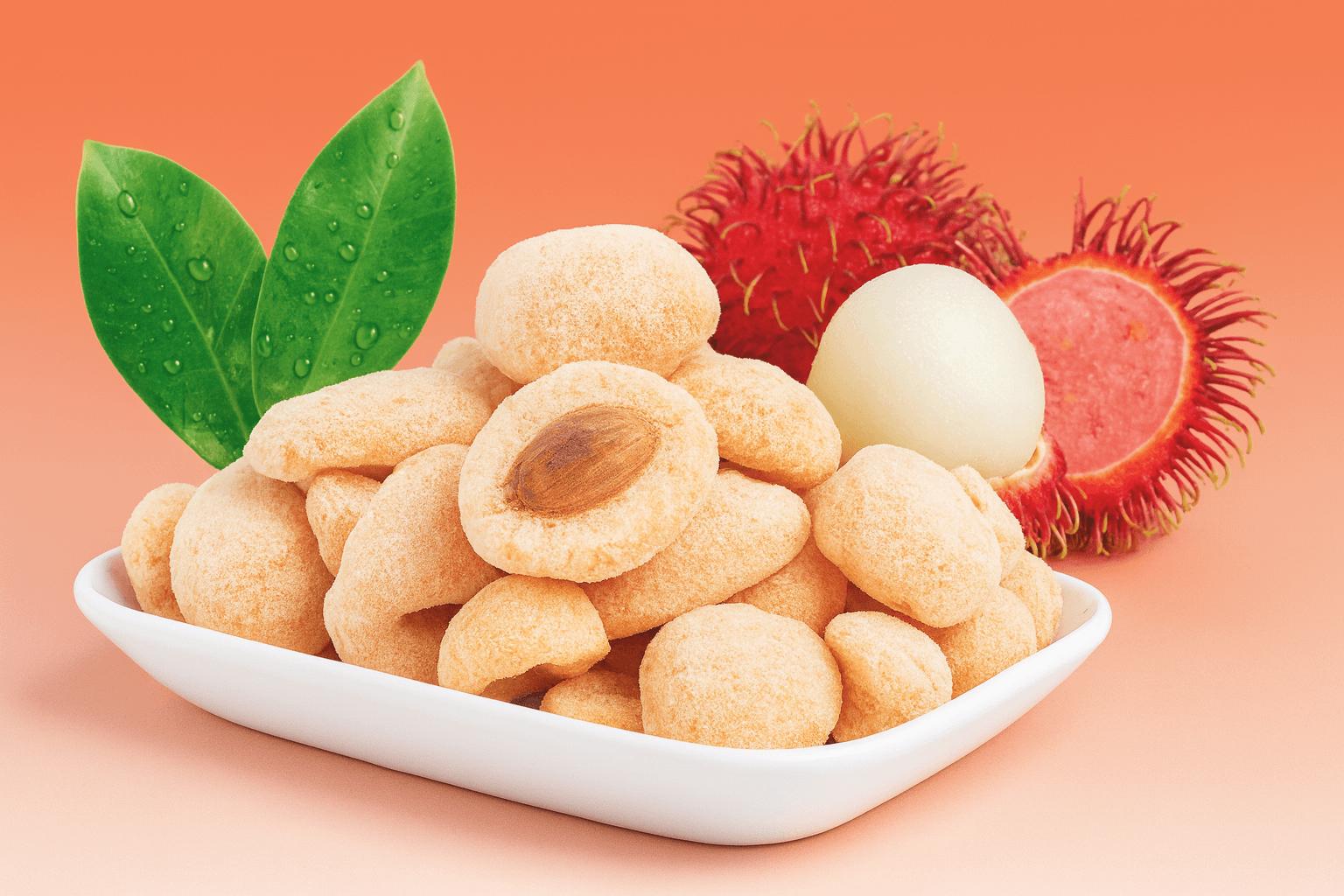
Fresh rambutan has long been a familiar fruit in tropical regions, known for its signature refreshing sweetness and juiciness. However, transporting and storing the fresh fruit over long distances has always faced obstacles due to the peel quickly darkening and the flesh easily fermenting. Today, the advancement of food technology has opened a new path: freeze-dried rambutan. This method not only solves the preservation problem but also provides an entirely new culinary experience, turning the thick, juicy flesh into perfectly flavored, crispy snack pieces.
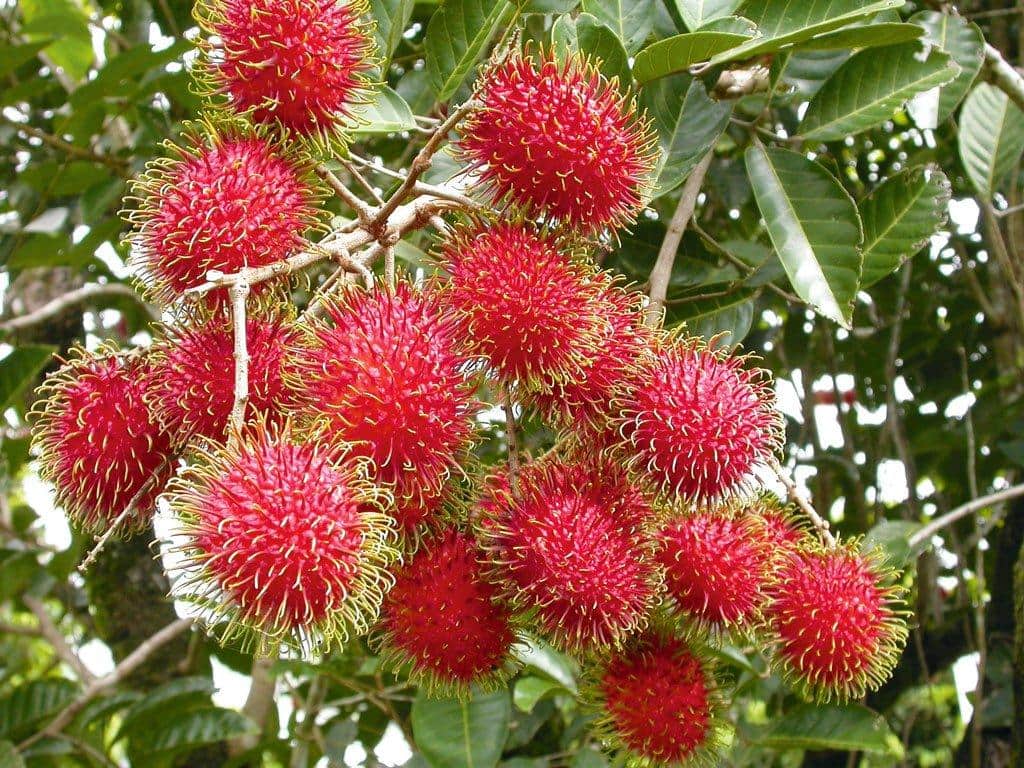
Vietnamese Rambutan – A tropical fruit specialty. (Source: Internet)
To understand the value of this snack, we first need to look back at the origins of the fresh ingredient. For many people encountering it for the first time, the question of what is rambutan usually starts with its unusual appearance. The fruit is small and oval or round, standing out with an outer peel covered in soft, curved spines resembling strands of hair. The international name “rambutan” originates from the Malay word “rambut” (meaning hair), accurately describing this natural identifying feature.
The rambutan tree thrives in regions with a tropical monsoon climate, fertile alluvial soil, and abundant water sources. In Southeast Asia, Vietnamese rambutan has long affirmed its quality thanks to ideal farming conditions along the Mekong Delta such as Ben Tre, Vinh Long, or the red soil region of the Southeast. The clusters of bright red, ripe fruits on the tree are not only a signature feature of Southern orchards but also provide a consistent source of ingredients, rich in natural flavor for deep processing procedures.
The spiky outer peel actually acts as a natural protective wrap for the inner flesh against insects and harsh sunlight. When the fruit reaches optimal ripeness on the tree, the natural sugar content, organic acids, and water volume in the flesh achieve a perfect balance, ready for the meticulous preliminary processing steps that follow.
When peeling back the rough skin covered in soft spines, the fruit flesh is revealed with a slightly translucent opaque white color, a smooth, glossy surface, and a juicy texture. The flesh tightly wraps around a small oval seed in the center. In high-quality rambutan varieties like “chôm chôm nhãn” or Java rambutan, the fruit flesh is often thick and peels easily from the seed, minimizing the adhesion of the seed’s woody membrane when eaten.
Nutritionally, rambutan flesh contains a lot of water, providing natural sugars (fructose, sucrose) along with an amount of soluble dietary fiber that supports digestion. This fruit is also a source of natural vitamin C, potassium, and several bioactive plant compounds such as polyphenols and flavonoids. However, precisely because of the high moisture content (often accounting for over 80% of the fresh flesh weight) and abundant sugar, the flesh is very sensitive to ambient temperatures, easily succumbing to oxidation, browning, or yeast infection just a few days after harvest without appropriate preservation solutions.
Many people unfamiliar with tropical fruits often wonder what does rambutan taste like. The flavor of fresh rambutan is a harmonious combination of a rich natural sweetness and a very mild, refreshing tart aftertaste, which keeps the sweetness from becoming cloying. Its aroma is gentle, carrying faint similarities to lychee and longan but less pungent, offering a distinctively refreshing sensation.
When enjoying a piece of fresh rambutan, the initial sensation is a slight crunchiness from the fruit’s flesh, followed by the natural sweet juice releasing into the mouth. The balance between sugar and organic acids creates an overall fresh and pleasant flavor profile. When applying modern dehydration techniques, one faces the challenge of how to fully preserve this delicate flavor spectrum without causing the fruit to caramelize or turn to a dark sour taste due to heat exposure.
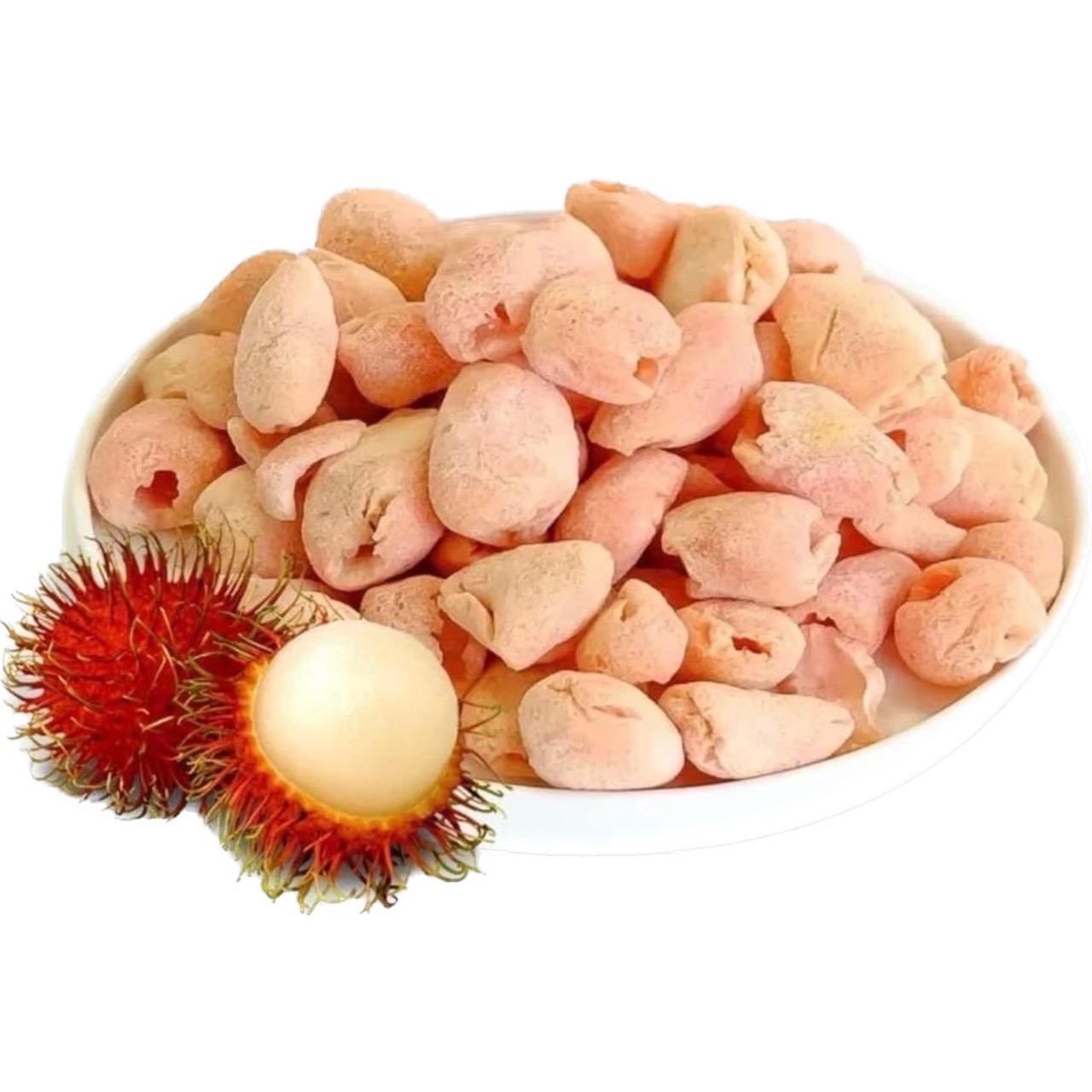
Freeze-dried Rambutan – Crispy, airy texture with natural flavor preserved. (Source: Internet)
To solve the problem of preserving the color, structure, and flavor without using high temperatures like traditional thermal drying, vacuum freeze-drying technology is applied. So, what is freeze-drying essentially?
Freeze-drying (or lyophilization) is a dehydration process based on the sublimation principle of water: transforming directly from a solid state (ice) to a gaseous state (water vapor) in an ultra-low vacuum pressure environment, completely bypassing the intermediate liquid state.
The processing of rambutan through this method takes place in strict technical stages:
Because the water evaporates without creating a liquid flow or thermal shrinkage, the cell walls of the fruit do not collapse. The spaces previously occupied by ice crystals now become microscopic pores, creating a specially light and porous texture.
| Criteria | Fresh Rambutan | Traditional Thermal Drying | Freeze-Drying |
| Moisture Content | > 80% | 15% – 20% | < 5% |
| Texture | Juicy, slightly chewy | Sticky and chewy, shrunken | Crispy and porous, feather-light |
| Fruit Morphology | Round, juicy white flesh | Dark brown, shriveled | Retains original shape, bright color |
| Micronutrient Preservation | 100% (short term) | Significant loss due to heat | Retains most vitamins & minerals |
This process completely eliminates the risk of browning (the Maillard reaction) often found in thermal drying, helping to preserve most of the vitamin C content and natural antioxidant compounds that are highly sensitive to temperature.
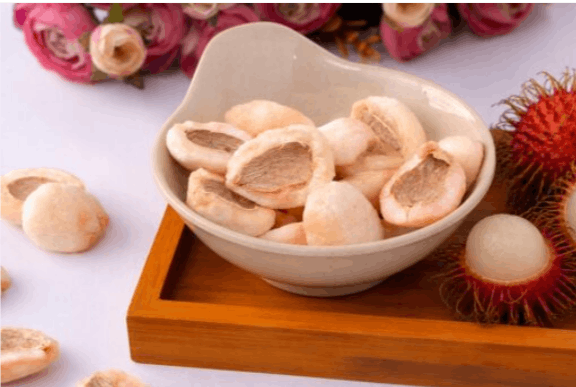
Freeze-dried rambutan preserves its natural flavor, creating a unique crispy fruit snack. (Source: Internet)
Applying modern processing standards, VietNatur’s product line maximizes the advantage of carefully selected ingredients from standard-compliant growing regions. Freshly ripened, thick-fleshed rambutans are mechanically peeled and carefully destoned, ensuring no hard fibers or seed membranes are mixed in before entering the dehydration process.
The final product does not require the addition of refined sugar, chemical flavorings, or any preservatives. The tasting experience brings a clear sense of surprise: biting into a piece of rambutan provides a resounding crispy sensation, but right after, the micro-fibers immediately absorb moisture from the salivary glands, melting smoothly in the mouth and fully releasing the pure sweet taste and natural aroma of the ripe fruit. This is a convenient, lightweight snacking solution that is easy to store long-term at room temperature while still meeting the original nutritional criteria of clean food.
The conversion from wet fruit segments into a crispy snack has opened a more modern approach for tropical agricultural products. By preserving the cellular structure, color, and micronutrient content without needing additives, freeze-dried rambutan affirms the value of deep processing technology in bringing the original flavor of Vietnamese fruits closer to today’s busy lifestyle.
The experience of enjoying a piece of freeze-dried rambutan brings a distinctly interesting touch. When biting into it, the micro-porous structure creates a light, crispy sound, but as soon as it comes into contact with the moisture in your mouth, the fruit segment quickly melts soft, fully releasing a refreshing sweetness with a natural mild tart aftertaste. You can visit VietNatur’s online store to experience this original snacking treat for yourself and add it to your daily healthy menu.
Read more:
Freeze-Dried Rambutan: Sweetness Explained
Entdecke passende VietNatur Produkte zu diesem Thema.