Best Hiking Snacks: Energy Foods for Outdoor Adventures
Hiking and trekking are outdoor activities that build endurance, improve physical fitness, and help recharge your mental energy. However, to...
read more

FREE Express Shipping On Orders $99+


Salted apricot-coated dried pomelo peel is a unique snack crafted from Ben Tre Green Skin pomelo peel and salted apricots fermented for about 6 months. It might sound unusual at first, as pomelo peel typically brings to mind a bitter, acrid taste that is hard to tolerate if not thoroughly processed. This article explores how the white pith, the aroma of pomelo essential oil, the drying level, and the salted apricot are balanced to create a snack with a distinct pomelo fragrance, a soft, chewy texture, and a characteristic savory, sour aftertaste.
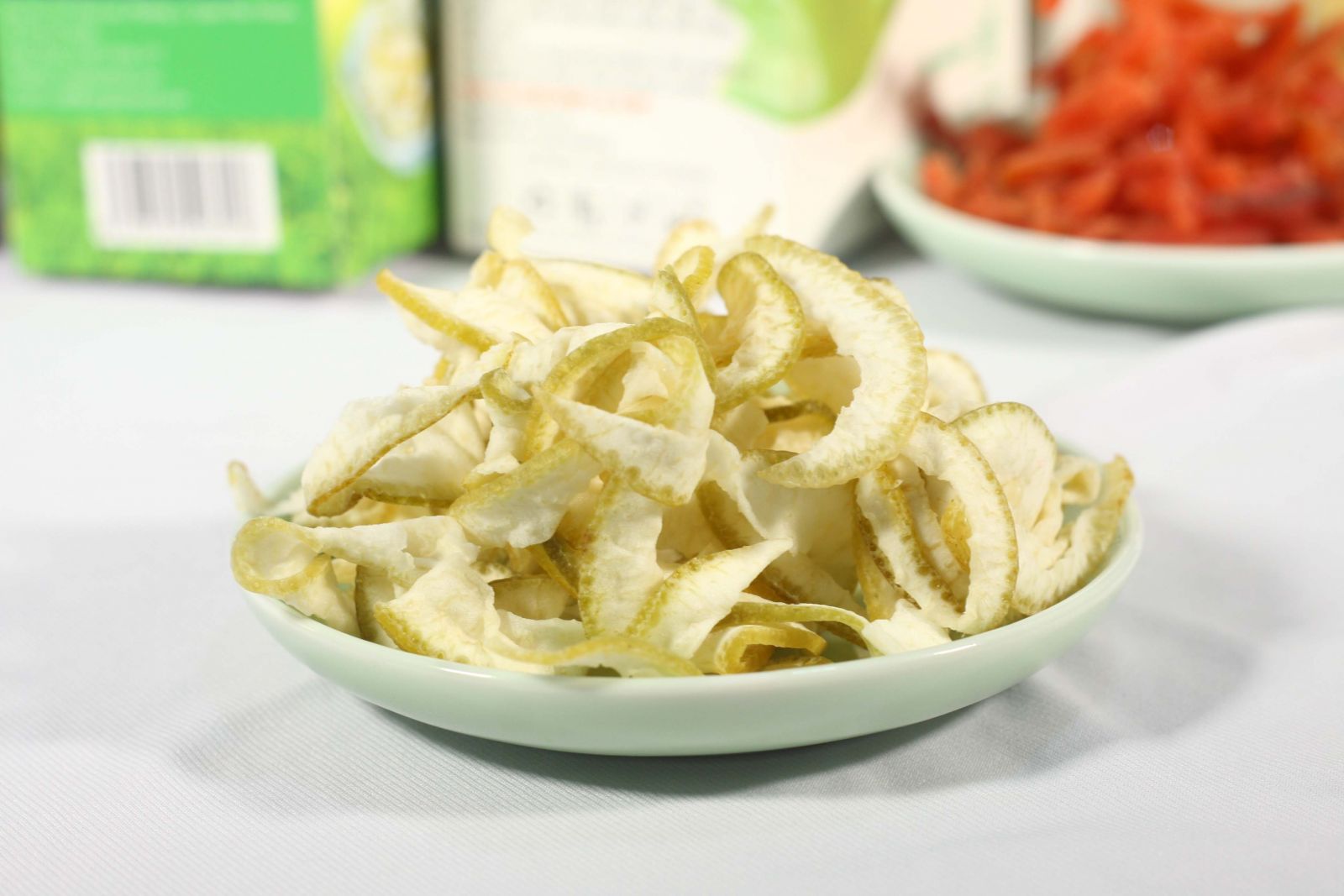
Pomelo peel must go through many processing steps before it becomes a unique snack (Image source: Internet)
Salted apricot-coated dried pomelo peel is not simply pomelo peel thrown into a dryer. It must undergo a multi-step preparation process to achieve a harmonious flavor and an enjoyable texture.
The processing method dictates whether the dried peel retains its natural pomelo fragrance, loses its pungent and acrid edge, and reaches a soft, chewy consistency perfect for snacking. The product’s appeal does not rely solely on the salted apricot coating; it begins with how each part of the peel, the green rind, the white pith, the essential oil, and the post-drying moisture – is handled.
If under-processed, the peel easily becomes intensely bitter, fibrous, or acrid on the tip of the tongue. If over-processed, the peel loses its signature pomelo aroma, lacks chewiness, and ends up resembling an ordinary piece of jam. Therefore, the true challenge of making this product lies in tempering the harsh qualities that turn people away while preserving the very characteristics that define pomelo peel.
Pomelo peel consists of two main parts: the outer green rind and the inner white pith.
If the selected peel is too thin, the white pith will not be thick enough to hold moisture, causing the final product to turn out dry, tough, and quick to lose its flavor. Conversely, if the white pith is too thick, the natural bitterness can become overwhelming and the texture can easily turn fibrous.
Because of this, the raw material must fall within a balanced thickness (roughly 3 to 4 mm). This ensures that after processing and drying, each piece retains its shape, offers a pleasant chew, and does not carry a heavy, overbearing taste.
By nature, the white pith is a porous structure loaded with naringin – the primary compound responsible for sharp bitterness and a teeth-dulling sensation. This step aims to wash away most of the free naringin without breaking down the cell framework that provides the chewiness.
The best approach is to soften the harsh bitterness of the white pith while preserving a part of its natural structure. When eaten, the peel should not taste sharply bitter right from the start, nor should it be so thin that it loses its bite. Any remaining bitterness should appear only as a gentle note in the aftertaste – a subtle reminder of the pomelo peel’s genuine identity.
This is the pivotal step that ensures the product delivers a profile that is not pungent or acrid, and lacks the harshness people often fear when they hear of a snack made from pomelo peel.
Essential oil is what gives pomelo peel its signature aroma. Without it, the product loses its identity and easily turns into a generic sweet snack. However, if the essential oil remains too strong, the peel can taste pungent, sharp, or slightly acrid on the tip of the tongue.
Thus, the goal is not to preserve as much essential oil as possible, but rather to keep it at a balanced level. A well-processed piece of pomelo peel should offer a clear pomelo scent the moment the bag is opened and maintain a natural fragrance as you chew, without causing a pungent or overwhelming sensation.
This is also why the phrase “not pungent or acrid” should not be misinterpreted as “devoid of pomelo aroma.” On the contrary, the product must still carry the fragrance of pomelo, but that fragrance needs to be clean, distinct, and pleasant throughout the eating experience.
The drying stage heavily influences the final texture of the pomelo peel. If dried too much, the pieces become hard, tough, and lose their fragrance. If under-dried, the product lacks structural stability and can feel unpleasantly damp and sticky.
For this type of snack, the ideal texture is neither crunchy like chips nor soft and wet like jam. The finished product should possess a moderate softness and chewiness—just enough to encourage slow chewing so you can appreciate each layer of flavor: the savory-sour notes from the salted apricot, a mild sweetness, the pomelo fragrance, and a clean, bitter finish.
Texture is a crucial pillar of the overall experience. The eater does not merely taste the flavors; they perceive the thickness, the chewiness, and the way the pomelo aroma unfolds with every bite.
Once the pomelo peel has been processed and dried to the proper consistency, the salted apricot layer steps in to tie the entire flavor profile together. Salted apricots fermented for around 6 months yield a deep savory and sour taste, ensuring that the peel is not just mildly sweet but carries a more defined layer of flavor.
If the coating is too sweet, the product easily crosses into jam territory. If it is too salty, the salted apricot will drown out the pomelo aroma. A proper ratio allows the salted apricot to serve as a savory, sour backdrop while the pomelo peel remains the starring flavor.
A high-quality piece of salted apricot-coated dried pomelo peel rarely relies on a single flavor note to make an impression. It starts with a mild savory-sourness, transitions into a moderate sweetness, and finally leaves a clean pomelo fragrance and a delicate bitterness in the aftertaste. This gradual flavor shift makes the product far better suited for slow savoring than hurried snacking.
| Processing Step | If Under-processed / Poorly Done | When Properly Processed |
| Peel Selection | Easily becomes too thin and dry, or too thick and fibrous | The peel has body and a satisfying chew |
| Pith Processing | Leads to sharp bitterness or a complete loss of structure | Remains soft and chewy with a mild bitter aftertaste |
| Oil Preservation | Becomes pungent, acrid, or loses the pomelo scent entirely | A distinct pomelo aroma without being pungent or acrid |
| Drying | Becomes hard and dry, or damp and sticky | Soft and chewy, ideal for slow snacking |
| Apricot Coating | Turns out overly sweet or intensely salty | Balanced savory-sourness that preserves the pomelo fragrance |
On the whole, the processing method is the defining factor behind the flavor and texture of salted apricot-coated dried pomelo peel. When these steps are kept in balance, the pomelo peel retains its natural fragrance, a soft chewiness, and its characteristic savory, sour, and mildly bitter finish.
Thanks to this meticulous and labor-intensive process, pomelo peel – which is usually thrown away after the fruit wedges are eaten – is repurposed into a unique Vietnamese snack that is natural, low in sweetness, and distinct from conventional dried fruits.
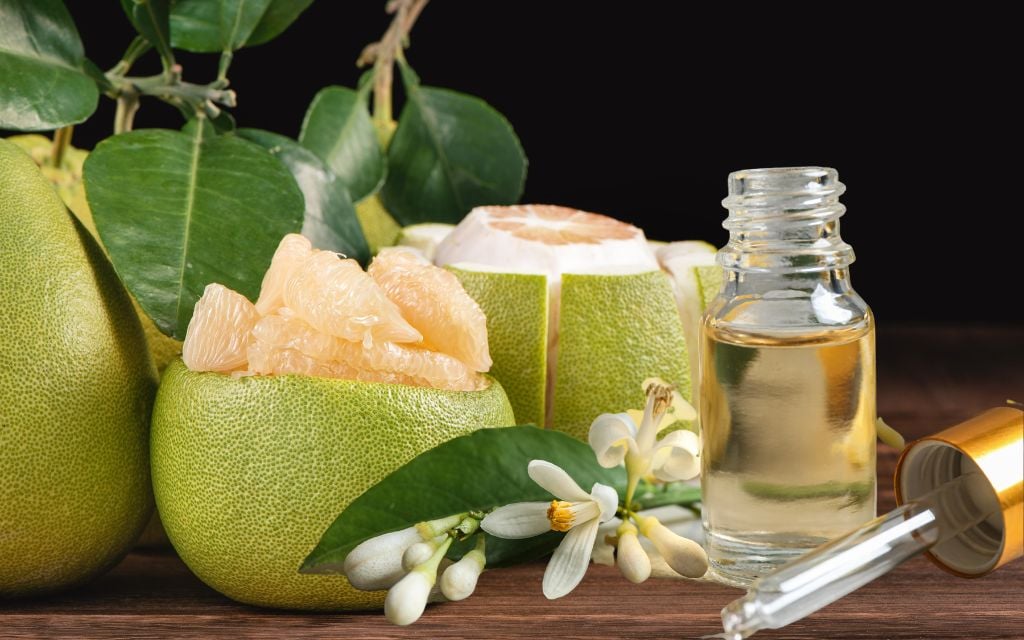
Pomelo peel can be transformed into a valuable and innovative snack (Image source: Internet)
The value of pomelo peel goes far beyond merely “utilizing a byproduct.” It resides in the natural fragrance, the soft, chewy texture, and the highly distinct aftertaste that emerges when it is processed correctly. While most people discard the peel after eating the fruit, the peel actually holds the truest essence of the pomelo aroma: fragrant, lightly citrusy, slightly bitter, and instantly recognizable.
When handled properly, pomelo peel stops being a difficult ingredient to work with. It becomes the element that sets this snack apart, offering real pomelo fragrance, a natural chewiness, a clean bitterness at the end of the palate, and freedom from the one-dimensional sweetness common in many conventional dried fruits.
Essential oil is what gives pomelo peel its clear, distinctive scent. In VietNatur’s salted apricot-coated dried pomelo peel, this layer of fragrance defines the product’s sensory appeal: opening the bag releases an authentic pomelo aroma, and chewing continues to unlock that natural scent without ever turning pungent, harsh, or acrid.
This is why pomelo peel leaves a distinct mark in this snack. While many dried fruits make an impression through sweetness, pomelo peel stands out with a clean, slightly citrusy fragrance and a deeper, more substantive aftertaste.
The white pith is often considered unpalatable because it can easily taste sharply bitter or fibrous if not handled with care. Yet, in this dried product, it is the essential component that provides thickness and a satisfyingly soft, chewy mouthfeel.
If too much white pith is removed, the peel becomes thin and loses its natural chew. If too much is kept without proper treatment, the product turns sharply bitter. The value of the white pith therefore rests on balance: thick enough to give the peel texture, without making the flavor heavy or unpleasant to eat.
High-quality pomelo peel does not need to lose all of its bitterness. If processed to the point where no bitterness remains, the product simply mimics a common slice of sweet jam. The goal is not to eradicate the bitterness, but to temper the sharp, harsh notes while leaving a clean, balanced aftertaste.
It is this exact hint of mild bitterness that assures the eater they are enjoying real pomelo peel. When paired with the savory-sour notes of salted apricot and a light sweetness, this bitter finish gives the snack depth, raising it above a basic, sugar-coated treat.
The fascinating aspect of salted apricot-coated dried pomelo peel is that the product does not attempt to hide the fundamental traits of pomelo peel. Instead, it highlights its best qualities: the natural fragrance, the chewiness of the white pith, and a mild bitter finish.
Through this deliberate approach, a part of the fruit once seen as unusable becomes an intriguing Vietnamese snack: aromatic with pomelo, soft and chewy, mildly savory and sour, and finished with an aftertaste that sets it apart from familiar dried fruits.
Pomelo peel is prone to being pungent, acrid, or sharply bitter because the green rind carries rather potent essential oils, while the white pith naturally holds a deep bitterness if not thoroughly prepared. This explains why this snack requires significantly more processing technique than standard dried fruits.
| Component of the Snack | Value When Well-Processed | Problem If Poorly Processed |
| Green Rind | Yields a fresh, instantly recognizable pomelo scent | Readily becomes overwhelming, pungent, and sharp |
| White Pith | Provides a soft, chewy texture and thickness | Becomes sharply bitter and fibrous |
| Essential Oil | Delivers a signature natural fragrance | Overpowers other flavors if too intense |
| Salted Apricot | Balances savory-sour notes, rounding out the pomelo | Becomes intensely salty if overused |
The challenge of this product is not to “erase” every single characteristic of the pomelo peel. Stripping away all the essential oil removes the pomelo scent entirely. Stripping away all the bitterness robs the snack of its depth.
The true artistry lies in control: preserving the pomelo aroma and a clean bitterness while smoothing out the harsh parts that cause a pungent, acrid, or intensely bitter reaction.
Salted apricot balances the flavor of pomelo peel by introducing a deep layer of savory sourness, which rounds out the mild bitterness and curbs any one-dimensional sweetness. This is precisely what distinguishes salted apricot-coated dried pomelo peel from ordinary pomelo peel jams or sugar-coated snacks.
If you rely solely on sugar, pomelo peel easily turns into a straightforward sweet treat. Salted apricot changes the dynamic: its savory, sour profile does not mask the pomelo fragrance but instead draws the aroma and the mild bitterness into a more harmonious whole.
| When Tilted Heavily Toward Sweetness | When Combined with Salted Apricot |
| Tastes similar to ordinary jam | Possesses a distinct savory, sour character |
| Sugar hits quickly; can feel cloying | The sharp sweetness is tempered |
| Simple, straightforward aftertaste | Offers greater flavor depth |
| The pomelo fragrance can easily be masked | Retains the clear aroma of the pomelo peel |
A delicious piece follows a distinct sequence of flavors: a mild savory-sour note at the start, a moderate sweetness in the middle, followed by the pomelo fragrance and a clean bitterness in the aftertaste. This structured sequence gives the product a quality where “eating slowly reveals its true appeal.”
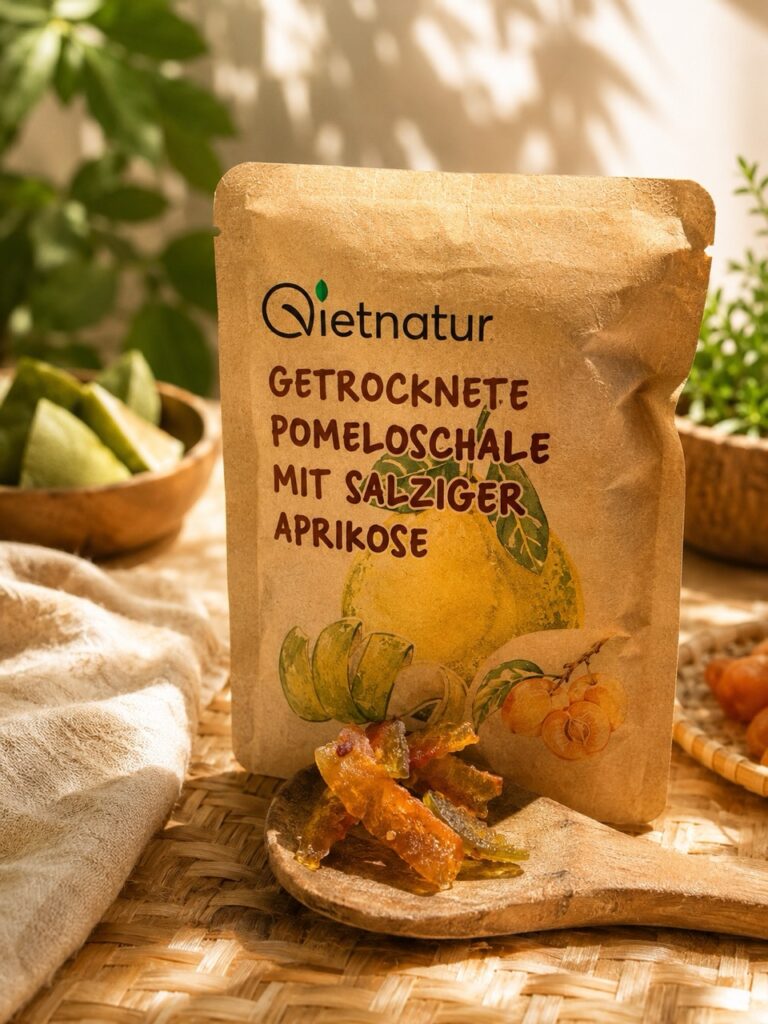
Pomelo peel coated with salted dried apricot becomes a unique snack that offers multiple layers of flavor and sparks consumers’ curiosity
Salted apricot-coated dried pomelo peel delivers a refreshing alternative to familiar dried fruits thanks to its natural pomelo fragrance, a soft chew, and a flavor profile that weaves together sour, savory, mild sweetness, and a clean bitterness.
High-quality salted apricot-coated dried pomelo peel should carry a natural pomelo scent, a balanced savory-sour taste, a mild bitter finish, a profile that is not pungent or acrid, and a moderately soft, chewy texture. When choosing or tasting the snack, look for the following indicators:
For the VietNatur product, the formulation consists of 90% pomelo peel, 5% salted apricot, and 5% sugar. This specific ratio ensures that the pomelo peel remains the main character, while the salted apricot and sugar work together to balance the flavor.
See more:
Salted Plum Dried Pomelo Peel : A Unique Specialty
Salted Apricot-Coated Dried Pomelo Peel – A Unique Snack from Traditional Ingredients
Mekong Delta Harvest: Tropical Fruit Season
Is salted apricot-coated dried pomelo peel pungent or acrid?
When processed correctly, the product yields a gentle pomelo fragrance without any heavy, pungent, or acrid harshness. A delicate trace of mild bitterness may remain, as this is a natural and authentic trait of pomelo peel.
What value does the pomelo essential oil bring to the product?
The essential oil provides a natural aroma and a distinct sensory signature. Thanks to this aromatic component, the snack tastes genuinely of pomelo, rather than relying strictly on sweetness or the flavor of salted apricot.
Is salted apricot dried pomelo peel the same as pomelo peel jam?
Not entirely. Pomelo peel jam is usually heavily tilted toward a sugary sweetness, whereas salted apricot-coated dried pomelo peel features an additional savory, sour layer and a clean, mildly bitter finish.
Salted apricot-coated dried pomelo peel proves that the part of the fruit typically left behind can be turned into a rewarding snack when handled with proper technique. The key lies in softening the white pith, maintaining the pomelo fragrance at a balanced level, drying to a soft, chewy texture, and applying a salted apricot layer to complete the profile.
When these steps are aligned, each piece of pomelo peel preserves its natural aroma, a mild bitter finish, and a savory-sour depth from the salted apricot, all while remaining free from a pungent or acrid taste. It is an ideal choice for anyone wishing to experience a unique Vietnamese snack made from authentic Ben Tre pomelo peel that breaks away from conventional, sweet-heavy dried fruits.
If you are eager to try a Vietnamese snack with an intriguing savory-sour taste, an authentic pomelo peel fragrance, and a soft chew carefully processed to temper the usual pungent edge of pomelo peel, VietNatur Salted Apricot-Coated Dried Pomelo Peel is an option well worth exploring.