Best Hiking Snacks: Energy Foods for Outdoor Adventures
Hiking and trekking are outdoor activities that build endurance, improve physical fitness, and help recharge your mental energy. However, to...
read more

FREE Express Shipping On Orders $99+

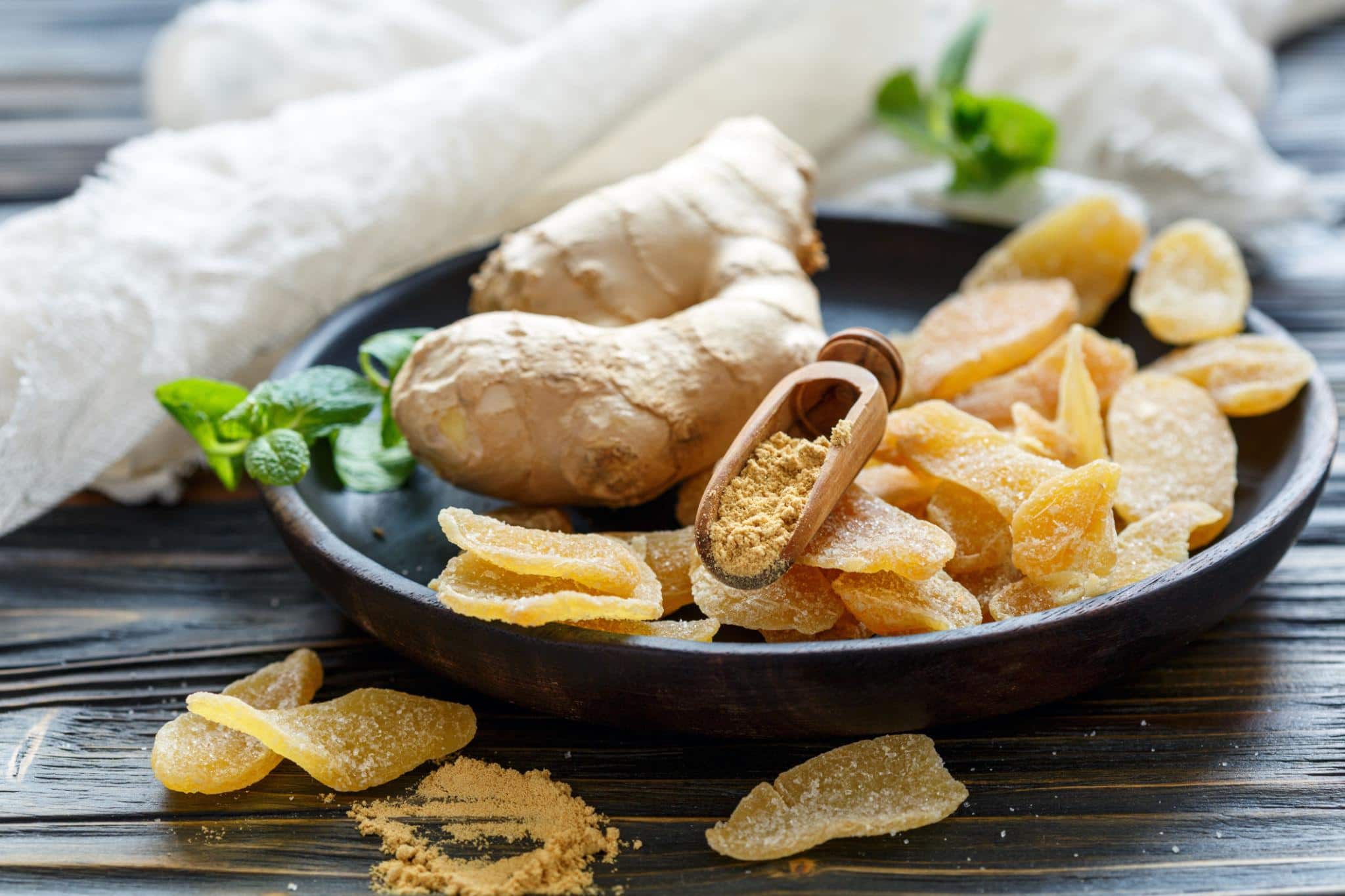
To create fragrant, chewy dried ginger slices with a natural warm flavor, the input materials must be standardized to the maximum. Applying the technology of growing ginger in bags is a strategic step that helps control uniform rhizome quality right from the growth stage. This advanced cultivation process not only effectively prevents pathogens but also creates a solid foundation to build premium quality for VietNatur’s products.
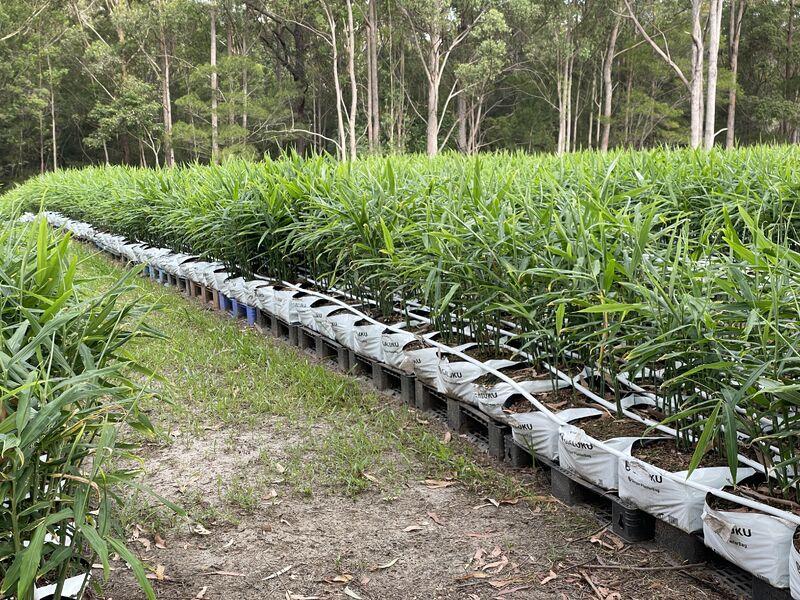
Bag-grown ginger cultivation helps reduce the spread of diseases and ensures a more uniform supply of raw ginger. (Source: Internet)
The perfection of a finished product does not depend solely on the processing factory, but begins right from the planting soil beds. Controlling raw material quality plays a decisive role in the deliciousness and nutritional value of the product.
Previously, planting mainly took place directly on natural open soil surfaces. Although saving initial investment costs, this method harbors many biological risks:
To thoroughly overcome the above risks, the model of growing ginger in bags is applied as a key cultivation solution for high-quality raw material areas. This is a method utilizing specialized bags or soil pots to nurture each plant individually, bringing clear benefits:
A sturdy house requires a good foundation. For the development of the rhizome root system, the soil mixture is precisely the foundation that plays a decisive role in the shape and deliciousness of the raw material.
The roots of this plant variety are highly sensitive to excess water and need a lot of oxygen for respiration. If using ordinary field soil, after a period of watering, the soil will become compacted. The narrow space causes the rhizomes to warp and deform. Worse still, groundwater stagnation will cause the roots to lack oxygen, leading to mushy rot of the rhizomes before they can be harvested. Therefore, a porous environment that retains moisture well but drains quickly is a mandatory condition in the process.
The ideal substrate mixture is often carefully blended from various materials, with each component playing a distinct role to maximally support growth:
Alongside the planting soil, controlling the surrounding environment is also systematically carried out. The cultivation area will punch small holes around the bag body at a sufficient distance from the bottom so that excess water automatically flows out. These bags are elevated off the ground to prevent reverse water seepage. Additionally, in the early stages, the cultivation area is often covered with agricultural shading nets to reduce harsh sunlight. Softening the light helps prevent leaf burn and keeps the pot surface consistently cool. This ideal growth environment is precisely the key to creating perfect raw materials before entering the intensive dried ginger making process.
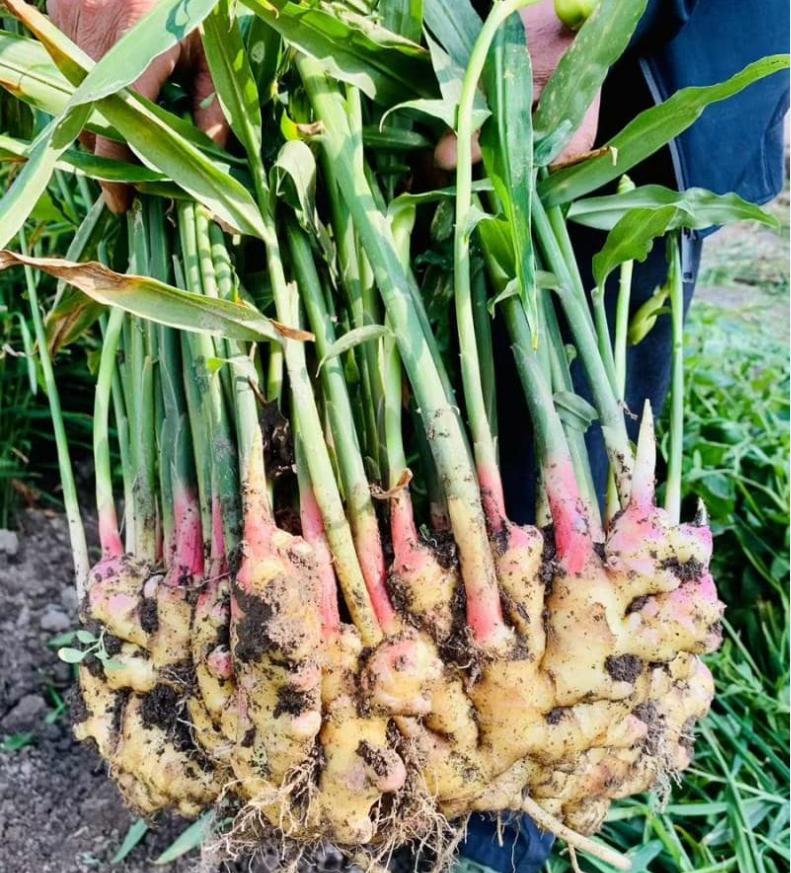
Mature ginger is harvested at the optimal time to ensure the ideal texture, aroma, and processing quality. (Source: Internet)
The timing of uprooting is a strategic decision that directly affects the chewing texture and taste experience of consumers. A strict set of standards is always applied to ensure the raw materials achieve the highest quality.
The natural growth cycle can last up to 9 or 10 months. However, through much practical experience, the most ideal harvest time for deep processing is when the plant reaches about 240 days old. In the field, this stage can be identified through distinct physiological signs. The plant tops will halt, not sprouting new young shoots. About two-thirds of the lower leaves gradually turn a natural faded yellow, and the stem shows slight drying. This is when the plant has concentrated all its nutrients into the lower rhizomes, entering a perfectly timed mature stage.
Medium-aged ginger is a term used to indicate the stage where the rhizome is neither too young nor too old. This balanced state brings immense benefits that other stages do not possess:
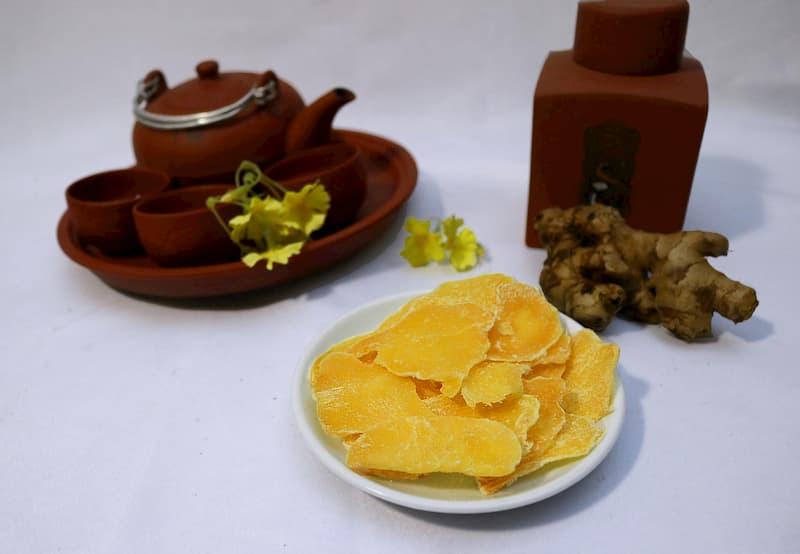
Honey and kumquat dried ginger retains its naturally warm flavor and distinctive soft, chewy texture. (Source: Internet)
The strictly standardized raw material source at the 240-day mark is precisely the core foundation that creates premium quality for VietNatur’s honey kumquat dried ginger product line. The combination of multiple ingredients requires the rhizome structure to have good nutrient absorption capabilities without crumbling. Modern marinating and drying processes are applied to materialize this.
After a careful cleaning process using water pressure, the medium-aged ginger rhizomes are put into a slicing machine system with standard thickness. At this age, the internal cells still retain their fine porous characteristics, operating like tiny sponge networks. Thanks to the favorable physical structure, the slice easily receives and absorbs natural sugar molecules from wild forest honey, as well as the essential oils extracted from kumquats. The marinating process takes place slowly, relying on natural osmotic principles. This method helps each thin slice fully absorb the essence of the accompanying ingredients without breaking the original cell wall structure. This blending creates the distinctive authentic flavor of the final product.
The next step in the process is the application of low-temperature range drying technology. This method slowly extracts the excess water vapor, simulating the natural air-drying process. Not using excessively high temperatures helps maximally protect the highly sensitive antioxidant compounds, while keeping the eye-catching golden-yellow color intact. Upon completion, the dried ginger batches possess a completely dry outer surface, causing no sticky feeling when held. However, the inner core still maintains perfect soft chewiness. VietNatur’s products bring a harmonious intersection between the original warm flavor, a hint of gentle tartness, and a smooth sweet aftertaste, meeting expectations for a healthy snack. Applying the bag cultivation method and strictly adhering to the precise harvest time has created a superior raw material source in both appearance and internal quality. Meticulousness from the field care stage to the careful processing procedure has helped the raw materials fully retain their signature flavor. The selection process, from mastering the substrate formula and strictly controlling every day of harvest age to the deep processing chain, has helped perfect quality comprehensively. Thanks to this systematic selection orientation, each rhizome slice brings authentic culinary experiences and ensures the provision of high nutritional value, effectively supporting body warming in all weather conditions.
The application of the technology of growing ginger in bags combined with the harvesting principle at the 240-day mark has created an outstanding raw material foundation for the food industry. Through strict selection and comprehensive control, VietNatur’s dried ginger products consistently maintain a soft chewy structure, fully radiating the natural warm flavor, and bringing true health value to users.